What Did the Kerala Court Say About the Actress Assault Case?

Synopsis
The Kerala court has sharply criticized the survivor's counsel in the ongoing actress assault case, questioning her professional conduct. With the state government planning to appeal the trial court's controversial verdict, the case remains in the spotlight, raising significant concerns about justice and legal proceedings in high-profile cases.
Key Takeaways
Kerala court criticizes survivor's counsel .
Trial court acquitted actor Dileep .
State government plans to appeal the verdict .
Concerns over courtroom engagement raised .
Prosecution calls for higher judiciary intervention .
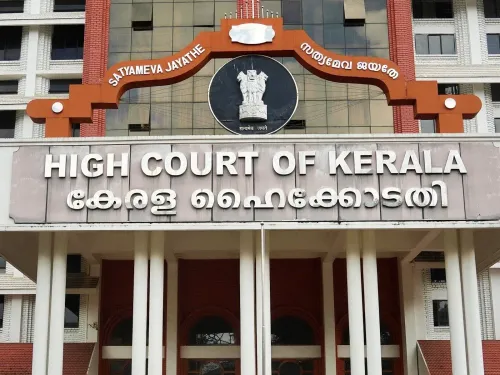
Kochi, Jan 12 (NationPress) The Kerala court, addressing the actress assault case, issued a scathing critique of advocate T.B. Mini, the survivor's lawyer, on Monday, questioning her engagement and presence throughout the trial proceedings.
The trial court, which handled the notorious actress abduction incident from February 2017, recently convicted and sentenced six individuals while acquitting four others, including well-known actor Dileep.
On Monday, the court remarked that the actress's attorney attended for merely ten days throughout the trial, often being present for less than thirty minutes each time.
The judge, while reviewing contempt of court motions, commented that the courtroom seemed to be utilized as a space for relaxation rather than a venue for serious legal discussions.
Furthermore, the court pointed out that during her sporadic appearances, the lawyer was frequently observed dozing off, yet later alleged that the court had failed to consider her arguments.
These comments arise amid ongoing disputes regarding the ruling in this widely publicized case concerning the alleged kidnapping and sexual assault of an actress on February 17, 2017.
The prosecution's case claimed that the survivor was abducted after her vehicle was stopped near Athani in Angamaly, sexually assaulted, and recorded in compromising visuals.
In its ruling, the trial court acquitted actor Dileep, asserting that the charges of criminal conspiracy and evidence tampering were not substantiated beyond a reasonable doubt.
In response to the verdict, advocate Mini publicly criticized the court, particularly challenging the assertion that the prosecution did not present compelling evidence, labeling such conclusions as erroneous.
Meanwhile, the state government has sought legal counsel, recommending that an appeal be lodged with the Kerala High Court.
The Special Public Prosecutor's assessment indicates that the trial court's decision cannot be wholly accepted and that the acquittals of Dileep and the other accused require appellate review.
The legal opinion further highlights that the sentences given to the convicted individuals were merely the minimum allowed and argues that the trial court's dismissal of key evidence against Dileep is legally indefensible.
It also points to various sections of the extensive judgment, suggesting that unnecessary justifications appeared to favor the accused.
Stressing the importance of ensuring justice in a case that has captivated national attention, the prosecution has emphasized the necessity for intervention by the higher judiciary to correct the perceived shortcomings in the trial court's conclusions.
Point of View
It is clear that the legal landscape surrounding high-profile cases continues to evolve. While the acquittal of prominent figures raises questions about due process, it is essential to uphold the principles of justice and fair representation for all parties involved. As a national editor, I believe it is crucial to approach this situation with a commitment to truth and integrity, ensuring that every voice is heard.
NationPress
25 Sept 2026
Frequently Asked Questions
What was the outcome of the trial court's decision?
The trial court convicted six individuals while acquitting four others, including actor Dileep.
What did the court criticize about the survivor's counsel?
The court criticized advocate T.B. Mini for her lack of presence and engagement during the trial, often being seen sleeping.
What actions is the state government considering?
The state government is seeking to appeal the trial court's verdict, as legal advice indicates that the decision warrants further scrutiny.
What was the nature of the alleged crime?
The prosecution alleged that the survivor was kidnapped, sexually assaulted, and recorded in compromising situations.
What legal concerns were raised regarding the trial court's ruling?
Legal counsel noted that the acquittal of Dileep and other accused requires appellate review, as the trial court's rejection of key evidence was deemed unsustainable.