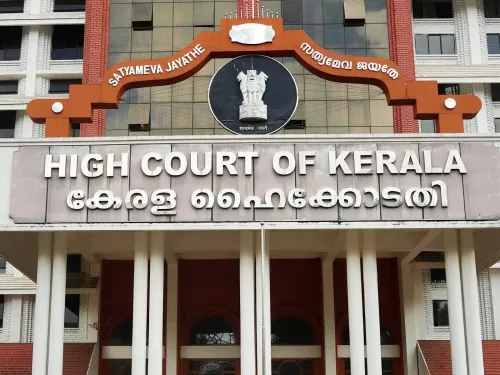
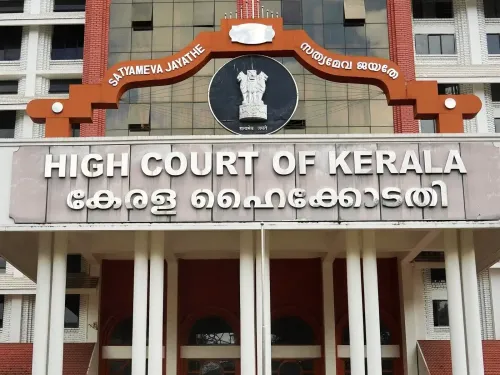
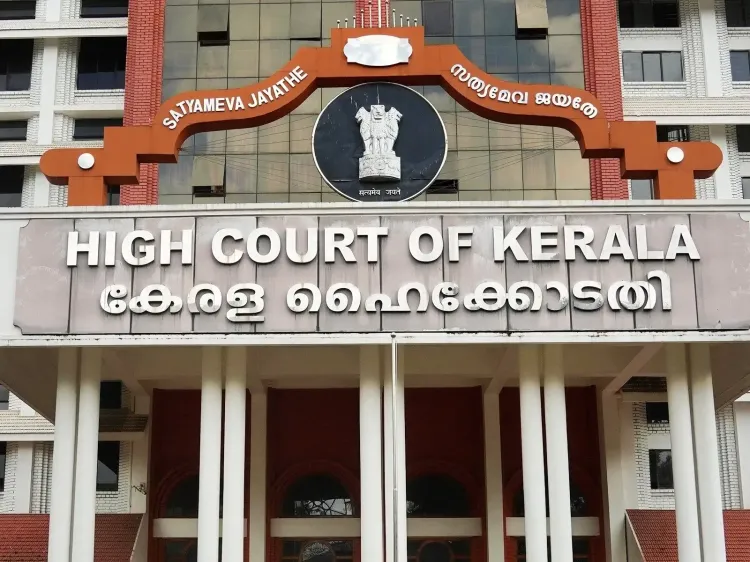
Kerala High Court quashes govt order dissolving Police Officers Association
Synopsis
The Kerala High Court has struck down the state government's move to abolish the Kerala Police Officers Association, ruling it violated the constitutional right to form and continue associations under Article 19(1)(c). The verdict — delivered just a day before scheduled elections to the restructured bodies — also exposed a direct contradiction between the government's order and its own police chief's earlier recommendation.
Key Takeaways
The Kerala High Court on 29 September 2026 quashed the state government's order dissolving the Kerala Police Officers Association (KPOA) .
Justice Bechu Kurian Thomas held the dissolution violated Article 19(1)(c) of the Constitution, which protects the right to form and continue associations.
The government's 27 July 2026 order had abolished the KPOA and directed its assets to be split between two surviving associations in a 60:40 ratio .
The court noted the government's action contradicted the state police chief's proposal of 17 January 2026 , which had not recommended abolishing any association.
All ad hoc committee orders have been set aside; the three police associations are restored to their pre-restructuring status.
Elections to the restructured bodies had been scheduled for 30 September 2026 , one day after the verdict.
The Kerala High Court on Tuesday, 29 September 2026, struck down the state government's order to dissolve the Kerala Police Officers Association (KPOA), ruling that the government lacked the authority to restructure recognised police associations in a way that infringed on the constitutional rights of their members. The verdict restores the KPOA and the pre-restructuring status of all three police associations in the state.
What the Court Ruled
A bench of Justice Bechu Kurian Thomas held that the freedom to form associations under Article 19(1)(c) of the Constitution encompasses not just the right to form an association, but also the right to continue it and preserve its composition. 'The freedom to form an association and freedom to continue the association are both facets of Article 19(1)(c) of the Constitution,' the judge observed.
The court found that the recognition granted to the police associations had never been formally withdrawn — neither by the state police chief nor by the government — and that the government therefore had no authority to interfere with the structure of those recognised bodies.
The Government Order That Was Challenged
The ruling came on petitions challenging a government order dated 27 July 2026, which restructured associations representing different ranks of police personnel. Under that order, the KPOA was abolished, while the Kerala Police Association (KPA) and the Kerala Police Senior Officers Association (KPSOA) were retained in a reorganised form.
The government had directed that the KPOA's assets — including bank accounts, documents, deposits, investments, rights, and liabilities — be distributed between the two surviving associations in a 60:40 ratio. Ad hoc committees were appointed to manage administrative functions, and elections to the newly constituted bodies were scheduled for 30 September 2026.
Contradiction With the Police Chief's Proposal
The High Court noted a significant contradiction at the heart of the government's action. In a proposal dated 17 January 2026, the state police chief had recommended retaining all three associations, suggesting only limited changes to their composition — and crucially, had not called for the abolition of any association. The government's July order went well beyond what its own top police official had advised.
The court also found that the government had altered the membership structure of the KPA contrary to its own bye-laws, and had interfered with the membership and assets of the KPOA without the consent of its members.
Impact and What Happens Next
The High Court set aside the 27 July 2026 government order along with all subsequent orders constituting the ad hoc committees. The judgment effectively restores the position of the three police associations as it stood before the restructuring directive was issued.
Notably, with the ad hoc committee elections scheduled for 30 September 2026 — just one day after the ruling — the verdict arrives at a critical moment, pre-empting any institutional changes that might have been difficult to reverse after elections were held. The Kerala government is expected to decide whether to challenge the verdict before a larger bench or comply and reinstate the original association structure.
Point of View
A principle courts have upheld consistently. More damaging is the internal contradiction the High Court surfaced: the government overrode its own police chief's measured January proposal and moved to abolition without withdrawing formal recognition, a procedural gap that made the order legally indefensible. The ruling is a reminder that administrative convenience cannot override constitutional guarantees, especially when the beneficiaries are government employees whose right to organise is already tightly circumscribed. The Kerala government must now decide whether to appeal or comply — either choice will signal how it intends to manage its own police bureaucracy going forward.
NationPress
29 Sept 2026
Frequently Asked Questions
What did the Kerala High Court rule about the KPOA dissolution?
The Kerala High Court ruled on 29 September 2026 that the state government's order dissolving the Kerala Police Officers Association (KPOA) was unconstitutional and set it aside. Justice Bechu Kurian Thomas held that the right to form and continue associations under Article 19(1)(c) of the Constitution cannot be overridden by the government restructuring recognised police associations without withdrawing their formal recognition.
What was the government's original order and what did it do?
A government order dated 27 July 2026 abolished the KPOA and reorganised the Kerala Police Association (KPA) and Kerala Police Senior Officers Association (KPSOA). It directed the KPOA's assets — including bank accounts, deposits, and investments — to be distributed between the two remaining bodies in a 60:40 ratio, and appointed ad hoc committees to manage administrative functions.
How does this ruling affect police associations in Kerala?
The High Court's judgment restores the three police associations — KPOA, KPA, and KPSOA — to the positions they held before the July 2026 restructuring order. All ad hoc committee appointments have also been quashed, effectively nullifying the administrative changes the government had put in place.
Why did the court find the government's order contradictory?
The court noted that the state police chief had, in a proposal dated 17 January 2026, recommended retaining all three associations with only limited compositional changes and had not suggested abolishing any of them. The government's subsequent order went significantly further, abolishing the KPOA entirely — a step its own top police official had not proposed.
What happens next after the High Court verdict?
The Kerala government is expected to decide whether to challenge the ruling before a larger bench or comply and reinstate the original association structure. The verdict came just one day before elections to the restructured associations were scheduled on 30 September 2026, effectively halting those polls.