Kerala Heatwave Kills Man in Kannur; IMD Issues Alert for 3 Districts
Synopsis
Kerala's deadly heatwave claimed its first confirmed casualty — a 37-year-old well-digger in Kannur — as temperatures soared past 40°C. The IMD has issued heat wave warnings for Palakkad, Kollam, and Thrissur, with sirens activated after 12:30 PM. The tragedy highlights the lethal risk to outdoor workers amid India's worsening pre-monsoon heat crisis.
Key Takeaways
Sanal Kumar, 37 , a well-digger from Pallippoyil, Kannur , died of suspected sunstroke on Wednesday, April 23, 2025 — one of Kerala's first heatwave fatalities this season.
The IMD has issued a formal heat wave warning for Palakkad, Kollam, and Thrissur districts after temperatures exceeded 40°C , over 4.5 degrees above normal .
Warning sirens were activated after 12:30 PM in Kollam and Palakkad to alert the public during peak heat hours.
The State Disaster Management Authority (SDMA) has ordered strict safety measures, and the Kerala Health Department has been placed on high alert .
Kerala's high coastal humidity raises the effective heat index significantly above recorded temperatures, making outdoor activity especially hazardous.
The IMD will officially declare a heat wave if dangerous conditions persist for two consecutive days ; the southwest monsoon is not expected until approximately early June .
Thiruvananthapuram, April 23: A 37-year-old man died of suspected sunstroke in Kannur, Kerala, on Wednesday as the state battles a dangerous surge in temperatures, prompting the India Meteorological Department (IMD) to issue a formal heat wave warning for Palakkad, Kollam, and Thrissur districts. The fatality underscores the deadly real-world consequences of an intensifying climate crisis that authorities are scrambling to manage.
Who Was the Victim and What Happened
The deceased has been identified as Sanal Kumar, a resident of Pallippoyil in Kannur district. He collapsed on Wednesday afternoon while engaged in well-digging work — a physically demanding outdoor occupation that left him dangerously exposed to direct sunlight during peak heat hours.
He was rushed to a medical facility but was subsequently declared dead. Authorities suspect heatstroke as the primary cause, though a formal post-mortem is expected to confirm the findings. His death is being treated as a grim warning sign of what unmitigated outdoor exposure can lead to when temperatures breach critical thresholds.
IMD Heat Wave Warning: What the Data Shows
The IMD issued its heat wave alert after atmospheric temperatures in parts of Kerala crossed 40 degrees Celsius, with a deviation of more than 4.5 degrees above normal seasonal levels — the standard meteorological benchmark for declaring a heat wave condition.
Kerala's coastal geography and characteristically high humidity levels compound the danger significantly. The heat index — the perceived temperature felt by the human body when humidity is factored in — can climb several degrees above the recorded figure, making even moderate outdoor activity potentially life-threatening.
The IMD is expected to officially confirm sustained heat wave conditions if the current temperature trend persists for two consecutive days. Until then, the agency has maintained its advisory status across affected districts.
Government Response and Emergency Measures
The State Disaster Management Authority (SDMA) has directed all district administrations to implement strict heat safety protocols, with particular focus on protecting outdoor workers, the elderly, children, and other vulnerable populations who face the greatest risk from prolonged sun exposure.
In a significant step, warning sirens under the state's alert system were activated after 12:30 PM in Kollam and Palakkad districts, as well as in other regions recording rising temperatures. This public alert mechanism is designed to reinforce community awareness and prompt residents to seek shelter during the hottest part of the day.
The Kerala Health Department has also been placed on high alert, with specific operational instructions issued to hospitals and primary health centres on managing heat-related illnesses, including heatstroke, dehydration, and heat exhaustion.
Public Advisory: What Citizens Must Do
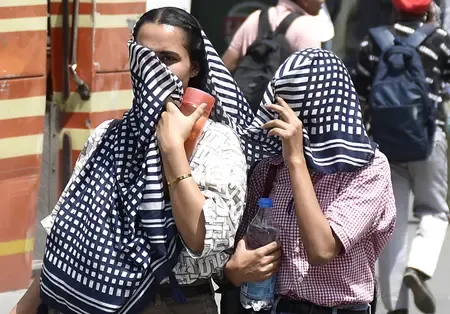
Authorities across Kerala have issued a series of public health advisories urging residents to maintain adequate hydration, avoid direct sun exposure between 11 AM and 3 PM, and strictly follow government guidelines — particularly those belonging to high-risk groups such as the elderly, pregnant women, and those with pre-existing medical conditions.
Outdoor workers like Sanal Kumar — who often have no choice but to work through peak heat hours — remain the most acutely endangered demographic. Labour welfare advocates have previously called for mandatory rest periods and hydration facilities at construction and agricultural worksites, though enforcement remains inconsistent across the state.
Broader Context: A Worsening Pattern Across India
Kerala's heat crisis is not an isolated event. Across India, the 2024 and 2025 pre-monsoon seasons have recorded anomalously high temperatures, with climate scientists attributing the trend to the compounding effects of El Niño patterns and long-term global warming. States like Rajasthan, Odisha, and Andhra Pradesh have similarly battled lethal heat waves in recent years, with hundreds of deaths recorded annually.
Notably, Kerala — often perceived as a cooler, greener state — has seen a measurable increase in heat-related mortality over the past decade, reflecting how climate change is reshaping risk profiles even in traditionally temperate regions. The death of Sanal Kumar is, tragically, part of a broader national pattern that demands systemic policy intervention beyond seasonal advisories.
As the southwest monsoon is expected to arrive in Kerala around early June, residents and authorities must brace for several more weeks of dangerous heat. The coming days will be critical in determining whether the state's emergency response infrastructure is equipped to prevent further fatalities.
Point of View
Celebrated for its human development indices and robust public health infrastructure, has consistently underinvested in heat action plans that protect its most economically vulnerable citizens: daily-wage outdoor workers who cannot afford to stop working, regardless of temperature. While sirens sound and advisories are issued, there is no enforceable mandate compelling construction contractors or well-digging operators to halt work during peak heat hours. Until India moves from reactive heat warnings to proactive labour protection laws — with real penalties for non-compliance — the next Sanal Kumar is already at work somewhere under a merciless afternoon sun.
NationPress
10 Oct 2026
Frequently Asked Questions
Who died in the Kerala heatwave and what happened?
Sanal Kumar , a 37-year-old well-digger from Pallippoyil in Kannur , died of suspected sunstroke on Wednesday, April 23, 2025 , after collapsing during outdoor work in the afternoon heat. He was declared dead at a medical facility, becoming one of the first confirmed heatwave fatalities in Kerala this season.
Which districts in Kerala have received a heat wave warning from IMD?
The India Meteorological Department (IMD) has issued a heat wave warning for Palakkad, Kollam, and Thrissur districts in Kerala. The alert was triggered after temperatures crossed 40 degrees Celsius with a deviation of over 4.5 degrees above normal .
What precautions should Kerala residents take during the heat wave?
Authorities advise residents to stay indoors between 11 AM and 3 PM , maintain adequate hydration, avoid prolonged sun exposure, and follow advisories from the Kerala Health Department and SDMA . Vulnerable groups — the elderly, children, and outdoor workers — are at the highest risk and should take extra care.
Why is Kerala's heat wave particularly dangerous despite being a coastal state?
Kerala's high coastal humidity dramatically elevates the heat index — the temperature the human body actually feels — well above the recorded air temperature. This combination of heat and humidity accelerates dehydration and heatstroke, making outdoor conditions far more dangerous than raw temperature figures suggest.
When will IMD officially declare a heat wave in Kerala?
The IMD will officially confirm a heat wave in Kerala if the current elevated temperature trend persists for two consecutive days . Until then, the agency has issued warnings and advisories, with authorities urging maximum public caution across all districts.