How Did Kerala's Grief over a 10-Month-Old's Death Turn Political?

Synopsis
A heartbreaking incident in Kerala has raised questions about the intertwining of grief and politics. After the tragic loss of a 10-month-old infant, Alin Sherin Abraham, the parents' decision to donate organs sparked both admiration and debate. With elections nearing, the act's political implications are under scrutiny.
Key Takeaways
Alin Sherin Abraham tragically passed away at 10 months old.
The parents donated the child's organs, saving four lives.
Organ transport was completed in a record time of 3 hours and 27 minutes.
The Chief Minister proposed naming an organ transplant unit after the infant.
The event blurred the lines between grief and political messaging.
Thiruvananthapuram, Feb 17 (NationPress) The passing of a 10-month-old infant, Alin Sherin Abraham, in Kerala last week brought profound sorrow to the family, who channeled their grief into a noble act by giving life to four other children.
After the child was pronounced brain dead at a hospital in Kochi, the parents, Arun Abraham and Sherin Ann John, made the heart-wrenching decision to donate their child’s organs, thus providing a fresh opportunity for four other young lives.
In an impressive medical operation, the organs were swiftly transported from Kochi to three hospitals in Thiruvananthapuram within just three hours and 27 minutes, showcasing the remarkable efficiency of Kerala’s transplant network.
Typically, the same journey would take over seven hours during peak traffic without police escort.
However, the subsequent events ignited a more unsettling dialogue.
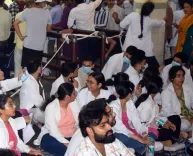
During the funeral held in Pathanamthitta on Sunday, the mourning family and church community witnessed an overwhelming turnout.
Ministers, political figures, and public officials rushed to express their condolences.
By Monday, Chief Minister Pinarayi Vijayan arrived, revealing plans to name a proposed state organ transplant unit after the child.
This gesture was framed as a tribute.
Yet, with the Assembly elections on the horizon, the timing sparked discussions about its implications.
In Kerala's politically charged atmosphere, public mourning frequently intertwines with political messaging.
While expressions of support from elected officials are common, when condolence visits morph into quasi-ceremonial occasions, accompanied by media coverage and official announcements, the distinction between genuine empathy and political signaling can become blurred.
Television channels competed fiercely for live coverage and updates during the day of the funeral.
The presence of leaders, the large crowds—many of whom had no personal ties to the family—and the rapid policy announcement turned what should have been a personal farewell into a state-level spectacle.
A state funeral was also held, marking the infant as the youngest in the state to receive one, as well as the youngest organ donor.
Nevertheless, the comparison to previous crises remains stark.
When Cyclone Ockhi devastated coastal communities near the Vizhinjam port project, impacting numerous fishing families just 10 kilometers from the Secretariat, the Chief Minister's delayed response drew public ire. The optics of urgency appeared significantly different then.
This context does not diminish the parents' noble choice or the lives they saved. Organ donation deserves recognition.
However, the loss of a child should not be exploited for political purposes. In a society that values compassion, we must ponder whether collective solidarity must always be so public, or if true dignity sometimes lies in preserving the privacy of grief.
Point of View
It is crucial to approach stories like this with sensitivity and impartiality. The parents' selfless act deserves recognition, yet the political undertones cannot be overlooked. As a national editor, it is our responsibility to present the facts while fostering a space for meaningful dialogue about the intersection of personal loss and public response.
NationPress
20 Sept 2026
Frequently Asked Questions
What happened to Alin Sherin Abraham?
Alin Sherin Abraham, a 10-month-old infant from Kerala, sadly passed away, leading to an organ donation that saved four other children.
How quickly were the organs transported?
The organs were transported from Kochi to three hospitals in Thiruvananthapuram in just three hours and 27 minutes.
What political reactions followed the event?
Following the funeral, Kerala's Chief Minister announced that a proposed organ transplant unit would be named after the infant, stirring discussions on the timing and political implications.
What was the response from the public and media?
The funeral witnessed a large turnout of political figures and media coverage, transforming the event into a public spectacle.
What does this situation reveal about Kerala's political culture?
It highlights how public mourning can intertwine with political messaging in Kerala's deeply political culture.