Kerala Senior Citizens Bill 2026: Silver economy plan to mentor startups, boost elderly care
Synopsis
Kerala is not just writing a law for its elderly — it is reimagining old age as an economic asset. Chief Minister V.D. Satheesan's Senior Citizens Bill 2026 pairs a grassroots care network with a 'silver economy' model where retirees mentor startups and Kudumbashree units, a global-first adaptation for a state whose senior population is on track to be twice the national average by 2036.
Key Takeaways
Satheesan introduced the Kerala Senior Citizens (Care and Protection of Rights) Bill, 2026 in the Assembly on Tuesday, 13 October 2026 .
By 2036 , Kerala's senior citizen proportion is projected to be twice the national average .
A 'silver economy' initiative will allow retired professionals above 60 to mentor young entrepreneurs and Kudumbashree units for a modest honorarium.
The state will compile comprehensive data on elderly citizens requiring palliative, dementia, or cancer care, supported by neighbourhood volunteer networks.
Caregiver training courses of six months or one year — modelled on UK, Australia, and Germany frameworks — will be introduced from the next academic year.
The Bill has been referred to the Subject Committee for further legislative scrutiny before enactment.
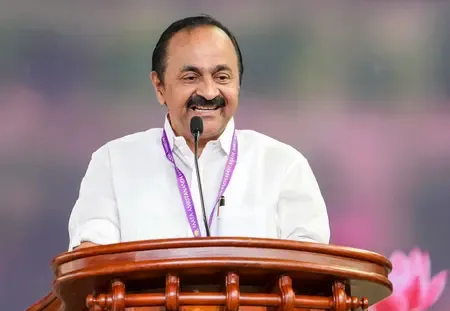
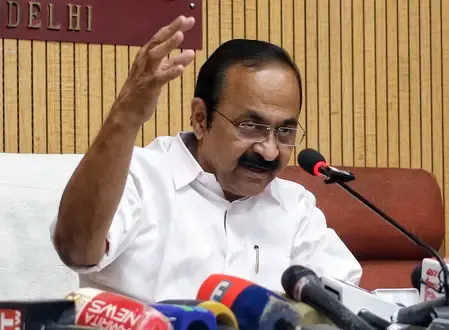
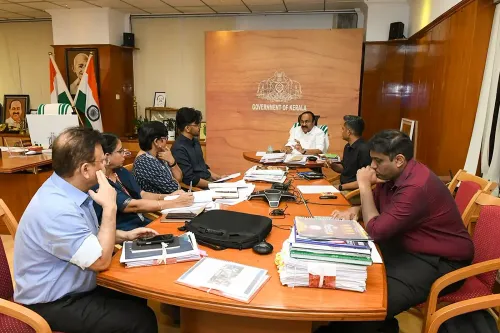
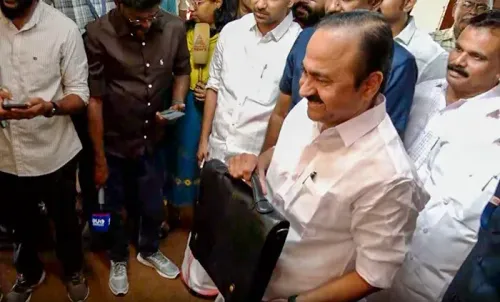
Kerala Chief Minister V.D. Satheesan on Tuesday introduced the Kerala Senior Citizens (Care and Protection of Rights) Bill, 2026 in the state Assembly, unveiling a sweeping plan to harness the expertise of retired professionals, build a grassroots care network for the elderly, and formalise a 'silver economy' framework as the state grapples with one of India's fastest-ageing populations.
Why Kerala Is Acting Now
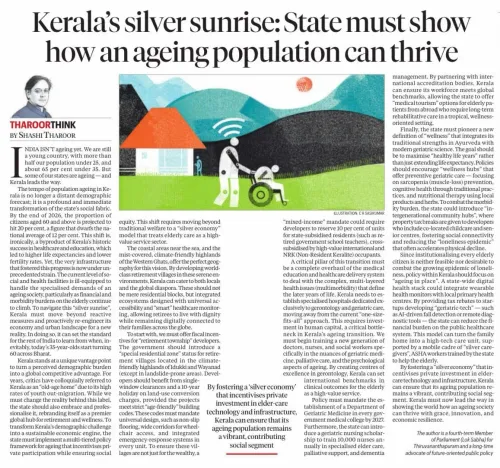
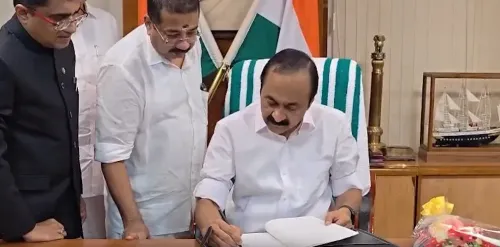
Kerala already has a disproportionately high share of senior citizens relative to the national average — and the demographic pressure is set to intensify. According to Satheesan, by 2036 the proportion of senior citizens in Kerala is projected to be twice the national average. The state has simultaneously established a dedicated department for senior citizens, a decision taken at the very first Cabinet meeting of the current government in fulfilment of an election promise.
This is a rare legislative move in India: no other state has moved to create a standalone institutional and legal framework for elderly welfare at this scale, making Kerala's Bill a potential model for high-ageing states such as Tamil Nadu, Goa, and Himachal Pradesh.
The Silver Economy Initiative
At the heart of the proposal is a 'silver economy' concept studied from models in Japan, the United States, and the United Kingdom. Retired professionals aged above 60 would be empanelled to guide young entrepreneurs on technical matters, marketing, and management in exchange for a modest honorarium. Their expertise could also help Kudumbashree units — Kerala's celebrated network of women's self-help groups — prepare business projects and strengthen women's economic independence. Satheesan framed this not merely as welfare, but as a job-creation and productivity measure for both ends of the age spectrum.
Care Infrastructure and Data Systems
The government plans to compile comprehensive data on senior citizens, covering those who are bedridden, living with dementia or cancer, or requiring palliative care. Neighbourhood networks and volunteers will be deployed to identify needs and ensure consistent access to food, medicines, and care. The initiative specifically targets elderly people who live alone — a growing cohort in Kerala, partly due to emigration of working-age family members to the Gulf and elsewhere.
For funding, the government is exploring a blended model drawing on government funds, local body budgets, and corporate social responsibility (CSR) contributions, ensuring coverage extends to families unable to afford private caregiving.
Caregiver Training: A New Profession
Both government and private institutions may offer structured caregiver training courses, with syllabuses modelled on frameworks from the United Kingdom, Australia, and Germany. Courses would run for six months or one year, with a possible one-year internship component. Trained caregivers could be hired by families with means; for others, state and CSR support would bridge the gap. Satheesan described this pipeline as a dual dividend — addressing the care deficit while creating formal employment in a sector that has historically been informal and underpaid.
The Legislative Path
The Bill was moved with a motion to refer it to the Subject Committee for further scrutiny, signalling that the government anticipates legislative deliberation before it is enacted. Satheesan underlined the moral imperative: 'Nobody should be left alone. No senior citizen should feel abandoned or isolated,' he said in the Assembly. The proposed legislation aims to formally recognise the rights of senior citizens and create enforceable protections — moving beyond advisory frameworks that have characterised earlier central and state-level senior citizen policies.
With the Bill now in committee, stakeholders including health experts, social workers, and industry bodies are expected to submit inputs before a final draft is tabled for passage.
Point of View
Borrowed from Japan and the West, makes intuitive sense for Kerala given its Gulf-migration pattern, which has left large numbers of elderly residents without immediate family support. The harder question is implementation: Kudumbashree mentorship and caregiver training are credible delivery channels, but the blended funding model — mixing government funds, local bodies, and CSR — has historically been unreliable at scale in India. Whether the Subject Committee sharpens the enforcement provisions will determine if this becomes a landmark law or a well-intentioned framework that underdelivers, as many elder-care policies before it have.
NationPress
13 Oct 2026
Frequently Asked Questions
What is the Kerala Senior Citizens Bill 2026?
It is a state legislation introduced by Chief Minister V.D. Satheesan in the Kerala Assembly on 13 October 2026, aimed at strengthening the care, protection, and rights of senior citizens. The Bill proposes a silver economy framework, a grassroots care network, and formal caregiver training, and has been referred to the Subject Committee for further review.
What is the silver economy initiative in the Kerala Bill?
The silver economy initiative would allow retired professionals above 60 to mentor young entrepreneurs in areas such as technical guidance, marketing, and management for a modest honorarium. Their expertise would also help Kudumbashree women's self-help group units build projects and strengthen economic independence, drawing on models from Japan, the US, and the UK.
Why is elderly care a pressing issue in Kerala?
Kerala already has a higher-than-average share of senior citizens, and by 2036 that proportion is projected to be twice the national average. Gulf migration has left many elderly residents without immediate family support, making state-backed care networks especially critical.
What caregiver training does the Bill propose?
The government plans to introduce six-month or one-year caregiver training courses from the next academic year, with syllabuses modelled on frameworks from the UK, Australia, and Germany. A one-year internship is also under consideration, and both government and private institutions may offer the courses.
How will care be funded for families who cannot afford it?
For families unable to pay for trained caregivers, the government is exploring a blended support model using government funds, local body budgets, and corporate social responsibility contributions. The state will also build volunteer-based neighbourhood networks to identify needs and ensure access to food, medicines, and care.