CM Fadnavis Chairs CBG Review, Orders Task Forces for Garbage-Free Cities
Synopsis
Maharashtra CM Devendra Fadnavis chaired a Mumbai review meeting on October 13, 2026, ordering task forces for compressed biogas projects in BMC, Vasai-Virar, Mira-Bhayandar, Kalyan-Dombivli, Hinjewadi, and Chakan, with a cluster processing model and BPCL participation.
Key Takeaways
Task forces directed to accelerate waste-based CBG projects across six identified urban zones in Maharashtra.
Target cities include BMC (Mumbai), Vasai-Virar, Mira-Bhayandar, Kalyan-Dombivli, Hinjewadi and Chakan (Pune) .
A cluster model proposed: primary waste segregation inside city limits, further processing at sites outside cities to ease land pressure.
BPCL and private firms KEVA Group and WTT were present, signalling industry partnership at the planning stage.
Projects to be evaluated on waste volumes, land availability, technology suitability and pipeline proximity .
CBG projects expected to reduce municipal corporations' waste collection costs while supporting garbage-free city goals.
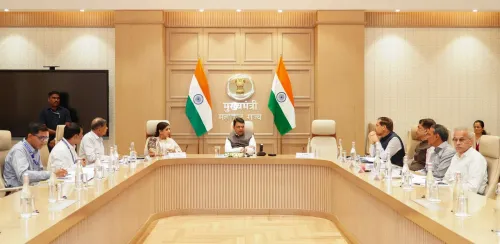
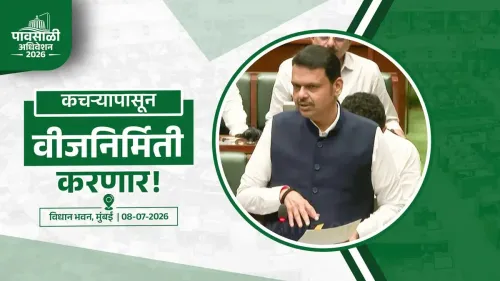
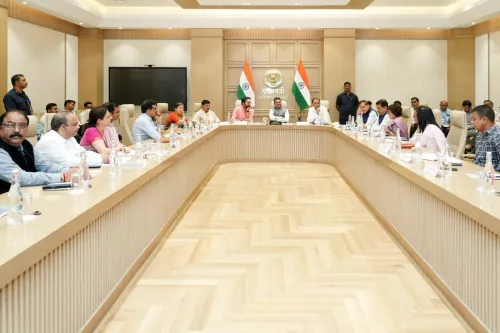
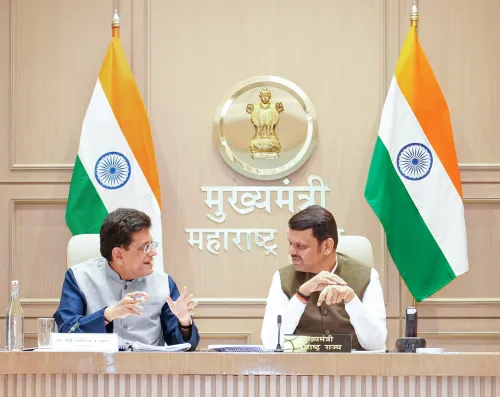
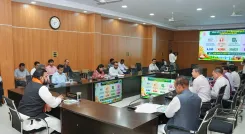
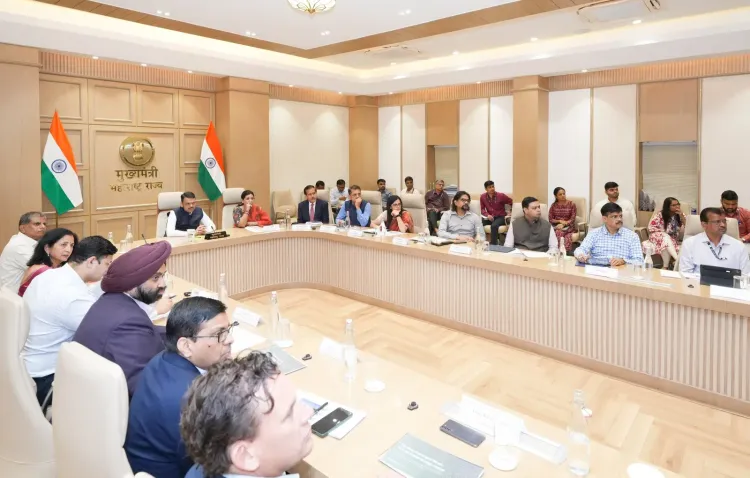
Mumbai's mountains of municipal waste may soon become fuel. Maharashtra Chief Minister Devendra Fadnavis on Tuesday, October 13, 2026, chaired a high-level review meeting in Mumbai on the state's 'Garbage-Free Cities and Compressed Biogas (CBG) Project', directing officials to establish dedicated task forces and fast-track waste-to-energy projects across major urban centres.
Task forces, target cities, and a cluster model
Fadnavis named the cities squarely: BMC (Mumbai), Vasai-Virar, Mira-Bhayandar and Kalyan-Dombivli in the Mumbai Metropolitan Region, and Hinjewadi and Chakan in the Pune belt. Officials were instructed to evaluate each location on four hard criteria — waste volumes, land availability, technological suitability, and proximity to existing gas pipelines — before finalising any project. No generic targets; specific geography, specific metrics.
The headline structural idea is a cluster model: primary waste segregation stays within city limits, but further processing moves to suitable sites outside urban boundaries. The logic is blunt — metropolitan cities are land-scarce, and CBG plants need room. By pooling waste from neighbouring cities into shared processing clusters, the model attempts to solve both the land crunch and the infrastructure cost problem simultaneously.
The Nagpur experience and what it informs
The meeting reviewed lessons from the Nagpur CBG project — Maharashtra's existing pilot in the space. While specific outcomes of that review were not disclosed, the discussion covered pipeline connectivity, waste segregation discipline, and technology options, all of which fed into the cluster-model recommendation. The message from Fadnavis was consistent: scientific waste management, proper land planning, and technology that actually fits the context — not one-size-fits-all roll-outs.
Industry and oil company partnerships at the table
The meeting brought public-sector energy and private industry into the same room. BPCL Chief General Manager (Biofuels) Inderjit Singh represented Bharat Petroleum Corporation Limited, a central player in India's CBG pipeline infrastructure. Also present were KEVA SusBDe Executive Director Vrinda Thakur, KEVA Group CEO and Wholetime Director Kedar Vaze, and WTT Director Strategy and Growth Tjeerd van den Berg. Minister of State Madhuritai Misal attended alongside senior government officials.
The participation of an oil marketing company like BPCL is not incidental — CBG projects depend critically on offtake agreements and pipeline connectivity to be financially viable. Getting BPCL into planning-stage discussions signals that Maharashtra intends to build projects with ready buyers, not orphaned plants.
Where this fits in India's waste-to-energy push
Maharashtra's CBG drive draws on two national frameworks. The Swachh Bharat Mission-Urban, launched in 2014, set garbage-free city targets built on scientific waste segregation and processing infrastructure. The SATAT initiative, launched in 2018 by the Ministry of Petroleum and Natural Gas, specifically promotes CBG plants using agricultural and municipal waste, with oil marketing companies as guaranteed offtakers. Maharashtra's state CBG policy layers on top of both, giving the Chief Minister a legal hook to direct implementation wherever 'feasible'.
The financial case is explicit in Fadnavis's own framing: CBG projects will 'reduce municipal corporations' waste collection costs.' For cash-strapped urban local bodies like the BMC — the country's largest municipal corporation — turning waste from a liability into a revenue-generating or cost-reducing asset is a genuine fiscal argument, not just a green talking point.
Task forces are now ordered. The next move is theirs — and so is the deadline pressure.
Point of View
With named cities and hard criteria as guardrails. Embedding BPCL at the planning stage addresses the classic CBG project failure mode: plants built without offtake certainty. The cluster model also reflects a pragmatic acknowledgment that India's dense metros cannot host large processing infrastructure within their own boundaries, and that regional cooperation between urban local bodies is now a planning necessity rather than a political bonus. If task force formation translates to project financial closure, Maharashtra could offer a replicable template for the dozen-odd Indian states still struggling to operationalise their SATAT commitments.
NationPress
14 Oct 2026
Frequently Asked Questions
What is the Maharashtra CBG project announced by CM Fadnavis?
It is a state initiative to convert municipal solid waste into compressed biogas as a clean fuel, implemented under Maharashtra's CBG policy and aligned with the central SATAT scheme. CM Fadnavis has directed task forces to fast-track CBG plants across major urban centres.
Which cities are targeted for CBG projects in Maharashtra?
The six identified urban zones are BMC (Mumbai), Vasai-Virar, Mira-Bhayandar, Kalyan-Dombivli in the Mumbai Metropolitan Region, and Hinjewadi and Chakan in the Pune belt.
What is the cluster model for waste processing that Fadnavis proposed?
Under the cluster model, primary waste segregation happens within city limits, but further processing takes place at suitable sites outside city boundaries. This addresses land scarcity in dense metro areas while allowing neighbouring cities to share processing infrastructure.
What is SATAT and how does it relate to Maharashtra's CBG push?
SATAT — Sustainable Alternative Towards Affordable Transportation — is a 2018 central government initiative promoting CBG plants using agricultural and municipal waste, with oil marketing companies like BPCL as guaranteed offtakers. Maharashtra's state CBG policy builds on this framework.
How will CBG projects benefit Mumbai's BMC financially?
CM Fadnavis stated that CBG projects will reduce municipal corporations' waste collection costs by turning waste into a productive resource, easing the fiscal burden on bodies like the BMC, which is the country's largest municipal corporation.