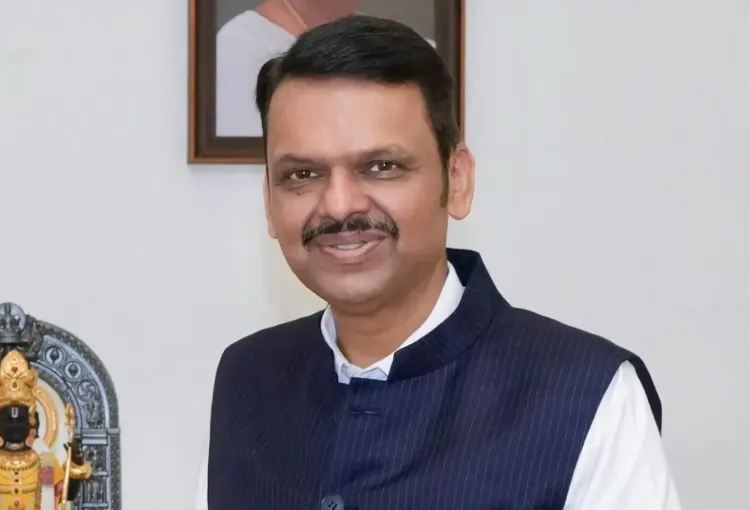
Maharashtra CM Fadnavis orders task forces for Waste-to-CBG projects statewide
Synopsis
Maharashtra Chief Minister Devendra Fadnavis has moved beyond policy rhetoric, ordering dedicated task forces to drive Waste-to-CBG plants across the state. With Mumbai, Vasai-Virar, and Pune's tech corridors designated as priority zones, the Nagpur model by Keva Green is the blueprint — and the cluster-based rollout strategy could quietly become India's most structured state-level bioenergy push.
Key Takeaways
CM Devendra Fadnavis on 13 October 2026 directed the formation of dedicated task forces for Waste-to-CBG projects across Maharashtra .
Projects will be prioritised in Mumbai (BMC) , Vasai-Virar , Mira-Bhayander , Kalyan-Dombivli , Hinjewadi , and Chakan .
Implementation will involve collaboration among private players , oil marketing companies , and urban local bodies .
Keva Green presented its operational Nagpur waste-to-biogas model as a blueprint for statewide scale-up.
A cluster-based processing model will group smaller municipalities to optimise plant capacity and reduce urban land pressure.
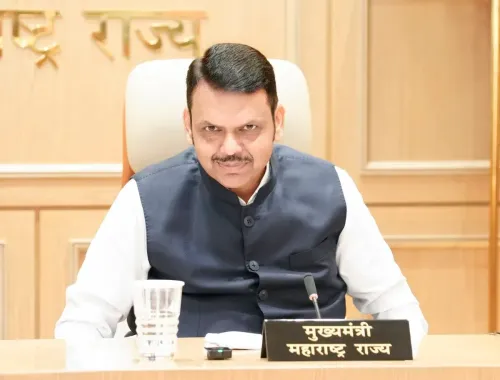
Chief Minister Devendra Fadnavis on Tuesday, 13 October 2026, directed the Maharashtra administration to constitute dedicated task forces to accelerate Waste-to-Compressed Biogas (CBG) projects across the state, signalling a dual push toward garbage-free cities and renewable energy expansion. The directive came during a high-level review meeting on garbage-free city initiatives and CBG project proposals.
Key Directives from the Chief Minister
Fadnavis instructed officials to set up waste processing plants wherever feasible, in line with Maharashtra's CBG policy. He identified four core parameters that must guide project planning: total volume of waste generated, availability of suitable land, technological feasibility, and proximity to existing gas pipelines. Implementation, he said, will hinge on structured collaboration among private sector players, oil marketing companies (OMCs), and urban local bodies (ULBs).
Notably, the Chief Minister stressed that converting organic waste into energy would meaningfully reduce municipal expenditures linked to waste collection and transport — a recurring fiscal pressure on urban local bodies across the state.
Priority Zones: MMR and Pune Industrial Hubs
Given the acute waste management challenges in the Mumbai Metropolitan Region (MMR), Fadnavis specified that projects must be prioritised in Mumbai (BMC), Vasai-Virar, Mira-Bhayander, and Kalyan-Dombivli. Beyond the MMR, IT and industrial corridors — specifically Hinjewadi and Chakan in Pune — were also flagged as high-priority zones, given their high waste generation and existing infrastructure density.
Keva Green Case Study: Nagpur Model
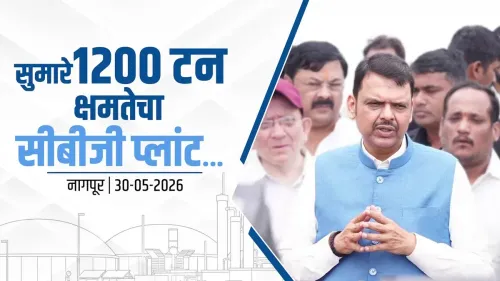
During the meeting, executives from Keva Green — including Executive Director Vrinda Thakur, Managing Director Kedar Waze, and Director Nandan Waze — presented a detailed case study of their operational waste-to-biogas initiative in Nagpur. The presentation outlined a roadmap for replicating and scaling similar units across Maharashtra, drawing on the Nagpur project's learnings in source segregation, land management, grid and pipeline connectivity, and technological deployment.
Cluster Model and Operational Strategy
Discussions centred on a cluster-based processing model that groups adjacent smaller municipalities to optimise processing capacity — a strategy seen as essential for towns that individually lack the waste volumes to justify standalone plants. Officials noted that conducting primary segregation within city limits while routing intensive processing to city outskirts will ease land pressure in dense urban zones. Positioning CBG units adjacent to gas pipelines was also recommended to reduce logistics and transport costs for the compressed gas.
This initiative comes amid India's broader national push for sustainable urban sanitation and bioenergy, with the government's SATAT (Sustainable Alternative Towards Affordable Transportation) scheme already targeting thousands of CBG plants nationally. Maharashtra's structured task-force approach could serve as a replicable model for other large states grappling with urban waste crises.
Point of View
Land, technology, and pipeline proximity — rather than blanket targets. The cluster model is the right call: smaller ULBs have long been the graveyard of standalone biogas ambitions for lack of critical waste mass. The real test will be whether the task forces have procurement autonomy or become another layer of bureaucratic delay. With Mumbai's landfill crisis worsening and SATAT targets nationally underperforming, execution speed — not intent — is what this initiative will ultimately be judged on.
NationPress
13 Oct 2026
Frequently Asked Questions
What are the Waste-to-CBG projects ordered by Maharashtra CM Fadnavis?
These are projects that convert municipal solid waste into Compressed Biogas (CBG), a renewable fuel. CM Devendra Fadnavis on 13 October 2026 directed the formation of dedicated task forces to set up such processing plants across Maharashtra, in line with the state's CBG policy.
Which cities in Maharashtra are prioritised for CBG plants?
The Chief Minister identified Mumbai (BMC), Vasai-Virar, Mira-Bhayander, and Kalyan-Dombivli in the Mumbai Metropolitan Region as top priorities, along with IT and industrial hubs Hinjewadi and Chakan in Pune, given their high waste generation and infrastructure density.
What is the cluster-based model being proposed for CBG projects?
The cluster model groups adjacent smaller municipalities together to achieve sufficient waste volumes for economically viable CBG plants. It allows primary segregation within city limits while routing heavy processing to city outskirts, reducing urban land pressure and logistics costs.
What role does Keva Green play in Maharashtra's CBG initiative?
Keva Green presented a detailed case study of its operational waste-to-biogas plant in Nagpur at the review meeting. The Nagpur model is being considered as a blueprint for scaling similar units across Maharashtra, covering source segregation, land management, and pipeline connectivity strategies.
How will the CBG projects be funded and implemented?
Implementation will be carried out through collaboration among private sector players, oil marketing companies (OMCs), and urban local bodies (ULBs). The projects will follow Maharashtra's existing CBG policy framework, with site selection guided by waste volume, land availability, technology viability, and gas pipeline proximity.