Supreme Court Dismisses Umar Khalid's Bail Review Petition in Delhi Riots Case
Synopsis
In a significant ruling, the Supreme Court has dismissed Umar Khalid's review petition regarding bail denial in a conspiracy case linked to the 2020 Delhi riots. This decision highlights the complexities surrounding legal proceedings and the implications for Khalid's future.
Key Takeaways
Supreme Court's ruling highlights the challenges in conspiracy cases.
The review petition was dismissed due to lack of valid grounds.
Oral hearing requests for review petitions are typically denied.
Significant implications for Khalid's ongoing legal battles.
Other accused individuals received bail while Khalid did not.
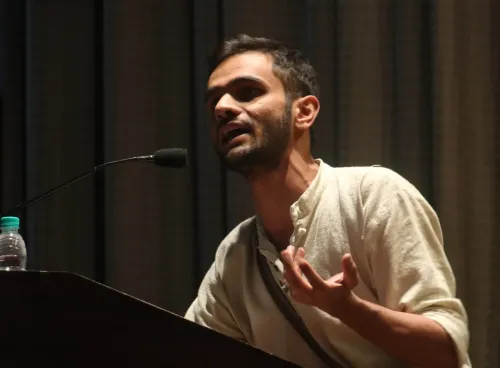
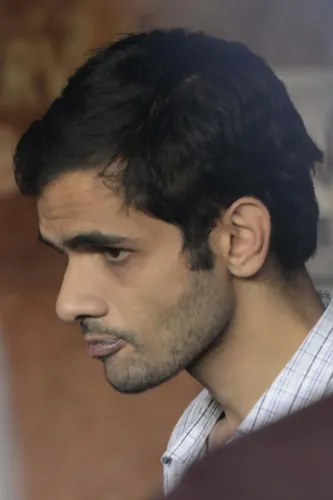
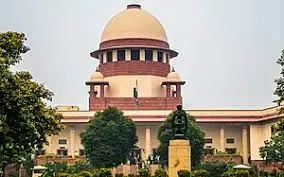
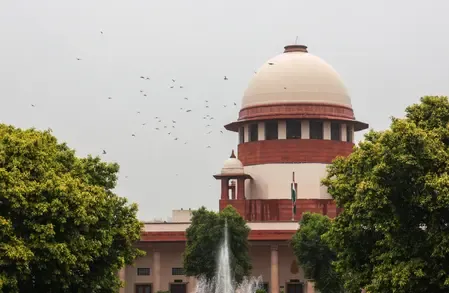
New Delhi, April 20 (NationPress) The Supreme Court has officially rejected a review petition lodged by student activist Umar Khalid, contesting the ruling delivered on January 5 that denied him bail in a significant conspiracy case related to the 2020 Delhi riots.
Upon reviewing the evidence presented, a panel comprising Justices Aravind Kumar and N. V. Anjaria dismissed the appeal, noting that there were no substantial grounds warranting a review.
“After thorough examination of the review petition and the accompanying documents, we find no compelling reason to revisit the judgment dated January 5, 2026. Therefore, the review petition is dismissed,” stated the Bench led by Justice Kumar.
The Supreme Court also turned down a request for an oral hearing regarding the review plea, asserting, “The request for an oral hearing in this review petition is denied.”
Previously, on April 13, senior advocate Kapil Sibal, representing Khalid, brought the matter before the Justice Kumar-led Bench, requesting an open court hearing for the review petition.
“I wish to highlight that my lords are reviewing the petition in Khalid's case. It is on the list for Wednesday, and I kindly request that you consider holding it in an open court,” Sibal had articulated.
The Justice Kumar-led Bench had acknowledged the request, indicating, “We will review the documents, and if deemed necessary, we will convene.”
Typically, review petitions are resolved in chambers under limited circumstances, such as manifest errors in the record, and are seldom conducted in open court.
Earlier in January, the Supreme Court had denied bail to Khalid and co-accused Sharjeel Imam concerning the broader conspiracy case stemming from the 2020 Delhi riots.
Nevertheless, the apex court approved bail for five other defendants: Gulfisha Fatima, Meeran Haider, Shifa Ur Rehman, Mohd Saleem Khan, and Shadab Ahmed, while continuing to deny relief to Imam and Khalid.
In its verdict, the Justice Kumar-led Bench determined that the prosecution's evidence established a prima facie case against Khalid and Imam, invoking the statutory prohibition on bail under Section 43D(5) of the Unlawful Activities (Prevention) Act.
The apex court remarked that the prosecution evidence did not substantiate Khalid's release on bail and suggested his role in planning, mobilizing, and issuing strategic directives.
Countering the argument that Khalid had not committed any overt acts of violence, the court stated that in conspiracy cases, “the law does not require every conspirator to execute the final act, but mandates a prima facie link between the accused and the unlawful design, inferred from cumulative actions.”
The Supreme Court clarified that its remarks were strictly related to the bail issue and would not sway the ongoing trial.
Point of View
The Supreme Court's dismissal of Umar Khalid's review petition on bail is a significant development in the ongoing legal narratives surrounding the 2020 Delhi riots. The ruling underscores the challenges faced by activists and the judiciary's role in matters of public concern.
NationPress
26 Sept 2026
Frequently Asked Questions
What was the outcome of Umar Khalid's review petition?
The Supreme Court dismissed Umar Khalid's review petition challenging the denial of bail in the Delhi riots conspiracy case.
Who represented Umar Khalid in court?
Senior advocate Kapil Sibal represented Umar Khalid during the proceedings.
What does the Supreme Court's ruling imply for Khalid?
The ruling reinforces the legal hurdles Khalid faces, as the court found sufficient grounds to deny his bail.
Were any other defendants granted bail in this case?
Yes, the Supreme Court granted bail to five other accused individuals while denying it to Khalid and Sharjeel Imam.
What legal provision was cited in the bail denial?
The Supreme Court cited Section 43D(5) of the Unlawful Activities (Prevention) Act in its decision.