CM Pema Khandu: Only Results Will Prove Tawang Convention a Success
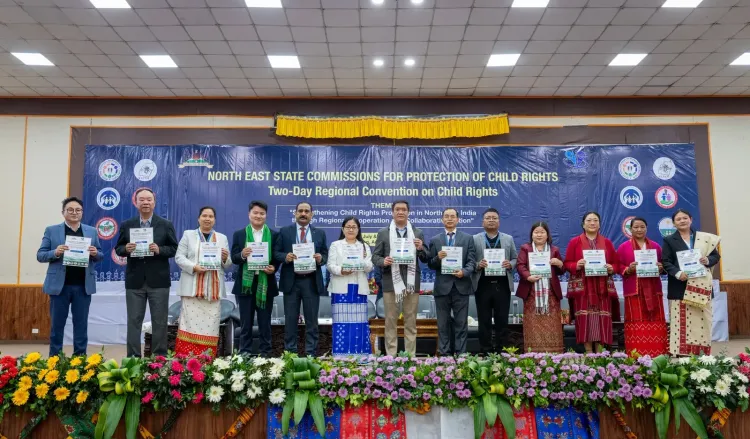
Synopsis
All eight North Eastern states convened in Tawang for the first-ever regional child rights convention. CM Pema Khandu demanded implementation over speeches, setting rescued trafficking victims and retained schoolgirls as the only true measure of success.
Key Takeaways
The North East State Commissions for Protection of Child Rights Convention 2026 in Tawang is the first to unite all eight North Eastern states on a single child rights platform.
CM Pema Khandu stated that conferences and speeches alone do not protect children — only implementation does.
He set specific success benchmarks: trafficked children rescued, missing children reunited with families, girls retained in school, and vulnerable children receiving timely care.
The convention's theme is 'Strengthening Child Rights Protection in North East India through Regional Cooperation and Collaborative Action.' State child rights commissions derive their mandate from the Commissions for Protection of Child Rights Act, 2005 , which established the NCPCR in 2007 .
Follow-up action plans and joint protocols from the eight commissions will be the real test of the Tawang Convention's impact.
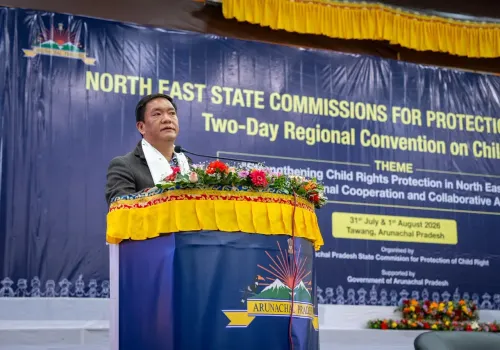
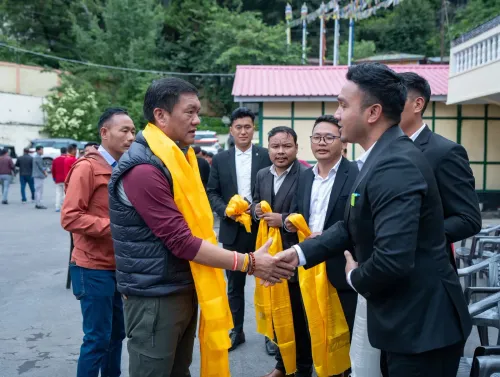
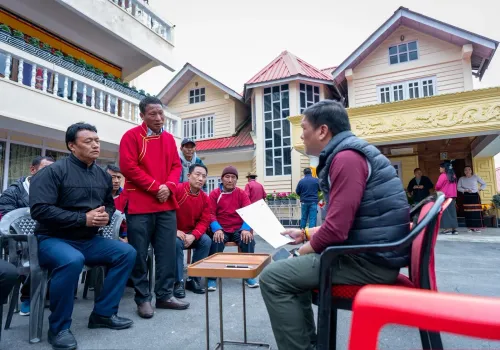
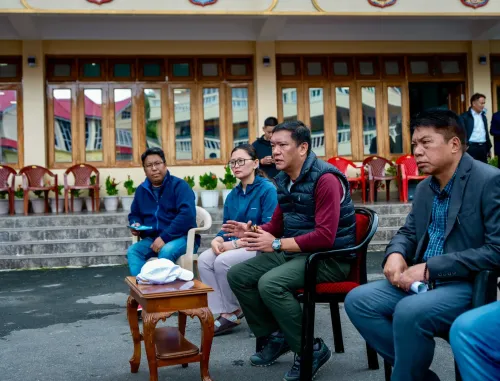
Eight states. One platform. And a Chief Minister who had no patience for ceremony without consequence. Arunachal Pradesh Chief Minister Pema Khandu on Friday, 31 July 2026, called out the gap between conference-room declarations and ground-level child protection as the North East State Commissions for Protection of Child Rights Convention 2026 convened in Tawang — the first time all eight North Eastern states have gathered under a single child rights framework.
Khandu's message was blunt and direct: 'Conferences do not protect children. Speeches do not protect children. Implementation does.' He set three concrete benchmarks for success — a trafficked child rescued, a missing child reunited with family, a girl who stays in school, and vulnerable children receiving timely care. Only then, he said, could the gathering be called the Tawang Convention and be counted a genuine achievement.
Eight States, One Table — Why This Gathering Is Unprecedented
The convention, held under the theme 'Strengthening Child Rights Protection in North East India through Regional Cooperation and Collaborative Action', brought together the State Commissions for Protection of Child Rights of all eight North Eastern states: Arunachal Pradesh, Assam, Manipur, Meghalaya, Mizoram, Nagaland, Sikkim and Tripura. These statutory bodies were enabled by the Commissions for Protection of Child Rights Act, 2005, which also created the National Commission for Protection of Child Rights in 2007. Getting all eight on one platform simultaneously is itself a structural milestone — the region has long coordinated on infrastructure and security through bodies like the North Eastern Council, but a dedicated child rights convergence at this scale is new.Trafficking Routes, Dropout Rates, and the Real Test
The North East faces a specific and serious child protection landscape. Cross-border and inter-state trafficking routes run through the region, school dropout rates — particularly among girls — remain a persistent challenge, and the geography of remote districts makes timely intervention difficult. Khandu's framing of success around trafficking rescues and school retention is not rhetorical; it maps directly onto the region's most documented vulnerabilities. The emphasis on implementation over declarations also mirrors recurring reviews of mechanisms like POCSO and the Juvenile Justice Act, where enforcement gaps rather than legislative gaps have been the recurring finding. What the Tawang Convention produces next — joint protocols, shared data systems, coordinated rescue mechanisms — will determine whether this unprecedented regional alignment translates into measurable outcomes for children on the ground. Khandu has already set the terms of that judgment, publicly and without ambiguity.Point of View
Not merely process-driven. The regional convergence of all eight SCPCRs mirrors a broader central push to strengthen the POCSO and Juvenile Justice enforcement architecture, particularly in geographically challenging border states. Whether the convention produces binding joint protocols or remains a high-level dialogue will reveal how much institutional weight this unprecedented platform actually carries.
NationPress
14 Sept 2026
Frequently Asked Questions
What is the North East State Commissions for Protection of Child Rights Convention 2026?
It is the first-ever convention to bring all eight North Eastern states — Arunachal Pradesh, Assam, Manipur, Meghalaya, Mizoram, Nagaland, Sikkim and Tripura — together on a single child rights platform, held in Tawang under the theme of regional cooperation for child protection.
What did CM Pema Khandu say at the Tawang Convention?
Khandu said conferences and speeches do not protect children — only implementation does. He defined success as rescuing trafficked children, reuniting missing children with families, keeping girls in school, and providing timely care to vulnerable children.
What are State Commissions for Protection of Child Rights?
They are statutory bodies created under the Commissions for Protection of Child Rights Act, 2005, tasked with monitoring and enforcing child rights at the state level, parallel to the National Commission for Protection of Child Rights established in 2007.
Why is Tawang significant as the venue for this convention?
Tawang is a district in Arunachal Pradesh known for its Buddhist heritage and strategic location. Hosting the convention there gives the gathering regional and symbolic significance, with CM Khandu directly linking the event's name to its accountability.
What child protection challenges does North East India face?
The region faces cross-border and inter-state child trafficking routes, high school dropout rates especially among girls, and difficulties in timely intervention due to remote and mountainous geography across several states.