Is Caste Discrimination in India Still a Reality? Kharge Speaks Out
Synopsis
Congress President Mallikarjun Kharge calls out caste discrimination in India, spotlighting a shocking case from Odisha where a Dalit woman’s role as a cook led to an Anganwadi boycott. His remarks shed light on how deeply rooted biases impact the nutrition and development of children, demanding immediate government intervention against such injustices.
Key Takeaways
Caste discrimination remains a critical issue in India.
Parents in Odisha have boycotted an Anganwadi due to caste bias.
Children's development is being hampered by such prejudices.
Legal provisions exist to protect against caste discrimination.
Immediate government intervention is necessary to address these injustices.
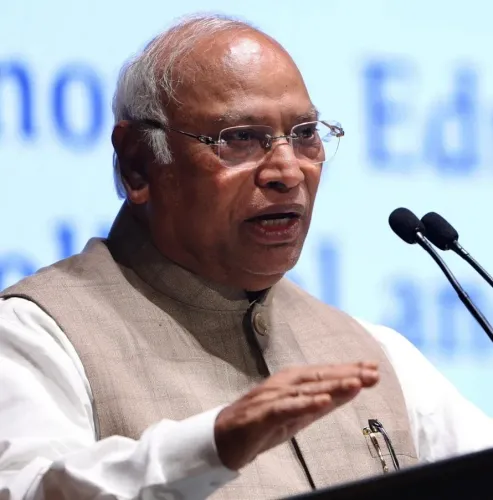
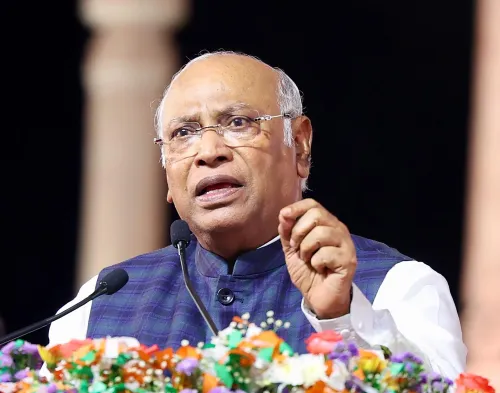
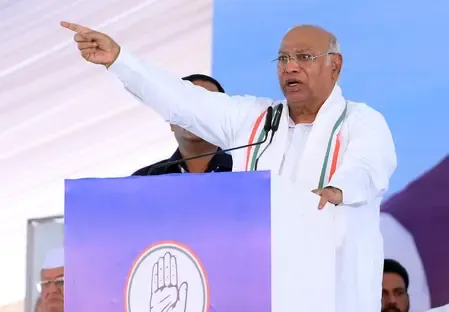
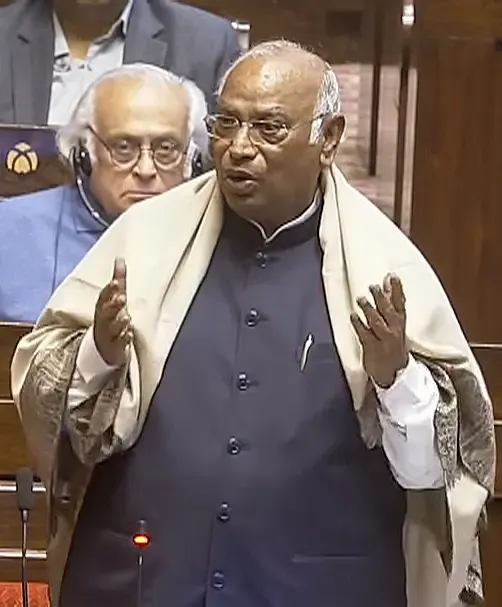
New Delhi, Feb 12 (NationPress) The Leader of Opposition in the Rajya Sabha and Congress President Mallikarjun Kharge on Thursday vehemently denounced the ongoing issue of caste-based discrimination in India, citing a disturbing incident from Odisha where parents have boycotted an Anganwadi centre for three months due to the fact that the helper-cum-cook is a Dalit woman.
Kharge elaborated on how the Anganwadi, which is designed to promote children's physical and cognitive growth through nutrition and early education, has been effectively rendered inactive due to entrenched caste biases.
"An Anganwadi should be a nurturing environment for children," he asserted, highlighting that the ongoing boycott not only deprives young students of essential nutrition but also critically affects their overall development.
He expressed deep concern over the parents' discriminatory behavior towards the Dalit worker, stressing that children should not be punished for the prejudices of adults.
Kharge emphasized that every child is entitled to proper nutrition as per government initiatives aimed at combating malnutrition.
He also criticized similar incidents in other states like Madhya Pradesh, Gujarat, and Chandigarh, where caste discrimination has led to devastating consequences.
He referred to cases in Madhya Pradesh, including an incident where a person urinated on a tribal laborer and a Dalit government employee who tragically took his own life due to alleged workplace harassment and institutional bias in Gujarat.
In Chandigarh, an ADGP from the Dalit community committed suicide, leaving behind a note that spoke of continuous caste discrimination and mental harassment by superiors within the police force.
Kharge pointed out that such occurrences underscore the pervasive nature of caste bias, affecting not only social interactions but also professional settings, thereby undermining the dignity, career advancement, and safety of marginalized communities.
He highlighted that treating individuals differently based on caste is a violation of crucial constitutional rights, including Articles 14 (equality before law), 15 (prohibition of discrimination), and 17 (abolition of untouchability).
Kharge urged the government to address these issues with the seriousness they deserve, ensuring strict and prompt action against those responsible.
"Whenever action is required in such matters, we hear excuses from the government about how Dalits have been marginalized," Kharge remarked sarcastically, calling for immediate action to uphold constitutional values and safeguard vulnerable communities from systemic bias.
Point of View
We stand firmly with the principle that no child should suffer due to societal biases. The recent remarks by Kharge highlight a critical issue that requires our collective attention and action. It is essential for the government and society to address caste discrimination, ensuring that every child receives the support they need for a healthy and prosperous future.
NationPress
23 Sept 2026
Frequently Asked Questions
What was the incident in Odisha that Kharge highlighted?
Kharge highlighted that parents boycotted an Anganwadi centre for three months because the helper-cum-cook is a Dalit woman, showcasing caste discrimination.
What are the implications of this boycott?
The boycott deprives children of essential nutrition and hinders their physical and cognitive development, undermining their rights.
What does Kharge demand from the government?
Kharge demands that the government take serious action against caste discrimination and uphold constitutional values.