Kharif MSP hike 2026-27: Banaskantha farmers thank Modi, Centre for 14-crop boost
Synopsis
The Centre's MSP hike for 14 Kharif crops — set at 1.5 times the cost of production — is drawing strong approval from Gujarat's Banaskantha farmers ahead of the sowing season. For small and marginal cultivators who routinely sell below market price, the revision could be the financial floor they have long needed.
Key Takeaways
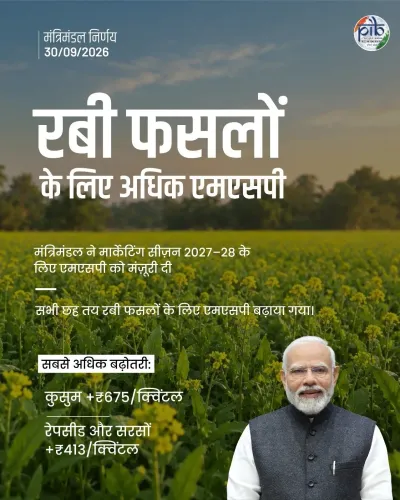
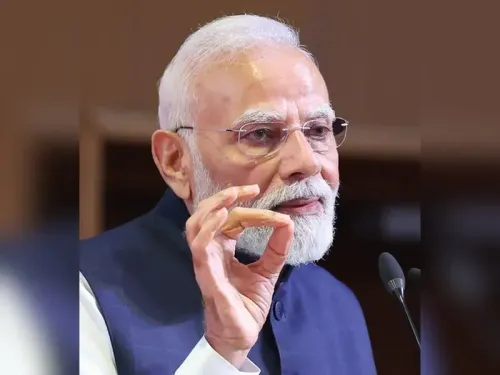
The Centre has approved an MSP hike for 14 Kharif crops for the 2026-27 season at a CCEA meeting chaired by PM Narendra Modi .
The revised MSP is set at 1.5 times the cost of production , a longstanding policy objective of the Union government.
Farmers in Banaskantha, Gujarat — including Jayesh Dave , Jagdish Patel , Kirti Mevada , and Megraj Patel — have publicly welcomed the decision.
The hike is expected to especially benefit small and marginal farmers and encourage cultivation of pulses and oilseeds .
Analysts will watch whether the revised MSP translates into effective farm-gate realisations during procurement operations.
Farmers in Gujarat's Banaskantha district have welcomed the Centre's decision to raise the Minimum Support Price (MSP) for 14 Kharif crops for the 2026-27 season, saying the revision will improve farm incomes and make cultivation more financially viable. The move was approved at a Cabinet Committee on Economic Affairs (CCEA) meeting chaired by Prime Minister Narendra Modi.
Farmers Respond to the Revision
Cultivators across Banaskantha expressed relief at the announcement, saying the revised rates would help them recover input costs and secure better returns. The sentiment was particularly strong among small and marginal farmers, who have historically struggled to get fair prices in open markets.
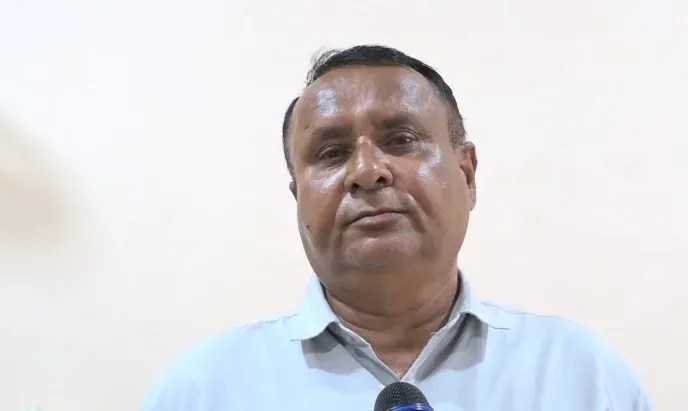
Farmer Jayesh Dave said the government had fixed the MSP at 1.5 times the cost of production, providing meaningful relief to cultivators. 'Prime Minister Narendra Modi has increased the MSP for farmers by fixing it at 1.5 times higher than the cost of production. At the same time, concern has also been shown for the welfare of small and marginal farmers living in villages. Therefore, on behalf of the farmers, we are very grateful to the Prime Minister,' he said.
Farmer Jagdish Patel noted that many growers who sell directly in open markets often receive prices below their expectations. 'The government's decision to increase the MSP rates will benefit farmers. Even those farmers who used to sell their produce directly in the market often got lower prices, so this increased MSP will be highly beneficial for them,' he added.
Pulses and Oilseeds in Focus
Farmers Kirti Mevada and Megraj Patel also expressed gratitude toward Prime Minister Modi and the Union government. According to farmers in the region, the enhanced MSP is expected to encourage cultivation of pulses and oilseeds — crops that are strategically important for India's food security but have seen declining acreage in recent years due to price uncertainty.
Broader Impact on Rural Economy
The Centre's move is being viewed as a significant step toward strengthening the rural economy ahead of the upcoming Kharif sowing season. Farmers said the higher support prices would reduce their dependence on volatile market fluctuations and allow them to plan cultivation with greater confidence.
This comes amid the government's broader Atmanirbhar Bharat push, which has emphasised self-reliance in agriculture through improved price support mechanisms. Notably, the 1.5x cost-of-production formula for MSP has been a stated policy objective of the Centre for several years, and its application across 14 Kharif crops for 2026-27 is being seen as a continuation of that commitment.
What Comes Next
With sowing season approaching, farmers and agricultural bodies will be watching procurement operations closely to ensure that the revised MSP translates into actual market realisations — a gap that has historically existed between announced support prices and effective farm-gate returns.
Point of View
And farmer satisfaction here matters electorally. But the more substantive question is one of implementation: India has a long history of MSP announcements that do not fully reach farmers because procurement infrastructure is uneven across states. The 1.5x formula is sound in principle, yet the gap between announced MSP and actual farm-gate price remains a persistent structural problem. Whether this hike moves that needle depends entirely on how aggressively the government activates procurement agencies in the field — something the announcement itself does not guarantee.
NationPress
21 Oct 2026
Frequently Asked Questions
What is the MSP hike for Kharif crops 2026-27?
The Centre has raised the Minimum Support Price for 14 Kharif crops for the 2026-27 season, setting the revised rates at 1.5 times the cost of production. The decision was approved at a Cabinet Committee on Economic Affairs meeting chaired by Prime Minister Narendra Modi.
Which crops are covered under the Kharif MSP hike?
The MSP revision covers 14 Kharif crops for the 2026-27 season. Farmers in Banaskantha specifically noted that the hike would encourage cultivation of pulses and oilseeds, which are strategically important for India's food security.
How will the MSP hike benefit small and marginal farmers?
Small and marginal farmers often sell their produce in open markets at prices below their cost of production. The revised MSP, set at 1.5 times the cost of production, provides a price floor that reduces exposure to market volatility and improves income stability.
Why are Gujarat's Banaskantha farmers significant in this context?
Banaskantha is one of Gujarat's major agricultural districts, with significant cultivation of pulses and oilseeds. Farmer sentiment here reflects conditions for a large section of small and marginal cultivators in the region ahead of the Kharif sowing season.
What is the Atmanirbhar Bharat connection to the MSP hike?
The MSP revision is part of the Centre's broader Atmanirbhar Bharat agricultural policy, which aims to make farming self-sustaining by ensuring cultivators receive remunerative prices. The 1.5x cost-of-production formula is a key plank of this approach.