Khattar Launches Indore-Ujjain Greenfield Highway, PMAY Housing in MP
Synopsis
Union Power Minister Manohar Lal Khattar joined Madhya Pradesh CM Dr. Mohan Yadav in Sanwer, Indore on June 20 to break ground on the 48-km Indore-Ujjain Greenfield Four-Lane corridor and oversee PMAY-Urban milestones covering more than 80,000 urban homes, linking the project to PM Modi's 'development and heritage' vision.
Key Takeaways
Union Power Minister Manohar Lal Khattar and MP CM Dr.
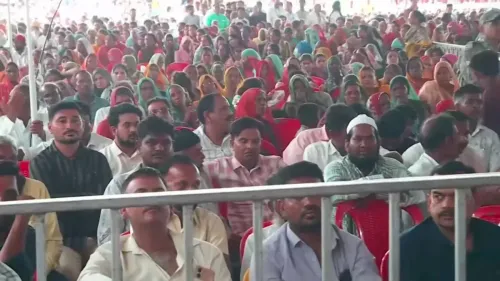
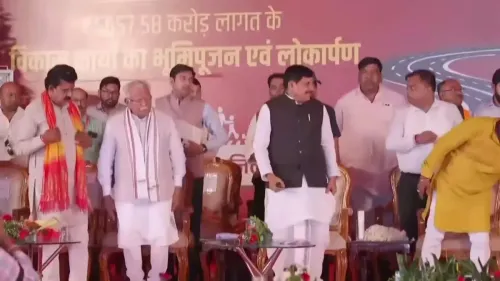
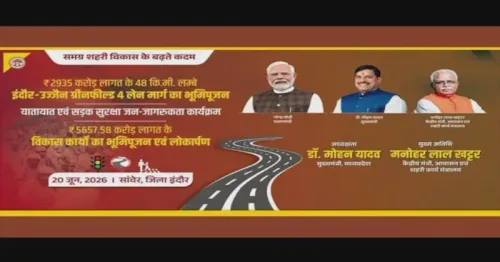
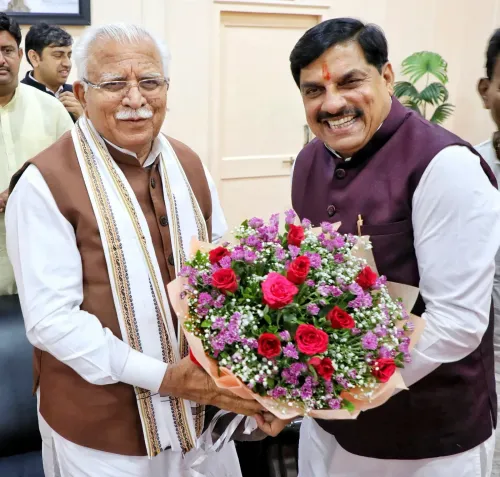
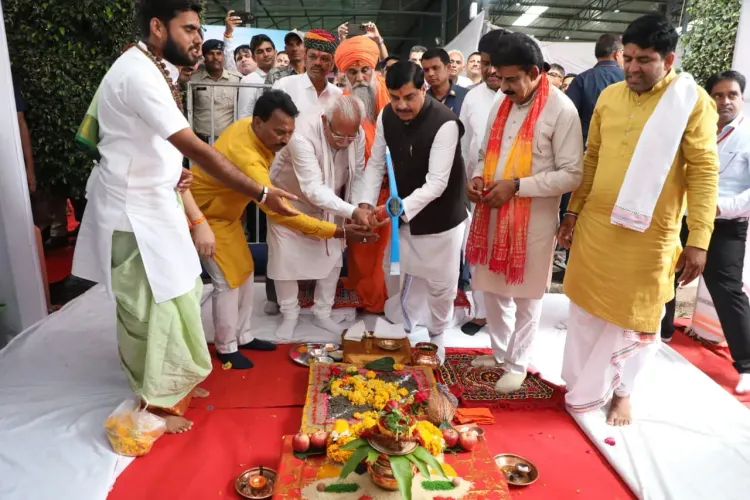
Mohan Yadav jointly held a grand inauguration and ground-breaking event at Sanwer, Indore on June 20, 2026 .
Ground was broken for the 48-kilometre Indore-Ujjain Greenfield Four-Lane Project , an access-controlled highway linking a commercial hub with a major pilgrimage city.
The corridor is planned to connect Pithampur and the Nimad region to the Delhi-Mumbai Economic Corridor , targeting industrial and tourism growth.
Foundation stones were laid for more than 42,000 new urban homes under Pradhan Mantri Awas Yojana (Urban) , while more than 38,000 beneficiaries received completed homes.
The event framed the projects under PM Modi's principle of 'विकास भी, विरासत भी' — combining modern infrastructure with heritage and pilgrimage connectivity.
Union Power Minister Manohar Lal Khattar joined Madhya Pradesh Chief Minister Dr. Mohan Yadav at a large-scale inauguration and ground-breaking ceremony in Sanwer, Indore on Saturday, June 20, 2026, to deliver a package of infrastructure and welfare projects to the people of Madhya Pradesh. The centrepiece was the ground-breaking of the 48-kilometre Indore-Ujjain Greenfield Four-Lane Project, alongside housing milestones under the Pradhan Mantri Awas Yojana (Urban).
Context
Khattar, posting in Hindi on X, described the occasion as 'वृहद लोकार्पण एवं भूमिपूजन कार्यक्रम' — a grand inauguration and ground-breaking programme — framing it under the slogan 'सशक्त मध्यप्रदेश, सशक्त भारत' ('Empowered Madhya Pradesh, Empowered India'). The event brought together central and state government leadership to mark simultaneous progress on road connectivity and urban housing in the state.
The minister invoked Prime Minister Narendra Modi's guiding principle of 'विकास भी, विरासत भी' — 'Development as well as Heritage' — to contextualise the highway project, which links a major commercial city with one of Hinduism's holiest pilgrimage destinations.
Policy Backdrop
The Indore-Ujjain Greenfield Four-Lane Project is an access-controlled highway corridor designed to provide modern, high-speed connectivity between the two cities. Khattar stated that the corridor will also link the Pithampur industrial township and the Nimad region to the Delhi-Mumbai Economic Corridor (DMEC), aiming to accelerate industry, investment, trade, and tourism in central Madhya Pradesh.
The Delhi-Mumbai Economic Corridor, formally announced in 2006 and subsequently master-planned with industrial nodes across multiple states, includes logistics and manufacturing clusters in Madhya Pradesh. Pithampur, near Indore, is already a well-established hub for automotive and engineering industries, making its integration with the DMEC framework strategically significant for the region.
The Pradhan Mantri Awas Yojana (Urban), launched in June 2015, aims to address urban housing shortages through in-situ rehabilitation, affordable housing construction, and credit-linked subsidies. At the Sanwer event, ground was broken for more than 42,000 new urban dwellings under the scheme, while more than 38,000 beneficiaries were handed over completed homes in a simultaneous griha-pravesh (house-warming) ceremony. Various welfare benefits were also distributed to eligible recipients.
Stakeholders and Impact
The most immediate beneficiaries are urban housing recipients in Madhya Pradesh who received keys to completed PMAY-Urban homes, and those whose new units broke ground at the event. The Indore-Ujjain corridor, once built, is expected to benefit pilgrims and tourists travelling to Ujjain — home to the Mahakaleshwar Jyotirlinga, one of the twelve sacred Jyotirlingas — as well as daily commuters between the two cities.
For the industrial sector, the corridor's proposed linkage with the Delhi-Mumbai Economic Corridor is intended to reduce logistics costs and travel time for units in Pithampur and the Nimad belt, potentially attracting fresh investment to the region. The combination of religious-tourism infrastructure with freight connectivity reflects an integration strategy that has been a recurring feature of BJP-led central and state government project packaging.
What's Next
The ground-breaking of the Indore-Ujjain Greenfield Four-Lane Project marks the ceremonial start of the project cycle; land acquisition status and construction timelines will be closely watched by industry and civil society groups in the region. For PMAY-Urban, subsequent allotment and project-completion reports from Madhya Pradesh urban local bodies will determine whether the announced numbers translate into delivered homes on schedule.
The event underscores the continued emphasis on state-centre coordination in BJP-governed states, combining physical infrastructure milestones with social-welfare deliveries — a pattern likely to remain prominent as both levels of government seek to demonstrate on-the-ground development outcomes.
Point of View
The party reinforces its positioning as a custodian of both economic progress and Hindu cultural identity. The linkage to the Delhi-Mumbai Economic Corridor also signals an attempt to attract private investment to Madhya Pradesh's industrial belt, keeping the state competitive in the inter-state race for manufacturing capital. With Khattar — a senior central minister — appearing alongside the state CM, the event also visibly demonstrates Centre-state alignment, a recurring motif in BJP's governance narrative.
NationPress
19 Sept 2026
Frequently Asked Questions
What is the Indore-Ujjain Greenfield Four-Lane Project?
It is a proposed 48-kilometre access-controlled, four-lane highway intended to provide modern, high-speed connectivity between Indore and Ujjain in Madhya Pradesh. Its ground-breaking was performed at Sanwer, Indore on June 20, 2026.
How does the Indore-Ujjain corridor connect to the Delhi-Mumbai Economic Corridor?
According to Union Minister Khattar's announcement, the corridor will link the Pithampur industrial township and the Nimad region to the Delhi-Mumbai Economic Corridor , aiming to boost industry, investment, trade, and tourism in central Madhya Pradesh.
How many PMAY-Urban homes were announced at the Sanwer event?
Ground was broken for more than 42,000 new urban homes under Pradhan Mantri Awas Yojana (Urban) , while more than 38,000 beneficiaries simultaneously received completed homes in a griha-pravesh ceremony at the same event.
Who attended the inauguration event at Sanwer, Indore?
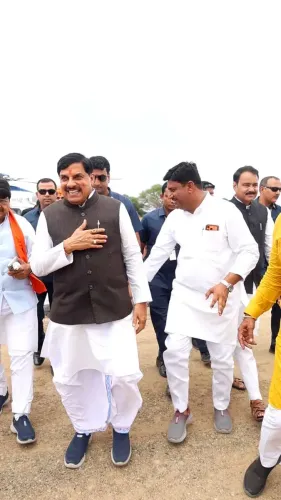
Union Power Minister Manohar Lal Khattar and Madhya Pradesh Chief Minister Dr. Mohan Yadav were the senior leaders present, along with other state government colleagues, at the grand inauguration and ground-breaking programme in Sanwer, Indore .
What is the significance of connecting Indore and Ujjain through a greenfield highway?
Ujjain is one of Hinduism's holiest pilgrimage cities, home to the Mahakaleshwar Jyotirlinga , while Indore is Madhya Pradesh's commercial capital. A modern four-lane corridor is expected to ease pilgrim travel, boost tourism, and reduce commute times for residents and freight between the two cities.