Khattar Distributes Cycles to Girls, Inaugurates Hall in Village Pur
Synopsis
Union Power Minister Manohar Lal Khattar joined a bicycle distribution drive for girls and inaugurated a multipurpose hall at Village Pur on 25 May 2026, praising organiser Sarvkalyan and calling cycles a medium for girls' self-reliance and brighter futures.
Key Takeaways
Union Minister Manohar Lal Khattar participated in a bicycle distribution for girl students at Village Pur on 25 May 2026 .
He also inaugurated a multipurpose hall in the same village during the same visit.
The event was organised by civil society body Sarvkalyan , whose office-bearers Khattar publicly commended.
Khattar described a bicycle as 'the medium through which a daughter's bright future, self-reliance, and bigger dreams are realised.' India's bicycle-for-girls policy tradition dates to Bihar's Mukhyamantri Balika Cycle Yojana (2006) and the national Beti Bachao Beti Padhao scheme (2015) .
NGO-led distributions increasingly complement government schemes in rural areas where state delivery is slower.
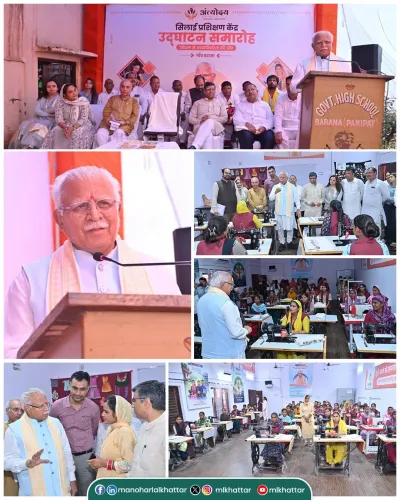
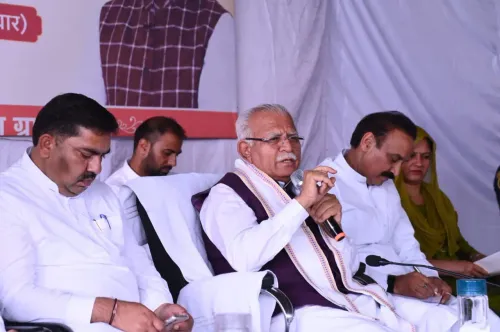
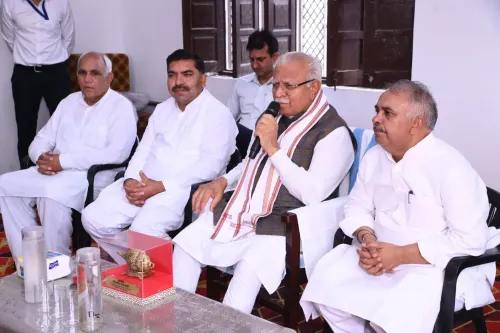
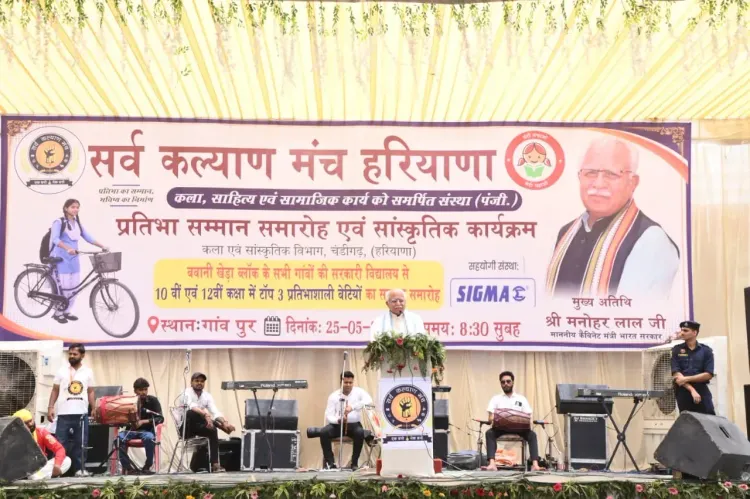
Union Power Minister Manohar Lal Khattar on Monday, 25 May 2026, participated in a bicycle distribution event for girls and inaugurated a multipurpose hall at Village Pur, sharing his reflections on the initiative via a post on X. The event was organised by Sarvkalyan, a social organisation whose officials and conveners the minister publicly commended for the effort.
Posting in Hindi, Khattar wrote: 'एक साइकिल किसी बेटी के लिए मात्र केवल साधन नहीं होती, बल्कि उसके उज्ज्वल भविष्य, आत्मनिर्भरता और बड़े सपनों को साकार करने का माध्यम भी बनती है।' ('A bicycle is not merely a means of transport for a daughter — it becomes the medium through which her bright future, self-reliance, and bigger dreams are realised.') He added that such efforts in society further strengthen faith in education and drive positive change.
Context
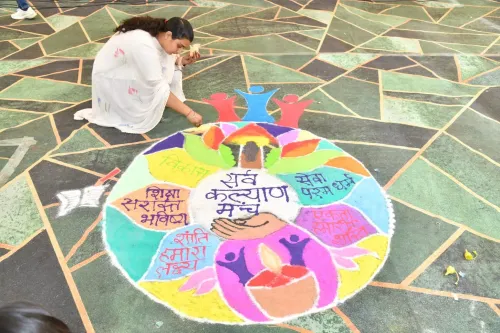
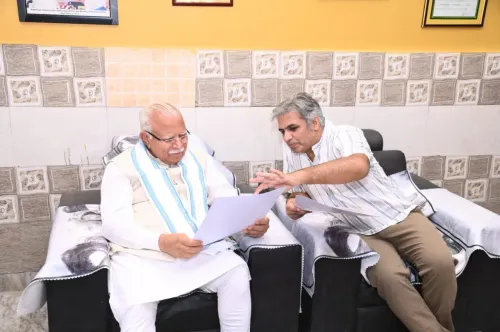
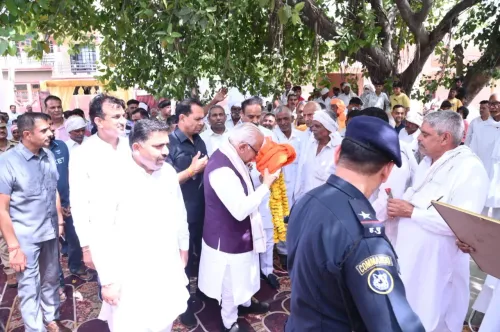
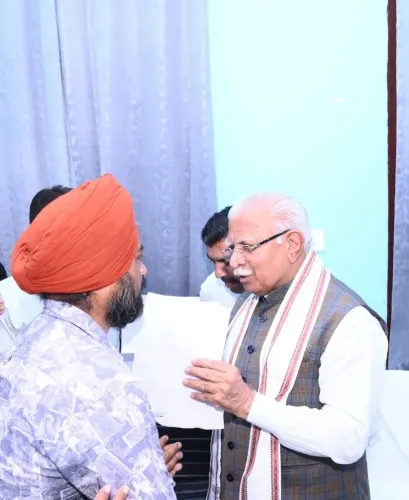
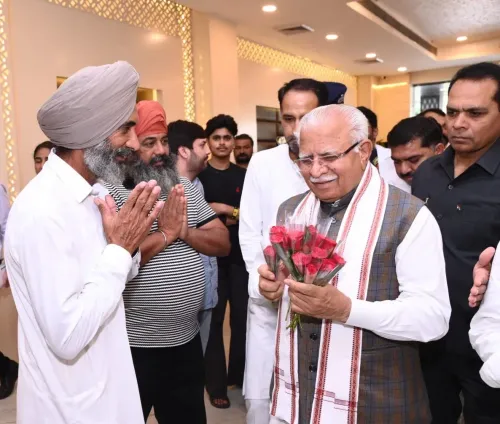
The minister noted that following the cycle distribution, he also had the opportunity to inaugurate a multipurpose hall in Village Pur. He extended heartfelt congratulations and good wishes to all office-bearers and organisers of Sarvkalyan for what he described as an 'innovative initiative.' The event featured four photographs shared alongside the post, documenting the occasion.
Bicycle distribution drives targeting girl students have a long history in India as a grassroots tool to address school dropout rates, particularly in rural areas. The combination of a cycle distribution with the inauguration of a community hall reflects a broader approach of pairing individual material support with shared community infrastructure.
Policy Backdrop
India's tradition of state-backed cycle schemes for girls dates to 2006, when the Bihar government launched the Mukhyamantri Balika Cycle Yojana to distribute bicycles to Class 9 girl students and curb rural dropout rates — a model later replicated across multiple states. At the national level, the Beti Bachao Beti Padhao scheme, launched in 2015, formalised the policy push to promote girls' education and shift societal attitudes toward female empowerment.
NGO-led and community-driven distributions have increasingly complemented these government programmes, filling gaps in areas where state delivery mechanisms are slower to reach. Multipurpose community halls, when built alongside such drives, serve as long-term anchors for local education and welfare activities.
Stakeholders and Impact
Girl students from low-income rural households are the primary beneficiaries of such distributions, for whom the cost and distance of daily commutes to school often determine whether they continue their education. Access to a bicycle has been documented across multiple state-level studies to improve attendance and retention among adolescent girls.
Rural communities at large benefit from the accompanying infrastructure: a multipurpose hall can serve as a venue for health camps, adult literacy programmes, and local governance meetings, multiplying the impact of a single inauguration event. The involvement of a civil society organisation like Sarvkalyan in organising such an event also points to the growing role of NGOs as delivery partners in welfare outreach.
What's Next
Khattar's public endorsement of the initiative may encourage Sarvkalyan and similar organisations to scale such distributions to neighbouring villages in the region. Analysts tracking education-access schemes will watch whether events of this kind inform state-level budget deliberations on girl-child welfare in forthcoming sessions.
With senior Union Ministers visibly associating themselves with grassroots education-access drives, the political signalling around Beti Bachao Beti Padhao's community-level implementation is likely to intensify ahead of any upcoming electoral cycles in states where rural girl enrolment remains a live issue.
Point of View
Community-level welfare delivery, particularly around girl-child education. The pairing of a material benefit (cycles) with durable infrastructure (a multipurpose hall) is a deliberate optic: it frames the party as invested in both immediate access and long-term community development. Coming from a minister whose primary portfolio is Power and Housing, the outreach underscores how BJP leaders are expected to remain active in social-welfare spaces well beyond their official remit. This pattern is likely to intensify in states like Haryana, where rural female enrolment and empowerment remain politically salient issues.
NationPress
25 Sept 2026
Frequently Asked Questions
Why did Manohar Lal Khattar distribute bicycles to girls?
Khattar participated in a bicycle distribution organised by Sarvkalyan to support girls' access to education, describing cycles as a means of self-reliance and a pathway to a brighter future for daughters.
What is the Beti Bachao Beti Padhao scheme?
Beti Bachao Beti Padhao is a national scheme launched in 2015 to promote girls' education and counter gender-biased practices; it forms the broader policy backdrop for events like the Village Pur bicycle distribution.
What is the history of bicycle distribution schemes for girls in India?
India's bicycle-for-girls tradition began with Bihar's Mukhyamantri Balika Cycle Yojana in 2006 , which distributed cycles to Class 9 girls to reduce dropout rates; multiple states have since adopted similar programmes.
Who is Sarvkalyan and what did they organise?
Sarvkalyan is a social organisation that organised the bicycle distribution drive for girl students and the multipurpose hall inauguration at Village Pur, for which Khattar publicly congratulated its office-bearers.
What is the significance of a multipurpose hall in a village?
A multipurpose community hall serves as a long-term venue for education activities, health camps, and local governance meetings, amplifying the impact of welfare drives held in rural areas.