Khattar Hails 'Selfie With Daughter' as a Global Movement
Synopsis
Union Power Minister Manohar Lal Khattar has lauded the 'Selfie With Daughter' campaign, started by former Bibipur sarpanch Sunil Jaglan in Haryana's Jind district, as a global people's movement that has helped shift attitudes toward daughters and contributed to improved gender ratios in Haryana.
Key Takeaways
Union Power Minister Manohar Lal Khattar publicly praised the 'Selfie With Daughter' campaign on 25 May 2026 .
The campaign was started by Sunil Jaglan , former sarpanch of Bibipur village, Jind district, Haryana , around 2014 .
Khattar described the initiative as a movement to establish 'the honour, acceptance, and dignified place of daughters in society.' The campaign is cited alongside the Beti Bachao Beti Padhao scheme, launched in January 2015 across 100 districts , as part of Haryana's broader gender-ratio correction effort.
Khattar credited sustained community awareness drives for contributing to a notable improvement in Haryana's gender ratio .
Future NFHS and SRS data releases will provide statistical confirmation of the trend Khattar referenced.
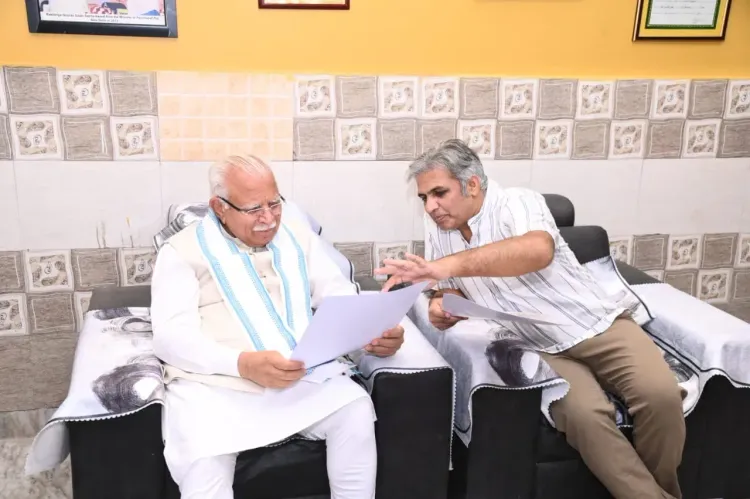
Union Power Minister Manohar Lal Khattar on Monday, 25 May 2026, paid tribute to the 'Selfie With Daughter' campaign, calling it a people's movement that transcended its origins as a local social media initiative to become a global campaign for the dignity and empowerment of daughters.
Context
In his post, Khattar highlighted the campaign's roots, writing: 'कुछ अभियान समय के साथ जनआंदोलन बन जाते हैं' ('Some campaigns become people's movements over time'). He credited Sunil Jaglan, former sarpanch of Bibipur village in Jind district, Haryana, as the man who started what grew into a globally recognised drive for respecting and celebrating daughters. The minister described the campaign as 'not merely a medium of a photograph or technology, but a powerful effort to establish the honour, acceptance, and dignified place of daughters in society.'
Jaglan launched the Selfie With Daughter initiative from Bibipur around 2014, encouraging fathers and families to share photographs with their daughters on social media. The campaign received state-level support and was later cited within broader national women-empowerment frameworks, resonating with audiences well beyond Haryana.
Policy Backdrop
The campaign emerged against the backdrop of Haryana's historically skewed child sex ratio, a concern that prompted both legal enforcement against sex-selective practices and community-driven awareness efforts across the state. The Beti Bachao Beti Padhao scheme, launched by the Government of India in January 2015, initially covered 100 districts including several in Haryana, and provided an institutional framework that complemented grassroots initiatives like Selfie With Daughter.
Since the early 2010s, central and state governments have combined regulatory action with digital and community campaigns in states reporting skewed child sex ratios. Haryana, alongside Punjab and parts of Rajasthan, has been a focal state for such interventions. Khattar noted that sustained social awareness and public participation of this kind have contributed to 'a notable improvement in the gender ratio in Haryana today.'
Stakeholders and Impact
The primary beneficiaries of campaigns such as Selfie With Daughter are rural families in Haryana and girl children across communities where son-preference has historically been pronounced. By anchoring the message in a simple, shareable act — a selfie — Jaglan's initiative lowered the barrier for ordinary families to publicly affirm the value of their daughters, creating a visible social norm shift.
Khattar's acknowledgement from a national ministerial platform amplifies the campaign's legacy and signals continued political will behind women's empowerment messaging. The minister framed the spirit of honouring daughters as 'giving society a new direction,' linking local community action to a broader civilisational aspiration.
What's Next
Attention will now turn to forthcoming data releases — including the next round of the National Family Health Survey (NFHS) or the Sample Registration System (SRS) — which will offer a statistical measure of how far Haryana's child sex ratio has moved. Analysts and policymakers will also watch whether community campaigns of this kind are formally integrated into the next phase of centrally sponsored women-empowerment programmes, potentially giving them renewed institutional momentum.
Point of View
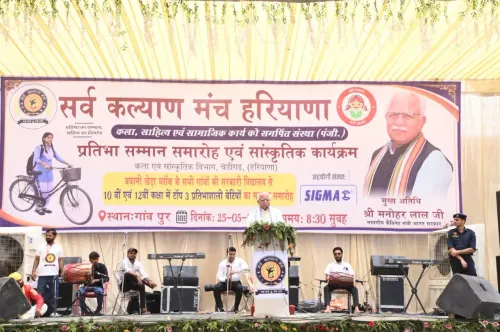
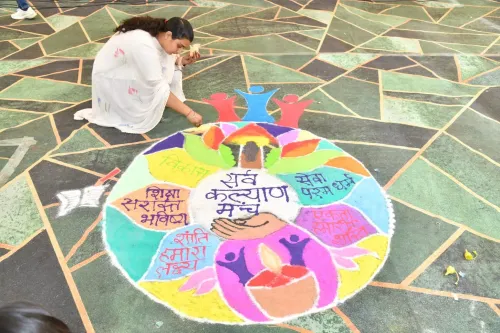
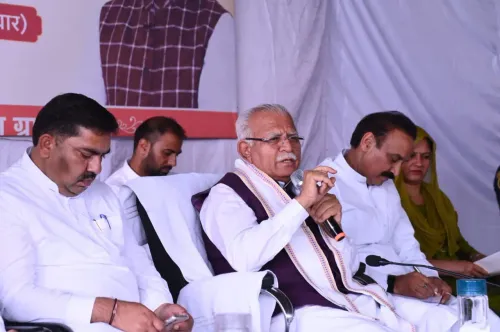
Connecting a grassroots Haryana initiative to the broader BJP-led narrative of women's empowerment that has anchored central welfare policy since 2014. By invoking Sunil Jaglan's campaign alongside implicit references to Beti Bachao Beti Padhao, he reinforces the party's claim that government and community action together have moved the needle on one of Haryana's most intractable social indicators. The timing — a quiet Monday post with four images — suggests this is less breaking news and more sustained brand-building around the welfare agenda ahead of any forthcoming data on sex ratios. It also keeps the Haryana connection alive for a minister who built his political identity as the state's chief minister before moving to the Union Cabinet.
NationPress
10 Oct 2026
Frequently Asked Questions
What is the 'Selfie With Daughter' campaign?
The 'Selfie With Daughter' campaign is a social media initiative started around 2014 by Sunil Jaglan, former sarpanch of Bibipur village in Jind district, Haryana, encouraging families to share photographs with their daughters to promote respect and acceptance of girl children.
Who is Sunil Jaglan?
Sunil Jaglan is the former sarpanch of Bibipur village in Jind district, Haryana, who founded the 'Selfie With Daughter' campaign, which later gained recognition as a global awareness drive for daughters' dignity and empowerment.
What did Manohar Lal Khattar say about the Selfie With Daughter campaign?
Union Power Minister Manohar Lal Khattar called the campaign a 'people's movement' and credited it as a powerful effort to establish the honour and dignified place of daughters in society, also linking it to improvements in Haryana's gender ratio.
Has Haryana's child sex ratio improved?
Haryana has recorded gradual improvement in its child sex ratio through a combination of legal enforcement, community campaigns like Selfie With Daughter, and government schemes such as Beti Bachao Beti Padhao, though the full extent of improvement will be confirmed by forthcoming NFHS and SRS data.
What is Beti Bachao Beti Padhao?
Beti Bachao Beti Padhao is a Government of India scheme launched in January 2015, initially covering 100 districts including several in Haryana, aimed at improving the child sex ratio and supporting girls' education and empowerment.