Khattar Meets South Africa's Energy Minister at BRICS Meet in Gurugram
Synopsis
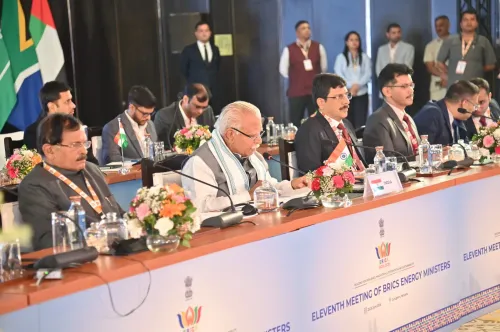
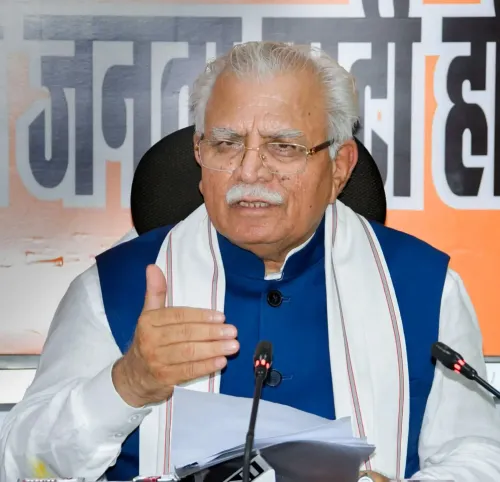
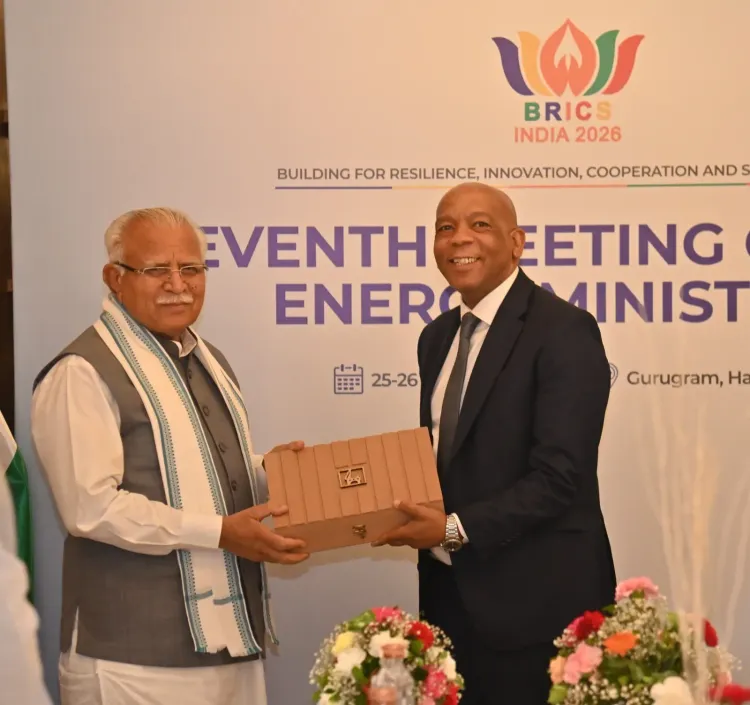
Union Power Minister Manohar Lal Khattar met South Africa's Minister of Electricity and Energy Kgosientsho Ramokgopa on the sidelines of the 11th BRICS Energy Ministers' Meeting in Gurugram on 25 June 2026, focusing on deepening bilateral cooperation in energy security and clean energy transition under India's 2026 BRICS Chairship.
Key Takeaways
Manohar Lal Khattar , Union Minister of Power, held bilateral talks with South Africa's Minister of Electricity and Energy Kgosientsho Ramokgopa on 25 June 2026 .
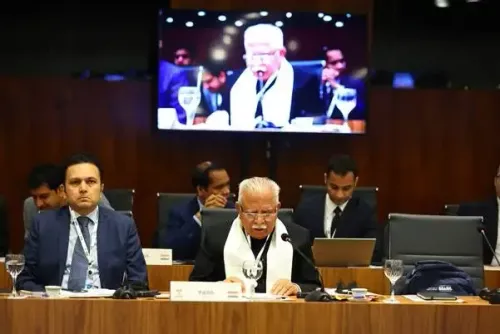
The meeting took place on the sidelines of the 11th BRICS Energy Ministers' Meeting in Gurugram .
Discussions focused on energy security , clean energy transition , and sustainable development .
India is hosting the 2026 BRICS Chairship , using multilateral platforms to deepen bilateral energy partnerships.
India targets 500 GW of non-fossil fuel capacity by 2030 ; South Africa is pursuing a just energy transition from coal.
Outcome documents or working groups on areas such as green hydrogen and grid integration may follow from the broader 2026 BRICS Summit process.
Union Power Minister Manohar Lal Khattar met Kgosientsho Ramokgopa, Minister of Electricity and Energy of the Republic of South Africa, on the sidelines of the 11th BRICS Energy Ministers' Meeting in Gurugram on Thursday, 25 June 2026. The bilateral exchange centred on deepening India-South Africa cooperation in the energy sector, with both sides reaffirming commitments to energy security, clean energy transition, and sustainable development.
Context
Khattar shared details of the meeting on X, stating that discussions were aimed at 'deepening India-South Africa cooperation in the energy sector' and 'reaffirming our shared commitment to advancing energy security, clean energy transition, and sustainable development through stronger bilateral engagements.' The meeting took place on the margins of the 11th BRICS Energy Ministers' Meeting, which India is hosting as part of its 2026 BRICS Chairship.
The encounter brings together two nations with distinct but complementary energy profiles. India is aggressively scaling renewable capacity, targeting 500 GW of non-fossil fuel-based power by 2030, while South Africa is navigating a prolonged electricity crisis and pursuing a just energy transition away from coal dependence.
Policy Backdrop
India and South Africa formalised energy cooperation commitments under their Joint Statement on Strategic Partnership in 2018, which included pledges to expand collaboration in renewable energy and electricity infrastructure. The two countries are also longstanding partners within the BRICS framework, which has held annual Energy Ministers' meetings since 2015 to coordinate on energy security and clean technology transfer.
India's 2026 BRICS Chairship has positioned New Delhi as a key voice for the Global South on energy transition diplomacy. Bilateral outreach on the sidelines of multilateral forums such as this meeting is a consistent feature of that strategy, allowing ministers to pursue focused, country-specific discussions beyond the broader group agenda.
Stakeholders and Impact
Renewable energy developers, power utilities, and grid technology firms in both countries stand to benefit from any follow-through on cooperation frameworks discussed at such meetings. For South Africa, engagement with India — which has rapidly scaled solar and wind capacity — offers a potential model and source of technology partnership as it works to stabilise its electricity grid.
For India, deepening ties with South Africa reinforces its broader diplomatic objective of leading developing-world coalitions on equitable energy transition, a theme that has featured prominently throughout India's BRICS Chairship. Consumers and industry in both nations are the ultimate stakeholders in any energy security gains that result from such bilateral dialogue.
What's Next
Analysts and industry observers will watch for outcome documents, memoranda of understanding, or the formation of bilateral working groups on specific areas such as grid integration or green hydrogen, which could emerge from the broader 2026 BRICS Summit process. Any follow-up ministerial-level engagement between India and South Africa on energy would signal that the Gurugram discussions produced actionable commitments beyond the diplomatic exchange.
As India steers the BRICS agenda through 2026, the depth of bilateral energy partnerships it cultivates — particularly with fellow members navigating the coal-to-clean transition — will be a measure of how effectively it translates chairship influence into lasting multilateral outcomes.
Point of View
South Africa is a strategically useful partner — a fellow BRICS member with a coal-heavy grid actively seeking transition pathways, making it receptive to Indian expertise in scaling renewables at speed. The meeting also reinforces India's self-positioning as the Global South's lead voice on equitable energy transition, a narrative it has cultivated since its G20 presidency. Whether the diplomatic warmth translates into bankable agreements — on green hydrogen, grid technology, or investment corridors — will determine whether this Chairship yields lasting energy diplomacy or remains largely symbolic.
NationPress
25 Jun 2026
Frequently Asked Questions
What was discussed at the India-South Africa energy meeting at BRICS 2026?
Union Power Minister Manohar Lal Khattar and South Africa's Minister of Electricity and Energy Kgosientsho Ramokgopa discussed deepening bilateral cooperation in energy security, clean energy transition, and sustainable development at the 11th BRICS Energy Ministers' Meeting in Gurugram on 25 June 2026.
Where was the 11th BRICS Energy Ministers' Meeting held?
The 11th BRICS Energy Ministers' Meeting was held in Gurugram, India, as part of India's 2026 BRICS Chairship.
Who is Kgosientsho Ramokgopa?
Kgosientsho Ramokgopa is the Minister of Electricity and Energy of the Republic of South Africa, overseeing the country's efforts to resolve its national electricity crisis and pursue a just energy transition.
What is India's energy target by 2030?
India has set a target of achieving 500 GW of non-fossil fuel-based power generation capacity by 2030, a goal that underpins its international energy diplomacy.
What could come out of India-South Africa BRICS energy talks?
Potential outcomes include memoranda of understanding, bilateral working groups on grid integration or green hydrogen, and cooperation frameworks that could be formalised at the broader 2026 BRICS Summit.