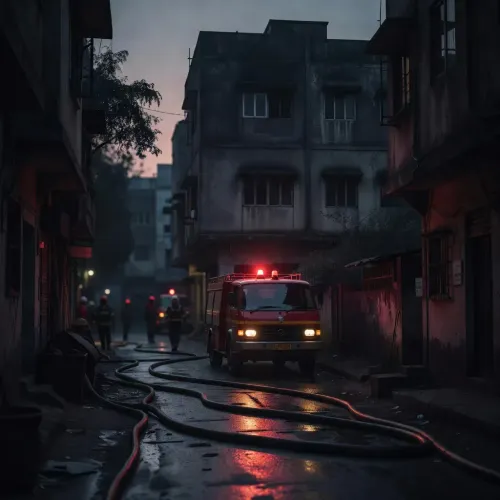
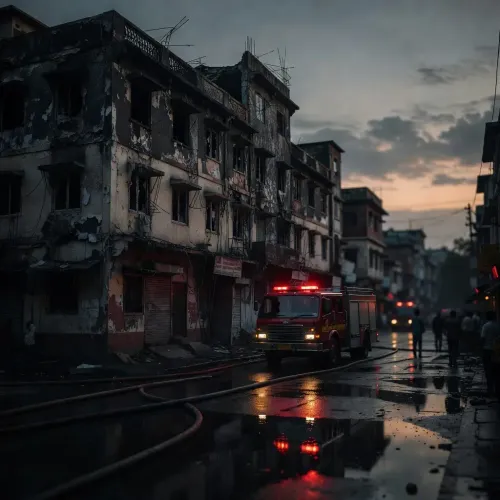
Khattar Mourns Lives Lost in Malviya Nagar Hotel Fire Tragedy
Synopsis
Union Power and Housing Minister Manohar Lal Khattar voiced deep anguish on X over a fatal fire at a hotel in Delhi's Malviya Nagar, conveying condolences to bereaved families and praying for the swift recovery of the injured, as attention turns to casualty figures and fire-safety compliance.
Key Takeaways
Union Power Minister Manohar Lal Khattar issued a public condolence message over a hotel fire in Malviya Nagar, South Delhi.
The Hindi-language post expressed grief for families that lost loved ones and prayers for the injured.
Khattar also holds the Housing and Urban Affairs portfolio, which oversees urban-development frameworks.
Malviya Nagar hosts several budget hotels and guesthouses in a densely built-up South Delhi locality.
Focus will shift to official casualty figures, cause-of-fire findings and fire-safety inspections of similar properties.
Union Power Minister Manohar Lal Khattar on Wednesday expressed deep anguish over a fatal fire at a hotel in Malviya Nagar, South Delhi, offering condolences to the bereaved families and praying for the swift recovery of those injured. The senior BJP leader, who also holds the Housing and Urban Affairs portfolio, posted his message on X shortly after news of the incident emerged.
In his post, written in Hindi, Khattar said he was 'deeply distressed by the tragic incident of fire at a hotel in Delhi's Malviya Nagar' and conveyed his 'heartfelt condolences to the families who lost their loved ones in this heart-wrenching event.' He added a prayer that 'the departed souls find a place at the feet of the divine' and that the bereaved be given strength to bear the loss, while wishing the injured a 'speedy and complete recovery.'
Context
Malviya Nagar is a densely built-up locality in South Delhi, home to residential colonies, college hostels, markets and a clutch of mid-budget hotels and guesthouses catering to students, travellers and visitors to nearby hospitals. Fires in such mixed-use buildings have repeatedly raised concerns about narrow lanes, blocked exits and overloaded electrical infrastructure.
Khattar's message was among the early political responses to the incident. As Union Minister of Housing and Urban Affairs, his portfolio places him at the intersection of urban building standards and municipal governance, lending weight to his expression of grief beyond a routine condolence note.
Policy backdrop
Hotel and commercial-building fires in Indian cities typically reopen debate around enforcement of the National Building Code and state-level fire-safety rules administered by municipal corporations and fire services. The Ministry of Housing and Urban Affairs sets broader urban-development frameworks, while licensing and inspection of hotels falls under civic agencies and the Delhi Fire Service.
Past tragedies in the capital, including fires at small hotels and guesthouses in central Delhi over the past decade, have led to periodic compliance drives, with inspectors checking sprinkler systems, emergency exits, kitchen safety and electrical wiring. These drives, however, tend to lose momentum once public attention shifts.
Stakeholders and impact
The immediate stakeholders are the families of the deceased and the injured, many of whom in such incidents turn out to be out-of-town guests or low-income workers staying in budget accommodation. Hotel owners in the vicinity also face scrutiny, as do local civic and fire-safety officials responsible for routine inspections.
For the political leadership, condolence statements such as Khattar's are also a signal to administrative machinery that the incident is being tracked at the highest levels. Senior BJP figures have in recent years used X to acknowledge urban tragedies quickly, often before official casualty figures are released.
What's next
Attention will now turn to official confirmation of the casualty count, identification of victims and the cause-of-fire inquiry, which typically involves the Delhi Police and the fire service. Municipal authorities may follow up with notices to similar properties in Malviya Nagar and adjoining areas, asking operators to produce updated fire no-objection certificates.
If preliminary findings point to safety violations, pressure is likely to mount on the city administration to launch a wider audit of budget hotels and guesthouses in South Delhi. For Khattar, whose dual charge spans power infrastructure and urban housing, the incident underlines the persistent gap between codified safety standards and on-ground compliance in India's rapidly expanding urban hospitality sector.
Point of View
Signalling political attention even before official figures emerge. What makes this post notable is that Khattar holds the Housing and Urban Affairs charge, placing him directly in the policy chain governing building safety. Hotel fires in Indian metros tend to trigger short bursts of compliance activity that fade quickly. The real test will be whether this incident prompts a sustained audit of budget hospitality properties in Delhi.
NationPress
18 Oct 2026
Frequently Asked Questions
What did Manohar Lal Khattar say about the Malviya Nagar hotel fire?
Khattar said he was deeply distressed by the tragic fire at a hotel in Delhi's Malviya Nagar, offered condolences to the families of those killed, prayed for the departed souls and wished the injured a speedy recovery, in a Hindi-language post on X.
Where is Malviya Nagar located in Delhi?
Malviya Nagar is a locality in South Delhi, known for its residential colonies, markets, student housing and several mid-budget hotels and guesthouses.
Which portfolios does Manohar Lal Khattar hold in the Union government?
Manohar Lal Khattar serves as the Union Minister of Power and Union Minister of Housing and Urban Affairs. He is a senior BJP leader and a former Chief Minister of Haryana.
What rules govern fire safety in Delhi hotels?
Fire safety in Delhi hotels is regulated through the National Building Code and rules enforced by municipal corporations and the Delhi Fire Service, which issues fire no-objection certificates after inspections of exits, alarms, sprinklers and electrical systems.
What happens next after a fatal hotel fire like this?
Authorities typically confirm casualty figures, register a case, and launch a cause-of-fire inquiry involving the police and fire service. Civic bodies often follow up with compliance notices and inspections of similar properties in the area.