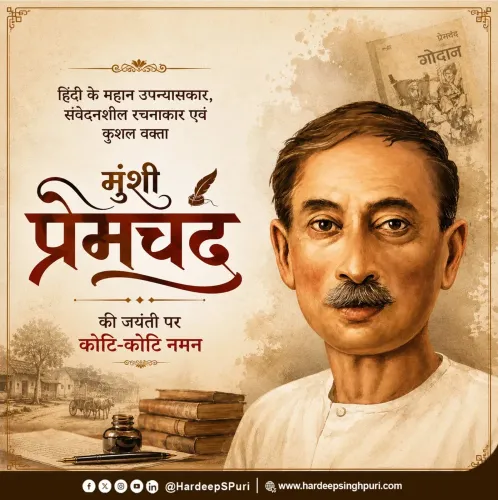
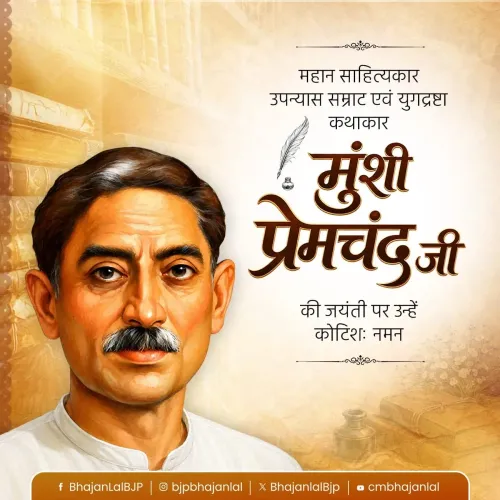
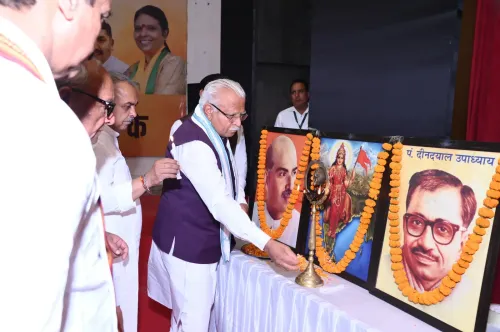
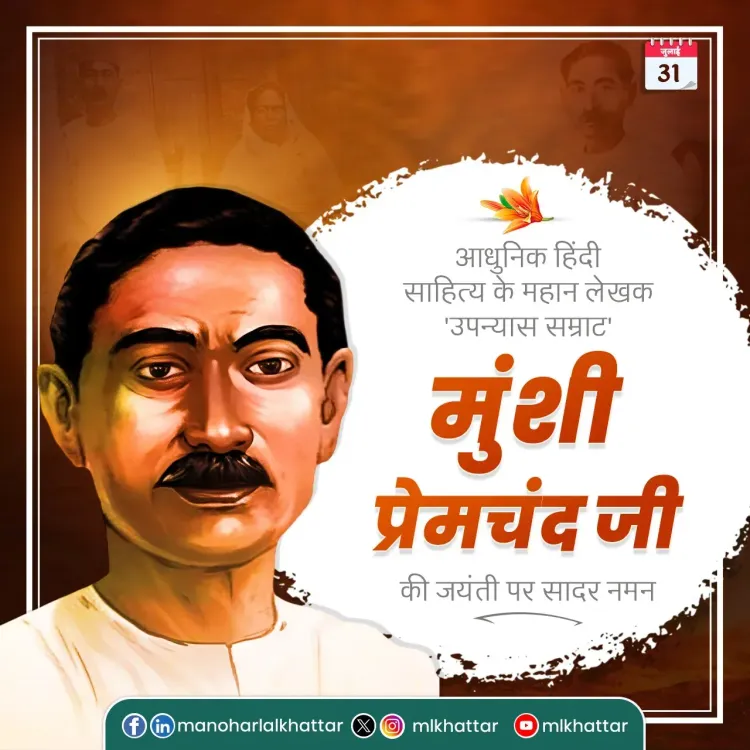
Khattar pays tribute to Munshi Premchand on his birth anniversary
Synopsis
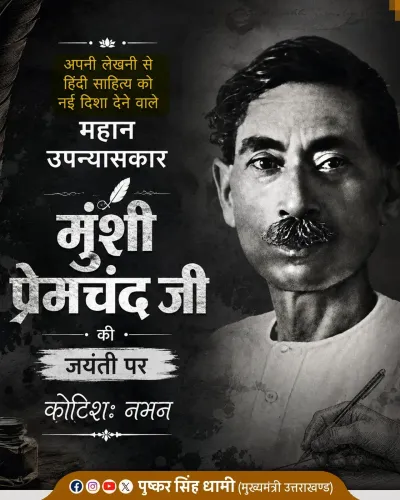
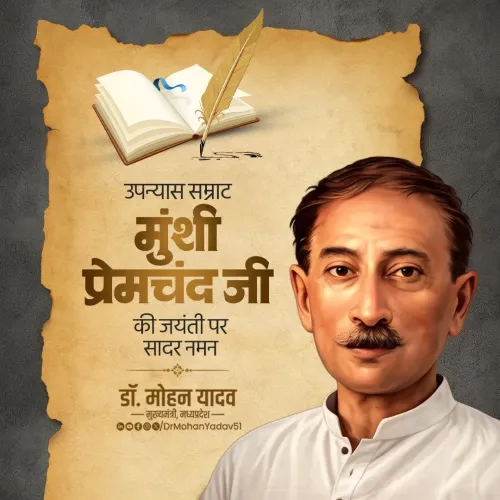
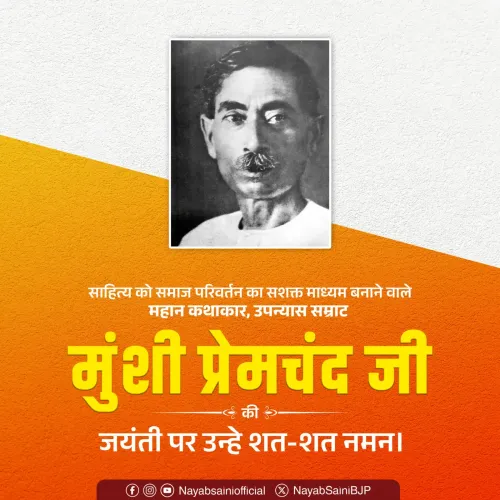
Union Power Minister Manohar Lal Khattar on 31 July 2026 honoured Munshi Premchand on his birth anniversary, calling the novelist the 'emperor of modern Hindi literature' whose timeless works continue to guide Indian society.
Key Takeaways
Union Power Minister Manohar Lal Khattar paid tribute to Munshi Premchand on his birth anniversary, 31 July 2026 .
Khattar described Premchand as aadhunik Hindi ke upanyas samrat — 'the emperor of the modern Hindi novel.' Premchand (1880–1936) was born in Lamhi, Varanasi and wrote extensively on rural poverty, caste, and social reform.
His works, including Godaan and Nirmala , remain part of school and university curricula across India.
Premchand Jayanti is observed annually by government bodies, educational institutions, and literary organisations nationwide.
A century after his pen first gave voice to India's forgotten millions, Union Power Minister Manohar Lal Khattar joined the nation on Friday, 31 July 2026, in honouring Munshi Premchand — the writer who made rural India's anguish impossible to ignore.
Posting in Hindi on X, Khattar described Premchand as 'aadhunik Hindi ke upanyas samrat' — 'the emperor of the modern Hindi novel' — and saluted him as a towering literary figure who held a mirror to the social problems of his era. 'His sensitive and timeless works continue to give new direction to the country and society even today,' the Minister wrote.
The writer who made poverty literature
Munshi Premchand (1880–1936) transformed Hindi-Urdu fiction by centering it on peasants, women, and the marginalised — people who had rarely existed in Indian literature before him. His novels and short stories, written across four decades of colonial rule, dissected caste oppression, rural debt, and widow remarriage with a clarity that still unsettles. Works like Godaan and Nirmala remain standard texts in school and university syllabi across India.A ritual of cultural memory
Premchand Jayanti on 31 July draws tributes from political leaders, educators, and literary institutions every year — a reflection of how deeply his work is woven into the national curriculum and cultural self-image. Khattar's post fits that pattern of official observance, but the language he chose — 'timeless,' 'new direction' — underlines a continuing institutional belief that Premchand's social critique retains relevance well beyond the classroom. The works of a man born in Lamhi village, Varanasi, in 1880 still shape how millions of Indian students first encounter questions of justice, class, and dignity. That is the quiet, durable power Khattar's tribute points toward.Point of View
But it signals the BJP-led government's continued investment in anchoring its public identity to mainstream Hindi literary heritage. Premchand's social-reform themes — caste, rural poverty, women's dignity — sit in complex tension with contemporary political debates, making such tributes both safe and symbolically loaded. The consistent inclusion of Premchand in government messaging reflects a broader pattern of appropriating progressive literary icons for national-unity optics. Whether that acknowledgement translates into policy aligned with Premchand's themes is the question his readers are likely to keep asking.
NationPress
31 Jul 2026
Frequently Asked Questions
When is Munshi Premchand Jayanti celebrated?
Munshi Premchand Jayanti is celebrated on 31 July every year, marking the birth anniversary of the Hindi-Urdu literary icon who was born on that date in 1880 .
Why is Munshi Premchand called 'Upanyas Samrat'?
Premchand is called Upanyas Samrat — 'emperor of the novel' — because of his prolific and influential body of fiction in Hindi and Urdu that redefined the novel form by centering it on ordinary, marginalised Indians.
What are Munshi Premchand's most famous works?
Among his best-known works are Godaan , Nirmala , Gaban , and the short story collection Manasorovar . These are widely studied in Indian schools and universities.
What did Manohar Lal Khattar say about Premchand?
Khattar described Premchand as the 'emperor of modern Hindi literature' and said his 'sensitive and timeless works continue to give new direction to the country and society even today.'
Where was Munshi Premchand born?
Munshi Premchand was born in Lamhi village, near Varanasi , in present-day Uttar Pradesh, on 31 July 1880 .