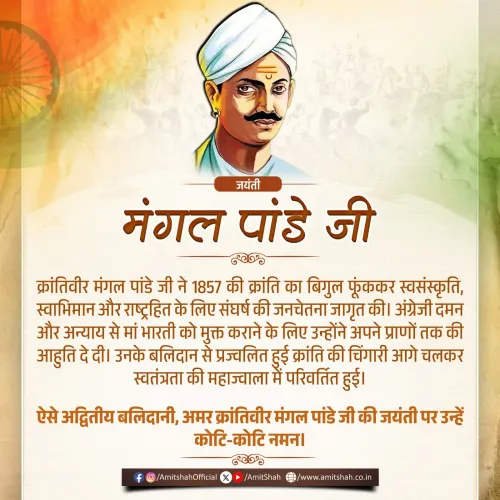
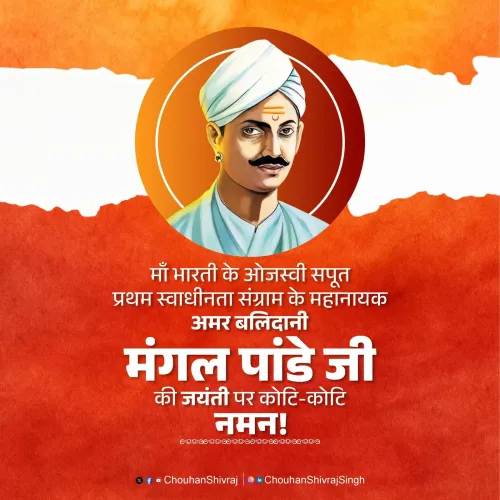
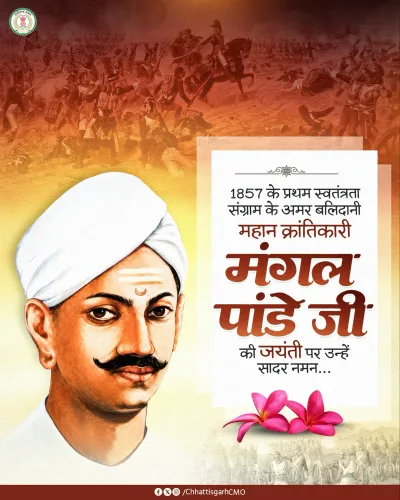
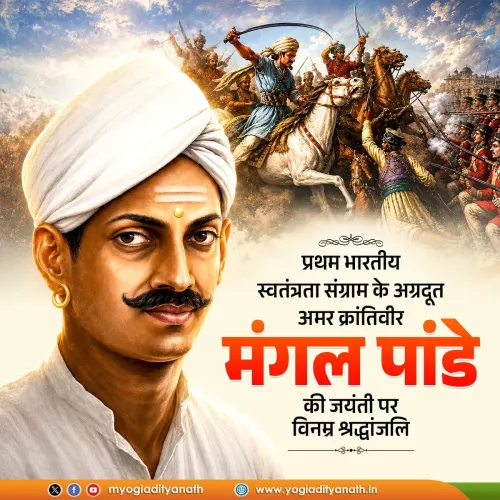
Khattar pays tribute to Mangal Pandey on his birth anniversary
Synopsis
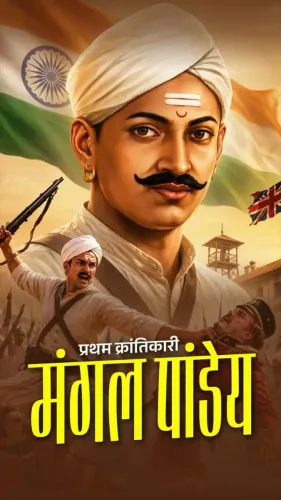
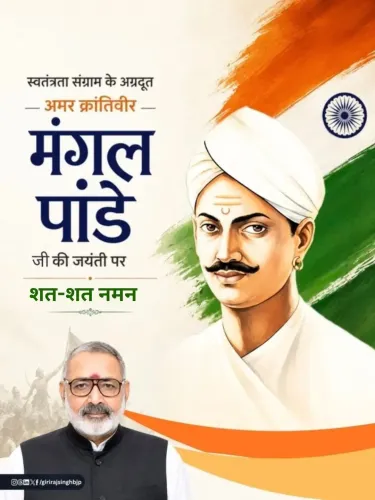
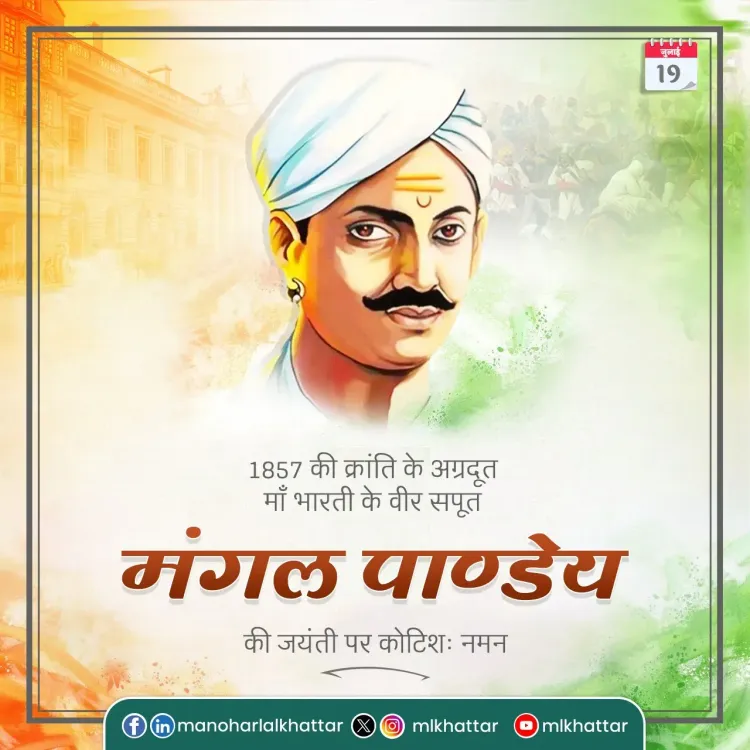
Union Power Minister Manohar Lal Khattar on 19 July 2026 paid tribute to Mangal Pandey on his birth anniversary, honouring the 1857 revolt figure as a fearless son of the motherland and an inspiration for future generations of Indians.
Key Takeaways
Union Power Minister Manohar Lal Khattar posted a tribute to Mangal Pandey on his birth anniversary on 19 July 2026 .
Mangal Pandey was a sepoy in the 34th Bengal Native Infantry whose 1857 defiance is regarded as an early spark of the First War of Independence.
Khattar described Pandey as one who 'stood like a rock against British rule' and called him the 'forerunner of the 1857 revolution.' The tribute aligns with the government's Azadi Ka Amrit Mahotsav programme, which has highlighted 1857 freedom fighters since 2021 .
Larger official observances are anticipated ahead of Independence Day 2026 and the 170th anniversary of the 1857 revolt in 2027 .
Union Power Minister Manohar Lal Khattar on Sunday, 19 July 2026, paid tribute to freedom fighter Mangal Pandey on his birth anniversary, honouring him as a harbinger of the 1857 revolt and a fearless son of the motherland.
Posting in Hindi on X, Khattar wrote: 'Angrezi hukumat ke saamne chattan bankar khade ho jaane waale, 1857 ki kranti ke agradoot, Maa Bharati ke veer sapoot Mangal Pandey ji ki jayanti par unhe kotishaha naman arpit karta hoon' — ('I offer my countless salutations to Mangal Pandey, who stood like a rock against British rule, the forerunner of the 1857 revolution, and a brave son of Mother India, on his birth anniversary.')
The minister added that Pandey's life, filled with fearlessness and valour, would continue to inspire future generations of the country to sacrifice everything for the honour of the motherland.
Context
Mangal Pandey was a sepoy in the 34th Bengal Native Infantry of the East India Company. His open defiance in 1857 against the use of greased cartridges — which soldiers believed were coated with animal fat offensive to both Hindu and Muslim soldiers — is widely regarded in India as an early spark of the broader uprising against colonial rule.
The 1857 revolt is commemorated in India as the First War of Independence. Pandey's act of resistance has made him one of the most celebrated figures in the national memory of anti-colonial struggle, referenced regularly in school curricula, popular culture, and official state observances.
Policy Backdrop
The tribute fits within a sustained pattern of official remembrance promoted by successive central governments. In 2017, the government marked the 160th anniversary of the revolt with nationwide events honouring Mangal Pandey and other martyrs of that era.
Under the Azadi Ka Amrit Mahotsav programme launched in 2021, the Ministry of Culture organised exhibitions and educational programmes centred on 1857 freedom fighters. Union ministers routinely use social-media platforms to amplify such commemorations, linking contemporary governance with nationalist historical narratives.
Stakeholders and Impact
The tribute is directed primarily at Indian youth and students, whom Khattar explicitly invokes as the 'future generations' who must draw inspiration from Pandey's example. Such ministerial posts serve as soft-power messaging, reinforcing the government's emphasis on pride in indigenous resistance to colonial rule.
The BJP-led government has consistently used the anniversaries of 1857 figures to underscore a broader ideological commitment to reclaiming pre-colonial and anti-colonial heritage as central pillars of national identity.
What's Next
With Independence Day on 15 August 2026 approaching, commemorative references to 1857 martyrs are expected to intensify across ministerial communications and official platforms. The 170th anniversary of the 1857 revolt in 2027 is also likely to prompt larger official observances, including parliamentary references and cultural programmes by the Ministry of Culture.
Khattar's post signals that the government intends to keep the legacy of Mangal Pandey and the 1857 uprising at the forefront of its historical messaging in the run-up to these milestones.
Point of View
Coming weeks before Independence Day when such messaging carries amplified resonance. The BJP has systematically used the anniversaries of 1857 figures to reinforce a historical narrative that positions the party as the custodian of India's anti-colonial legacy. With the 170th anniversary of the 1857 revolt approaching in 2027, the frequency and scale of such ministerial tributes is likely to increase. The post also reflects a broader pattern in which Union ministers deploy social media not merely for governance communication but as a vehicle for cultural and ideological positioning.
NationPress
18 Oct 2026
Frequently Asked Questions
Who was Mangal Pandey and why is he remembered?
Mangal Pandey was a sepoy in the 34th Bengal Native Infantry of the East India Company whose defiance in 1857 over the use of greased cartridges is regarded in India as an early spark of the First War of Independence against British colonial rule.
Why did Manohar Lal Khattar pay tribute to Mangal Pandey?
Khattar paid tribute on Mangal Pandey's birth anniversary on 19 July 2026, calling him a forerunner of the 1857 revolution and urging future generations to draw inspiration from his fearlessness and valour.
What is the significance of the 1857 revolt in India?
The 1857 revolt, also called the First War of Independence, was a widespread uprising against the East India Company's rule and is commemorated as a defining moment in India's anti-colonial struggle.
What is Azadi Ka Amrit Mahotsav and how does it relate to 1857?
Azadi Ka Amrit Mahotsav is a central government programme launched in 2021 to mark 75 years of Indian independence; it included exhibitions and educational programmes specifically highlighting 1857 freedom fighters such as Mangal Pandey.
What official events are expected around the 1857 anniversary in coming years?
Larger commemorative events, parliamentary references, and cultural programmes are expected around Independence Day on 15 August 2026 and the 170th anniversary of the 1857 revolt in 2027.