Kishan Reddy Highlights 12 Years of India Infrastructure Growth
Synopsis
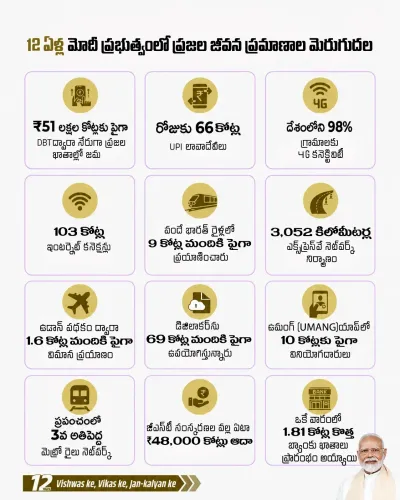
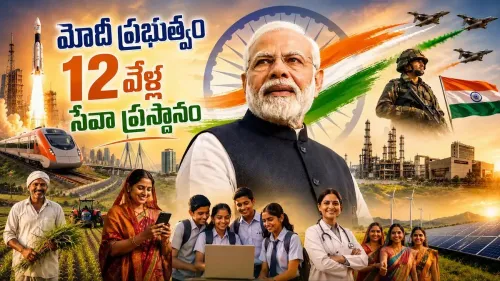
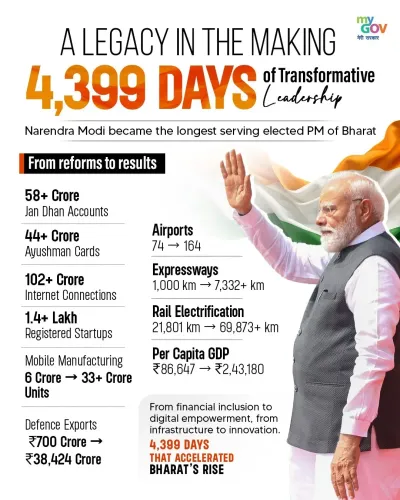
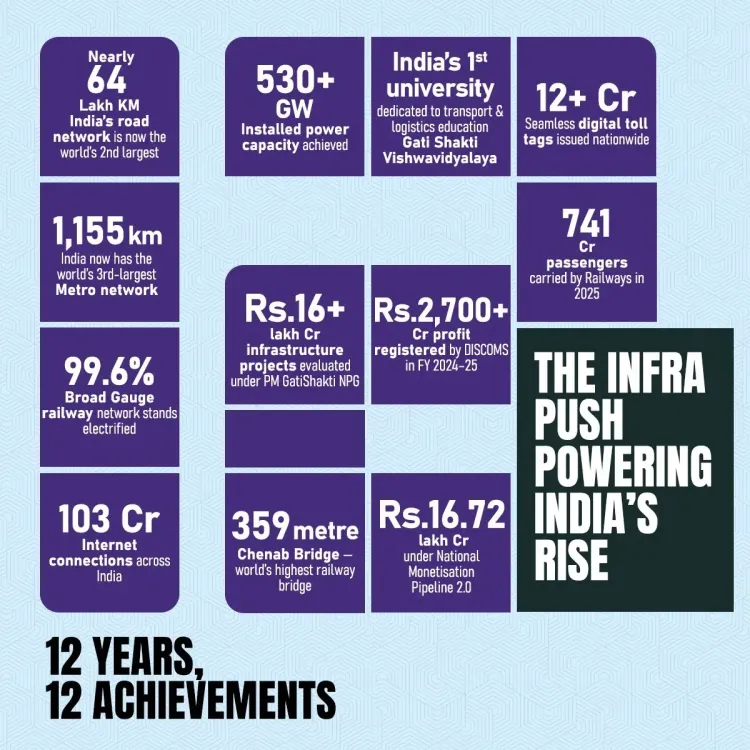
Union Coal and Mines Minister G. Kishan Reddy has highlighted 12 years of infrastructure growth under PM Modi, citing India's rise to the world's second-largest road network, near-complete railway electrification, 530-plus GW power capacity and the iconic Chenab Bridge.
Key Takeaways
Kishan Reddy posted on June 16, 2026 crediting PM Modi's 12-year tenure with transforming India's infrastructure.
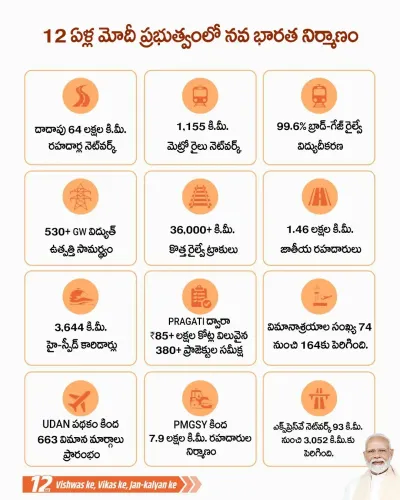
India has built the world's second-largest road network and the third-largest metro network in this period, according to the post.
99.6% Broad Gauge railway electrification and 530-plus GW of installed power capacity are cited as headline achievements.
More than 12 crore FASTags have been deployed on national highways, streamlining electronic toll collection.
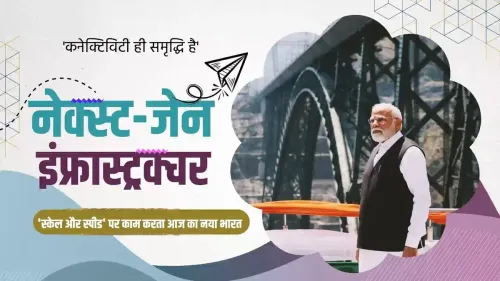
The Chenab Bridge in Jammu and Kashmir — the world's highest railway arch bridge — is highlighted as a signature engineering milestone.
The post is part of the BJP's broader #12YearsOfNayaBharatNirman campaign marking over a decade of Modi government.
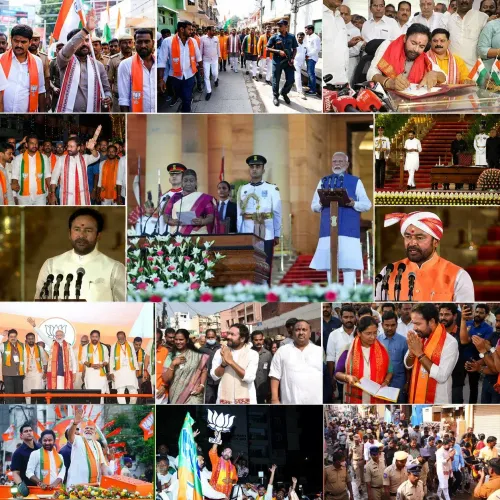
Union Coal and Mines Minister and BJP Telangana president G. Kishan Reddy on Tuesday, June 16, 2026, credited Prime Minister Narendra Modi's 12-year tenure with delivering what he called an 'unprecedented transformation' of India's infrastructure landscape, pointing to milestones across roads, railways, power and digital toll systems.
Context
Reddy's post, shared under the hashtag #12YearsOfNayaBharatNirman, catalogues a range of infrastructure achievements since May 2014. He cites India building the world's second-largest road network and the third-largest metro network, alongside 99.6% Broad Gauge railway electrification, 530-plus GW of installed power capacity, and more than 12 crore FASTags deployed on national highways. He also singles out the Chenab Bridge in Jammu and Kashmir as an engineering landmark of the era.
The post arrives as the ruling Bharatiya Janata Party marks what it frames as a decade-plus of governance under Modi, with senior ministers across portfolios amplifying the party's record on development.
Policy Backdrop
The infrastructure push Reddy references draws from several flagship programmes. The Bharatmala Pariyojana, launched in 2015, set out to expand national highways and expressways across the country. The National Infrastructure Pipeline, announced in 2019, projected an investment of Rs 111 lakh crore over five years, covering roads, railways, ports, energy and urban infrastructure.
Indian Railways formally targeted 100% broad-gauge electrification in the 2017-18 budget cycle, a goal Reddy's post suggests has been nearly achieved. The FASTag system, made mandatory on national highways, was designed to reduce congestion at toll plazas and improve revenue collection through electronic means.
The Chenab Bridge, part of the Udhampur-Srinagar-Baramulla Rail Link, stands as the world's highest railway arch bridge and has been a centrepiece of the government's effort to integrate Jammu and Kashmir with the national rail grid.
Stakeholders and Impact
The infrastructure expansion directly affects the logistics sector, where lower transit times and electronic tolling are expected to reduce freight costs and improve manufacturing competitiveness. State governments have been co-participants in metro expansions and highway projects, with central funding channelled through dedicated schemes.
For the general public, the connectivity improvements translate into faster inter-city travel, better access to remote regions and a wider spread of economic opportunity — arguments the BJP has consistently made in framing infrastructure as a social equity tool, not merely a growth metric.
Projects in Jammu and Kashmir and the Northeast have received explicit policy priority to link previously under-connected regions to the national mainstream, a strategic objective that carries both economic and security dimensions.
What's Next
Attention will now turn to the Union Budget 2026-27 and whether capital expenditure allocations for infrastructure sustain the pace set in recent years. Progress on the remaining sections of Dedicated Freight Corridors and metro expansions in second-tier cities will serve as near-term benchmarks for the government's delivery record.
With the BJP continuing to position infrastructure as a core electoral and governance narrative, ministers like Reddy are expected to keep amplifying milestone data as the party consolidates its 12-year record ahead of future electoral cycles.
Point of View
Verifiable assets like the Chenab Bridge and FASTag penetration, the party shifts the debate from welfare spending to physical nation-building. The choice of a senior minister from Telangana to carry this message also signals an effort to reinforce the party's credibility in a state where it has historically faced stiff competition. The 12-year framing is deliberate: it encompasses the full Modi era and pre-empts any opposition attempt to credit earlier administrations with foundational work.
NationPress
16 Sept 2026
Frequently Asked Questions
What infrastructure achievements did Kishan Reddy highlight in his June 2026 post?
Kishan Reddy highlighted India becoming the world's second-largest road network, third-largest metro network, achieving 99.6% Broad Gauge railway electrification, 530-plus GW installed power capacity, over 12 crore FASTags, and the completion of the Chenab Bridge in Jammu and Kashmir.
What is the Chenab Bridge and why is it significant?
The Chenab Bridge is the world's highest railway arch bridge, located in Jammu and Kashmir. It is part of the Udhampur-Srinagar-Baramulla Rail Link and represents a major step in connecting the region to India's national rail network.
What is the Bharatmala Pariyojana?
Bharatmala Pariyojana is a central government highway development programme launched in 2015 to expand and upgrade India's national highway and expressway network, and is a key driver behind the road infrastructure growth cited by Reddy.
What is FASTag and how many are in use in India?
FASTag is an electronic toll collection system mandated on national highways to reduce congestion and improve revenue efficiency. Kishan Reddy's post states that more than 12 crore FASTags have been issued.
Who is G. Kishan Reddy?
G. Kishan Reddy is the Union Minister of Coal and Mines in the Government of India and serves as the BJP's Telangana state president. He is a senior BJP leader and Member of Parliament from Secunderabad.