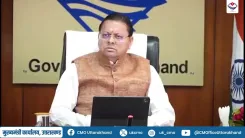
Kishan Reddy: 3 Bullet Train Corridors to Boost Hyderabad
Synopsis
Union Minister G. Kishan Reddy on 24 June 2026 stated that three bullet-train corridors are set to transform Hyderabad's transport landscape, crediting 12 years of infrastructure progress under PM Modi including expressways, Vande Bharat trains, and new airports.
Key Takeaways
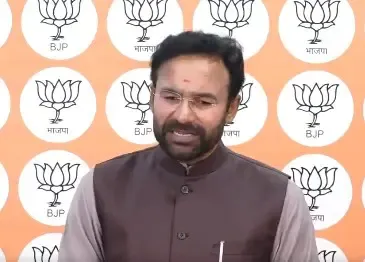
Kishan Reddy , Union Minister of Coal and Mines and BJP Telangana president, posted on 24 June 2026 about Hyderabad's upcoming transport transformation.
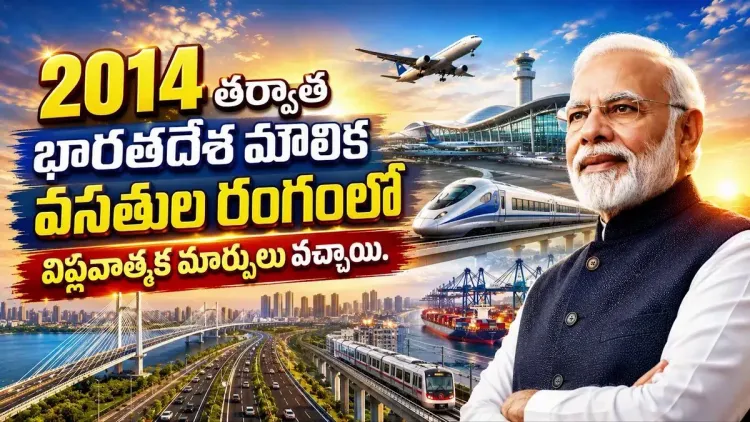
The minister cited 12 years of Modi-led infrastructure development including expressways, Vande Bharat trains, railway modernisation, and new airports.
Three bullet-train corridors are proposed for Hyderabad, which Reddy says will contribute to the city's economic progress.
India's first bullet-train project, the Mumbai–Ahmedabad High-Speed Rail corridor , was sanctioned in 2015 and remains the benchmark for the programme.
The specific routes and sanction status of the three Hyderabad-linked corridors have not yet been confirmed in official Railway Ministry records.
Hyderabad's IT, pharmaceutical, and business sectors are identified as the primary economic stakeholders of improved high-speed connectivity.
Union Coal and Mines Minister G. Kishan Reddy on Wednesday, 24 June 2026 highlighted the transformative pace of infrastructure development under Prime Minister Narendra Modi over the past 12 years, asserting that Hyderabad — referred to in the post as Bhagyanagar (the city of fortune) — is set to become the stage for a new transport revolution through three incoming bullet-train corridors.
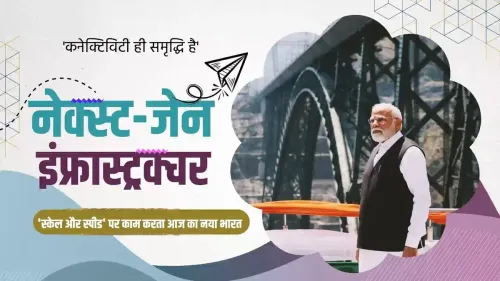
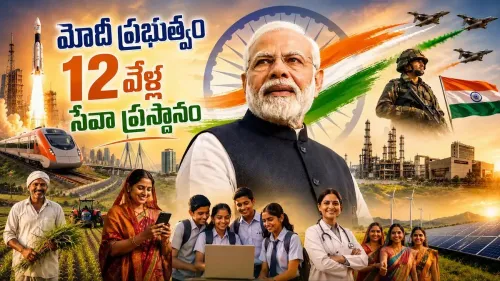
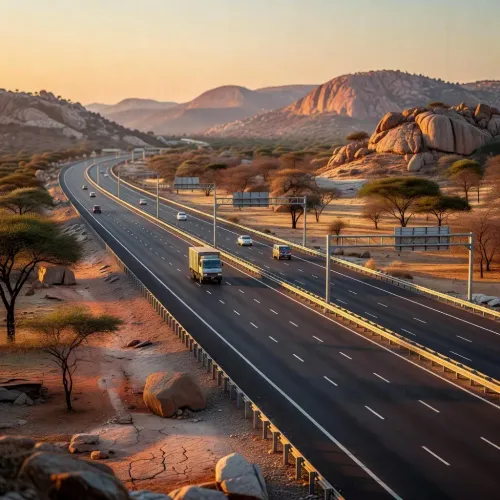
Posting in Telugu, the minister wrote: 'In the last 12 years, under the leadership of respected Prime Minister Narendra Modi, revolutionary and unprecedented changes have taken place in infrastructure development across the country. With expressways, railway modernisation, Vande Bharat trains, and the construction of new airports, New India is racing ahead on the path of progress. In this journey of development, our Bhagyanagar is set to become the venue of a brand-new transport revolution. Three upcoming bullet-train corridors will contribute to Hyderabad's economic progress.'
Context
G. Kishan Reddy holds the dual role of Union Minister of Coal and Mines and BJP Telangana state president, making his focus on Hyderabad's connectivity gains both a national-policy statement and a regional political signal. The post was accompanied by a video and was published in Telugu, the primary language of Telangana.
The minister's enumeration of achievements — expressways, Vande Bharat trains, and new airports — mirrors the central government's broader infrastructure narrative that has been a consistent BJP campaign theme since 2014.
Policy Backdrop
India's first bullet-train project, the Mumbai–Ahmedabad High-Speed Rail corridor, was sanctioned in 2015 and remains under construction. The National Infrastructure Pipeline, launched in 2019, set out a framework for accelerating transport and connectivity investment nationwide.
The Vande Bharat Express semi-high-speed services, introduced in 2019, have since expanded across dozens of routes, serving as a visible marker of railway modernisation. High-speed rail planning has progressively moved beyond the initial western corridor toward southern and eastern economic hubs, with Hyderabad emerging as a key node given its status as a major IT and business centre.
Stakeholders and Impact
Hyderabad's urban commuters, along with the city's substantial IT, pharmaceutical, and business services sectors, stand to benefit most directly if the proposed bullet-train corridors materialise. High-speed rail connectivity typically compresses travel times between major cities, lowering logistics friction and potentially attracting further investment to the region.
Telangana's broader economy — which has positioned Hyderabad as a rival to Bengaluru and Pune for technology investment — could see enhanced competitiveness if intercity rail times to Mumbai, Chennai, or Bengaluru are significantly reduced through dedicated high-speed corridors.
What's Next
The specific routes, sanction status, and budget allocations for the three bullet-train corridors cited by the minister have not yet been confirmed in publicly available Railway Ministry records. Clarity is expected through forthcoming Union Budget announcements and Railway Ministry feasibility disclosures.
Observers will watch whether the corridors referenced by Reddy are formally included in the next round of high-speed rail project approvals, which would mark a significant southward expansion of India's bullet-train ambitions beyond the existing western corridor.
Point of View
Framing Hyderabad as a direct beneficiary of central government investment is a clear electoral positioning move ahead of future state contests. The reference to three bullet-train corridors, while not yet backed by formal Railway Ministry announcements, follows an established BJP pattern of previewing infrastructure intentions through ministerial social media before official sanction. If the corridors are eventually sanctioned, it would mark a meaningful southward pivot in India's high-speed rail strategy, which has so far been concentrated on the western and northern corridors. The timing — mid-2026 — aligns with a period when the Railway Ministry typically signals project priorities ahead of the next budget cycle.
NationPress
24 Jun 2026
Frequently Asked Questions
What are the three bullet-train corridors planned for Hyderabad?
Union Minister G. Kishan Reddy has stated that three bullet-train corridors will contribute to Hyderabad's economic progress, but the specific routes and official sanction status have not yet been confirmed in Railway Ministry records as of June 2026.
When did India's bullet-train project start?
India's first bullet-train project, the Mumbai–Ahmedabad High-Speed Rail corridor, was sanctioned in 2015 and has been under construction since then.
What is Vande Bharat and how does it relate to bullet trains?
Vande Bharat Express is a semi-high-speed train service introduced in 2019 as part of Indian Railways modernisation. It is distinct from bullet trains, which run on dedicated high-speed corridors at significantly higher speeds.
Why is Hyderabad called Bhagyanagar?
'Bhagyanagar' is an alternate name for Hyderabad used historically and frequently by BJP leaders; it translates roughly to 'city of fortune' and has cultural and political significance in Telangana.
What infrastructure projects has the Modi government completed in 12 years?
According to the central government's own account, the period since 2014 has seen the expansion of expressways under the Bharatmala programme, the launch of Vande Bharat semi-high-speed trains, the construction of new airports, and the initiation of India's first bullet-train corridor.