Nainital Women Turn Pichoda into Livelihood and Identity
Synopsis
The Uttarakhand Chief Minister's Office on 24 June 2026 spotlighted women of Nainital district who have turned the traditional Kumaoni pichoda cloth into a livelihood and a marker of cultural identity, drawing attention to grassroots women-led textile enterprise in the Himalayan state.
Key Takeaways
The Chief Minister's Office of Uttarakhand posted on 24 June 2026 highlighting the pichoda as a livelihood tool for Nainital women.
The pichoda is a traditional ceremonial cloth from the Kumaon region , now being produced commercially by women artisans.
The initiative aligns with India's National Handloom Development Programme (restructured 2015 ) supporting traditional weave clusters.
Uttarakhand has increasingly linked hill textiles to women's self-help groups and micro-enterprise schemes since its formation in 2000 .
State-level handloom funding and skill-training allocations in the 2026-27 budget cycle are the key policy developments to watch.
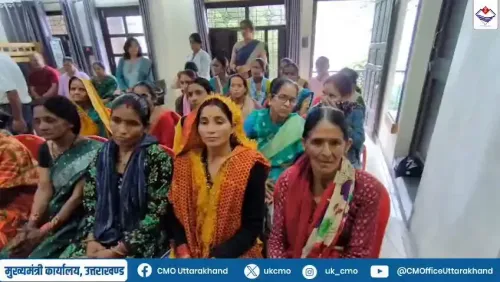
The Chief Minister's Office of Uttarakhand on Wednesday, 24 June 2026, highlighted how women in Nainital district have transformed the traditional Kumaoni pichoda cloth into a source of employment and cultural identity, sharing the story through an official post on X.
The post, carrying the hashtags #Pichoda, #Nainital, and #Uttarakhand, stated in Hindi: 'Janpad Nainital ki mahilaon ne Pichoda ko rojgar aur pahchan ka madhyam banaya' — meaning, 'Women of Nainital district have made the Pichoda a medium of livelihood and identity.' The message spotlights grassroots women artisans who have turned a ceremonial textile into an economic asset.
Context
The pichoda is a sacred yellow or red cloth woven with traditional Kumaoni motifs, worn by women during religious rituals and auspicious occasions across the Kumaon region of Uttarakhand. Long confined to ceremonial use, the textile carries deep cultural significance for communities in the Nainital hills and surrounding areas. Women artisans have now broadened its commercial appeal, producing it for a wider market that values authentic regional handicrafts.
Policy Backdrop
India's National Handloom Development Programme, restructured in 2015, provided a framework for cluster-based support to traditional weaves, including those from Kumaon. Uttarakhand, formed in 2000, has since worked to link its distinctive hill textiles with women's self-help groups and micro-enterprise schemes that emphasise self-reliance and rural livelihoods. The pichoda push fits squarely within this policy lineage, which has gained momentum across Himalayan states since the mid-2010s.
Stakeholders and Impact
The primary beneficiaries are rural women artisans in Nainital district who weave and sell the pichoda, converting a heritage skill into household income. By anchoring their enterprise in a product with strong cultural resonance, these women also act as custodians of Kumaoni identity — a dual role that state governments across the Himalayan belt have increasingly sought to amplify. The official endorsement from the Chief Minister's Office adds institutional visibility to what has largely been a community-driven effort.
What's Next
Observers will watch whether the spotlight from the Chief Minister's Office translates into concrete allocations — such as handloom cluster funding or skill-training budgets — in Uttarakhand's 2026-27 state budget cycle. Broader adoption of the pichoda as a recognised geographical-indication product could further protect and promote the craft. The post signals that the state government views women-led textile enterprises as both an economic and a cultural priority going into the second half of 2026.
Point of View
Leaving room for future budget announcements to fill the gap. The real test will be whether institutional follow-through — funding, GI tagging, market linkages — matches the visibility the CMO's platform has now given the pichoda.
NationPress
22 Sept 2026
Frequently Asked Questions
What is a pichoda in Uttarakhand?
A pichoda is a traditional sacred cloth, typically yellow or red with Kumaoni motifs, worn by women in the Kumaon region of Uttarakhand during religious rituals and auspicious ceremonies. Women artisans in Nainital district have begun producing it commercially, turning it into a source of livelihood.
How are Nainital women earning from pichoda?
Women artisans in Nainital district weave and sell the pichoda beyond its traditional ceremonial context, tapping into a market for authentic regional handicrafts. The Uttarakhand Chief Minister's Office highlighted this on 24 June 2026, giving the effort official visibility.
What government schemes support handloom weavers in Uttarakhand?
India's National Handloom Development Programme, restructured in 2015, supports cluster-based development for traditional weaves including those from Kumaon. Uttarakhand has also linked hill textiles to women's self-help groups under broader self-reliance schemes.
Why is the pichoda important to Kumaoni culture?
The pichoda is a culturally significant textile tied to Kumaoni religious and social identity, worn during key rituals across the Kumaon hills. Its production by local women now serves a dual purpose: preserving heritage and generating income.
What is the Uttarakhand CMO's role in promoting women's livelihoods?
The Chief Minister's Office of Uttarakhand uses its official platforms to spotlight grassroots livelihood initiatives, as seen in the 24 June 2026 post on the pichoda. Such endorsements add institutional visibility and can precede formal policy or budget support for the highlighted activity.