Kishan Reddy: Centre Bets Big on Telangana Textiles

Synopsis
Union Minister G. Kishan Reddy highlights the Centre's textile push in Telangana — citing ₹3,862 crore invested and ₹8,800 crore in interest at the Warangal PM MITRA park, plus central funding for Pochampalli and Ranga Reddy textile parks under the SITP scheme, targeting 24,500 jobs.
Key Takeaways
The Warangal PM MITRA Textile Park has attracted ₹3,862 crore in investments so far, with ₹8,800 crore in investment interest letters received.
The Centre has released ₹30 crore for infrastructure at the Warangal PM MITRA site, which is projected to create around 24,500 jobs .
The Pochampalli Handloom Park Limited in Yadadri Bhuvanagiri district has received ₹13.60 crore in central funding under the SITP scheme.
The White Gold Textile Park in Ranga Reddy district has received ₹32.48 crore in central investment under SITP.
The PM MITRA scheme, announced in the 2021-22 Union Budget , targets seven mega integrated textile parks across India, with Warangal as one of the chosen sites.
Three textile projects, billions in investment interest, and a target of 24,500 jobs — Union Coal and Mines Minister G. Kishan Reddy on Sunday, August 2, 2026, laid out the central government's expanding textile infrastructure push in Telangana, anchored by the Warangal PM MITRA Textile Park and two projects under the older SITP scheme.
Posting in Telugu, Reddy said the central government under Prime Minister Narendra Modi is 'moving fast to make Telangana the country's primary hub for textile exports and to further strengthen the textile sector.' The post listed specific figures across three projects — numbers that sketch an ambitious blueprint for a state long associated with handloom weaving but eager to scale into industrial export territory.
What the Warangal PM MITRA Park Numbers Say
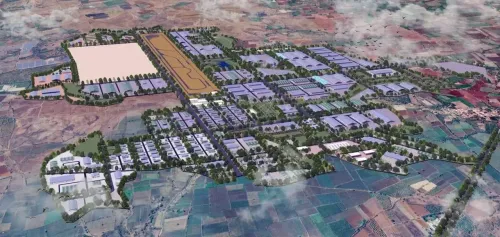
The centrepiece is the PM MITRA Textile Park at Warangal, one of seven such mega parks approved under the PM MITRA scheme — short for Mega Integrated Textile Region and Apparel — announced in the 2021-22 Union Budget. Reddy cited investment inflows of ₹3,862 crore so far, with investment interest letters totalling ₹8,800 crore. The Centre has released ₹30 crore for infrastructure at the site. The park is projected to generate approximately 24,500 jobs. The PM MITRA concept was designed to create end-to-end textile manufacturing clusters — spinning, weaving, processing, and garmenting under one roof — to help India compete with established textile exporters. Warangal's selection reflected Telangana's ambition to expand its textile base well beyond Hyderabad.Pochampalli and Ranga Reddy: The SITP Leg
Running alongside PM MITRA are two projects under the Scheme for Integrated Textile Parks (SITP), a programme that has been channelling central funds into textile infrastructure since 2005. The Pochampalli Handloom Park Limited, located in Yadadri Bhuvanagiri district, has received a central investment of ₹13.60 crore. Pochampalli is one of India's most iconic handloom clusters, famous for its ikat weave — a craft that carries both cultural weight and export potential. The second project, White Gold Textile Park in Ranga Reddy district, has drawn a central investment of ₹32.48 crore. Together, the two SITP parks represent the government's dual-track approach: preserve and modernise traditional handloom clusters while building new industrial textile zones capable of competing in global markets.Telangana's Textile Ambition Takes Shape
The broader pattern here is deliberate. Successive central governments have used dedicated textile park schemes to attract private capital, generate employment, and shift India's manufacturing geography. Telangana receiving multiple project approvals signals that the state has made a credible case to the Centre — and that the Centre sees the Deccan's logistics and labour base as viable for export-scale textile production. The real test, as always with large infrastructure projects, is conversion: how much of the ₹8,800 crore in investment interest materialises into operational factories, and how quickly the job projections translate into actual payroll. Those numbers will surface in coming budget reviews and project audit cycles. For now, the government's message is clear — Telangana's looms, from Pochampalli's handloom lanes to Warangal's industrial corridors, are being wired into a national export strategy.Point of View
A message with clear electoral resonance in a state where the party is seeking to expand its footprint. The figures cited span both the new-generation PM MITRA parks and the long-running SITP scheme, allowing the government to claim continuity and scale simultaneously. The emphasis on handloom welfare alongside industrial investment is deliberate: it speaks to the weaver community, a constituency that has historically been courted by multiple parties. Whether the investment interest numbers harden into ground-level employment will determine how durable this narrative proves to be.
NationPress
2 Aug 2026
Frequently Asked Questions
What is the PM MITRA scheme and which city in Telangana has a park under it?
PM MITRA stands for Mega Integrated Textile Region and Apparel. It was announced in the 2021-22 Union Budget to set up seven integrated textile parks across India. Warangal in Telangana is one of the chosen sites.
How much investment has the Warangal PM MITRA Textile Park attracted?
According to Union Minister G. Kishan Reddy's post, the Warangal PM MITRA park has received investments of ₹3,862 crore so far, with investment interest totalling ₹8,800 crore .
How many jobs will the Warangal PM MITRA park create?
The park is projected to create approximately 24,500 jobs , according to figures cited by Minister Kishan Reddy.
What is the SITP scheme and which Telangana projects are funded under it?
The Scheme for Integrated Textile Parks (SITP), launched in 2005 , provides central funding for textile infrastructure. In Telangana, the Pochampalli Handloom Park Limited (Yadadri Bhuvanagiri district, ₹13.60 crore ) and White Gold Textile Park (Ranga Reddy district, ₹32.48 crore ) are funded under this scheme.
Why is Pochampalli significant for India's textile sector?
Pochampalli in Yadadri Bhuvanagiri district is one of India's most iconic handloom clusters, renowned for its traditional ikat weave, which has both strong cultural heritage and significant export potential.