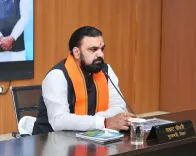
Kishan Reddy Challenges Rahul Gandhi Over SIR Voter Roll Findings
Synopsis
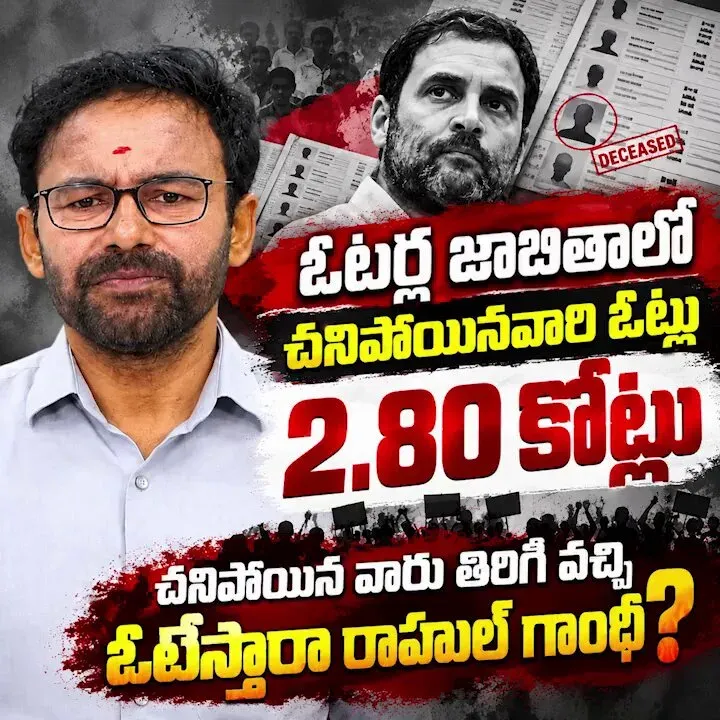
BJP minister G. Kishan Reddy cited SIR findings of 2.80 crore dead voters and over 1 crore duplicate entries on electoral rolls, directly challenging Congress leader Rahul Gandhi to justify his protests against the Election Commission's clean-up exercise.
Key Takeaways
Kishan Reddy posted in Telugu on October 13, 2026 citing Special Intensive Revision (SIR) data.
The SIR is claimed to have identified 2.80 crore deceased voter entries on national electoral rolls.
Over 1 crore duplicate vote entries were also reportedly flagged by the same exercise.
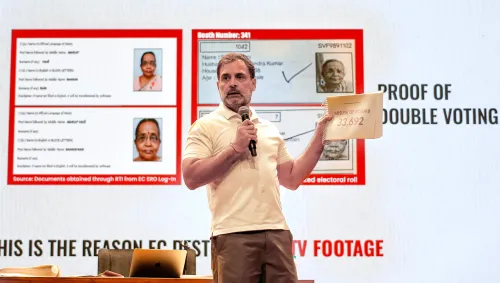
Kishan Reddy directly challenged Rahul Gandhi to explain opposition dharnas against the roll revision.
The Election Commission of India conducts periodic intensive revisions to remove invalid entries ahead of elections.
The BJP–Congress row over voter-list integrity is especially charged in Telangana , a Congress-governed state where Kishan Reddy is the BJP state president.
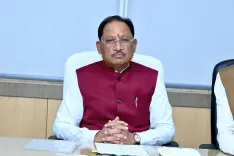
Dead voters casting ballots and millions voting twice — Union Coal and Mines Minister G. Kishan Reddy brought those charges straight to Rahul Gandhi's door on Tuesday, October 13, demanding the Congress leader answer for his protests over an electoral roll clean-up that, the BJP argues, is long overdue.
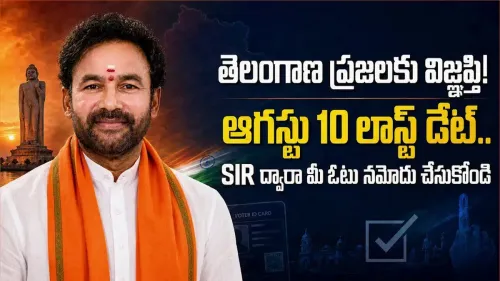
Posting in Telugu, Kishan Reddy cited figures from the ongoing Special Intensive Revision (SIR) of voter rolls, writing: 'SIR ద్వారా దేశంలో 2.80 కోట్ల చనిపోయిన వారి ఓట్లు, కోటి మందికి పైగా డబుల్ ఓట్లు ఉన్నట్లు తేలింది' — 'The SIR has revealed 2.80 crore entries for deceased voters and over 1 crore duplicate votes across the country.' His challenge to Gandhi was blunt: 'Should all of this be allowed to continue? Will the dead come back to vote?'
SIR: What the Voter-Roll Revision Is, and Why It Ignites Politics
The Special Intensive Revision is a targeted exercise by the Election Commission of India — the constitutional body mandated to maintain accurate electoral rolls — to identify and strike off entries for deceased individuals and duplicate registrations. The Commission has conducted similar intensive drives in previous election cycles, including rounds reported in 2018–19 and 2023–24, though the scale of removals cited in Kishan Reddy's post could not be independently confirmed from public record at the time of writing.
The BJP frames such exercises as essential hygiene for democratic credibility. The Congress, led nationally by Rahul Gandhi, has contested aggressive roll revisions, arguing that the process can disenfranchise legitimate voters — particularly from marginalised communities — if conducted without adequate safeguards.
Kishan Reddy's Direct Jab at Opposition Dharnas
The minister's sharpest line was directed at street protests — 'పనికిమాలిన ధర్నాలు' ('useless dharnas') — which he linked to Congress's pushback against the SIR findings. He demanded the opposition 'answer the people' as to why they were agitating against a process designed to remove phantom votes. As BJP's Telangana state president, Kishan Reddy has a direct political stake: Telangana, governed by the Congress, is a key battleground where voter-list integrity disputes carry immediate electoral weight.
The exchange fits a well-worn pattern in Indian politics — ruling parties pointing to invalid-entry removals as proof of cleansing the system; opposition parties reading the same removals as the system being rigged. What makes this round sharper is the raw scale of the figures being cited publicly, putting the Election Commission squarely in the spotlight for its response.
The Question That Now Hangs Over New Delhi
Kishan Reddy's post does not end the argument — it escalates it. The Election Commission's official accounting of how many entries have actually been removed, and on what grounds, will determine whether the BJP's framing holds or the Congress counter-narrative gains traction. Both sides are now on record with their positions. The voters — living, verifiably registered ones — will be the judges.
Point of View
Large-scale figures to the SIR and directing the challenge personally at Rahul Gandhi, the BJP is attempting to put the opposition on the defensive over a process the Congress has critiqued as disenfranchising. The move also reflects Kishan Reddy's dual role: as a Union minister lending institutional weight to the figures, and as Telangana BJP chief turning a national policy debate into local electoral ammunition against a Congress state government.
NationPress
13 Oct 2026
Frequently Asked Questions
What is the Special Intensive Revision (SIR) of voter rolls in India?
The Special Intensive Revision (SIR) is an exercise conducted by the Election Commission of India to audit and update electoral rolls, specifically to remove entries for deceased individuals and identify duplicate registrations before elections.
What did G. Kishan Reddy say about dead voters in India?
G. Kishan Reddy cited SIR findings claiming 2.80 crore entries for deceased voters and over 1 crore duplicate voter entries exist on India's electoral rolls, using these figures to challenge Congress's protests against the clean-up process.
Why is Rahul Gandhi protesting against the voter roll revision?
Congress, led by Rahul Gandhi, has raised concerns that aggressive revisions of electoral rolls risk disenfranchising legitimate voters, particularly from marginalised communities, though its specific response to the SIR figures cited by Kishan Reddy was not on public record at the time of writing.
What is Kishan Reddy's political role in Telangana?
G. Kishan Reddy serves as both Union Minister of Coal and Mines and as the BJP's Telangana state president, making him the party's top political face in a state currently governed by the Congress.
What will the Election Commission do about dead and duplicate voters?
The Election Commission is expected to release official data on the scale of entries removed through the SIR process; its response will be closely watched by both the BJP and Congress to substantiate or contest the figures now in circulation.