Kishan Reddy Hails India's First Hydrogen Train Trial on Jind–Sonipat Route
Synopsis
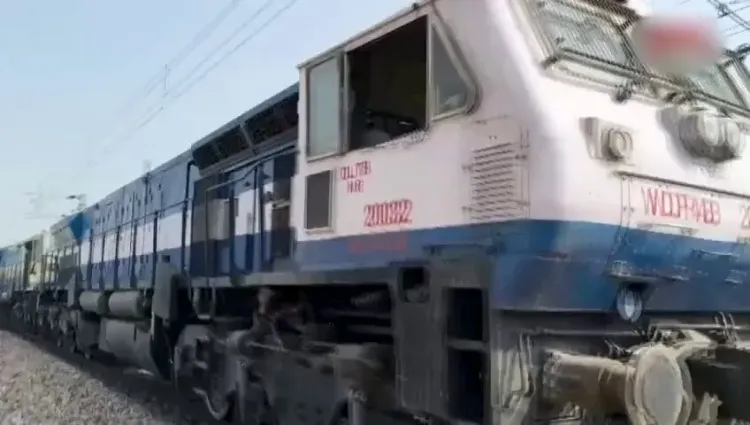
India's first indigenous hydrogen-powered train has completed its final high-speed trial on the Jind–Sonipat section in Haryana at 120 kmph, with Union Minister G. Kishan Reddy hailing the milestone as a historic step toward sustainable rail mobility and net-zero emissions under the Viksit Bharat vision.
Key Takeaways
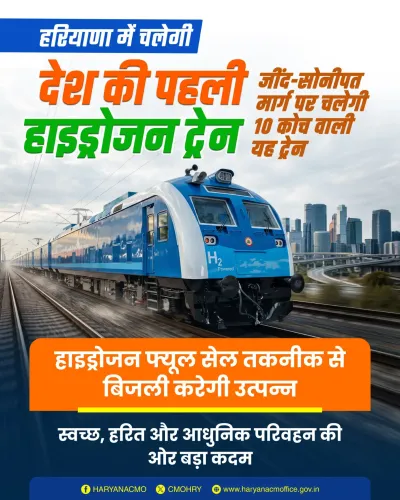
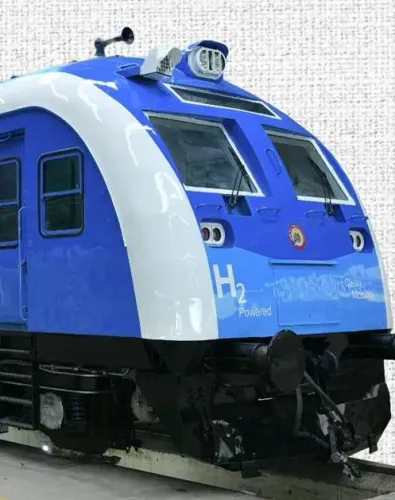
India's first indigenous hydrogen-powered train completed its final high-speed trial on the Jind–Sonipat section in Haryana .
The rake was tested at a top speed of 120 kmph , marking a breakthrough in indigenous clean-propulsion technology.
The trial aligns with Indian Railways' target of achieving net-zero emissions by 2030 .
The development is backed by the National Green Hydrogen Mission (2023) and the earlier National Hydrogen Mission (2021) .
India now joins Germany, Japan and China among nations that have tested hydrogen trains at scale.
Commercial deployment timelines and integration with railway budget planning remain the key next steps to watch.
Union Coal and Mines Minister and BJP Telangana president G. Kishan Reddy on Saturday, 27 June 2026 celebrated the successful completion of the final high-speed trial of India's first indigenous hydrogen-powered train on the Jind–Sonipat section in Haryana, calling it a proud milestone in the country's journey towards clean, green and self-reliant transportation.
Context
The trial saw the hydrogen-powered rake tested at a top speed of 120 kmph, marking what Reddy described as a 'historic achievement for Indian Railways.' The Jind–Sonipat corridor in Haryana was selected as the test bed for this breakthrough in alternative propulsion technology. Reddy tagged Railway Minister Ashwini Vaishnaw and the Ministry of Railways in his post, underlining cross-ministerial enthusiasm for the development.
In his post, Reddy wrote that the achievement 'brings us a step closer to ushering in a new era of sustainable rail mobility and reducing carbon emissions,' and that it reflects India's 'growing capabilities in innovation, clean energy and indigenous manufacturing.'
Policy Backdrop
The hydrogen train trial is the product of years of policy groundwork. The Ministry of Railways announced the development of hydrogen fuel-cell trains in 2021 as part of its broader decarbonisation agenda. That same year, the government launched the National Hydrogen Mission to position India in global clean-energy technology supply chains.
The subsequent National Green Hydrogen Mission, launched in 2023, provided a dedicated policy scaffold to scale production and application of green hydrogen across transport sectors, including railways. Indian Railways has separately committed to achieving net-zero emissions by 2030, making alternative propulsion trials a strategic priority rather than an experimental footnote.
The broader Atmanirbhar Bharat framework has driven the emphasis on indigenous manufacturing of the hydrogen rake, reducing dependence on imported fossil-fuel-based technology and aligning with the government's self-reliance agenda in advanced transport.
Stakeholders and Impact
For rail passengers, a commercially deployed hydrogen train fleet would mean quieter, cleaner journeys with zero direct carbon emissions at the point of operation. For clean energy manufacturers and domestic engineering firms, the successful trial signals a potential new market in hydrogen rolling stock components and fuel-cell systems.
India now joins Germany, Japan and China among nations that have tested hydrogen-powered trains at scale. Germany's Coradia iLint entered commercial service as early as 2022, while Japan and China have conducted their own trials, making India's entry into this cohort a meaningful geopolitical and technological signal.
Reddy noted that 'India strengthens its position among the leading nations advancing hydrogen-powered railway technology' — a framing consistent with the government's push to project technological leadership ahead of its 2070 net-zero commitment.
What's Next
The completion of the final high-speed trial is a precursor to decisions on commercial deployment. The key questions now centre on the timeline for rolling out hydrogen rakes on additional routes, the cost economics of green hydrogen as a fuel source at scale, and how the programme will be reflected in upcoming railway budget allocations and parliamentary committee reviews.
Under what Reddy called the 'visionary leadership' of Prime Minister Narendra Modi, the government has consistently framed such technological milestones within the larger Viksit Bharat vision — a developed India by 2047. The hydrogen train, if it moves swiftly from trial to deployment, could become one of the more visible symbols of that ambition on the ground.
Point of View
And a 120-kmph hydrogen train offers exactly that kind of visible, photogenic evidence. The real test, however, will be whether the programme moves from trial to commercial deployment at a pace that matches the political ambition surrounding it.
NationPress
27 Jun 2026
Frequently Asked Questions
What is India's first hydrogen-powered train and where was it tested?
India's first indigenous hydrogen-powered train completed its final high-speed trial on the Jind–Sonipat rail section in Haryana, achieving a top speed of 120 kmph.
What is the National Green Hydrogen Mission and how does it relate to Indian Railways?
The National Green Hydrogen Mission, launched in 2023, is a central government scheme to scale production and use of green hydrogen across sectors including transport. Indian Railways is using it as a policy foundation for hydrogen train development as part of its net-zero-by-2030 goal.
Which countries have hydrogen-powered trains?
Germany, Japan, China and now India are among the nations that have tested or deployed hydrogen-powered trains. Germany's Coradia iLint entered commercial service in 2022, while India's trial on the Jind–Sonipat section marks its entry into this group.
When will hydrogen trains run commercially in India?
No official commercial deployment date has been announced. The completion of the final high-speed trial is a prerequisite for deployment decisions, which are expected to be reflected in upcoming railway budget allocations and policy reviews.
Why did Coal Minister Kishan Reddy comment on a railway achievement?
G. Kishan Reddy posted in his capacity as a senior BJP leader and Union Minister, reflecting the government's practice of collectively celebrating technology and infrastructure milestones that align with the Viksit Bharat and Atmanirbhar Bharat narratives.