Kishan Reddy Hails MMDR Amendment Bill 2026 in Lok Sabha

Synopsis
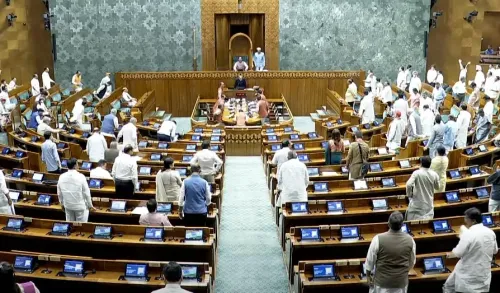
The Lok Sabha passed the Mines and Minerals (Development and Regulation) Amendment Bill, 2026 on August 12. Union Coal and Mines Minister G. Kishan Reddy hailed the legislation as a step toward greater transparency, investment, and mineral security under PM Modi's Viksit Bharat vision.
Key Takeaways
The Lok Sabha passed the MMDR Amendment Bill, 2026 on August 12, 2026 , advancing India's mining sector reform agenda.
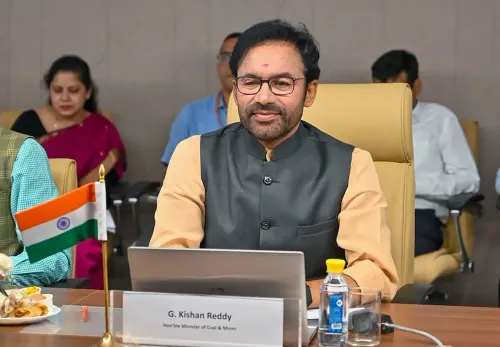
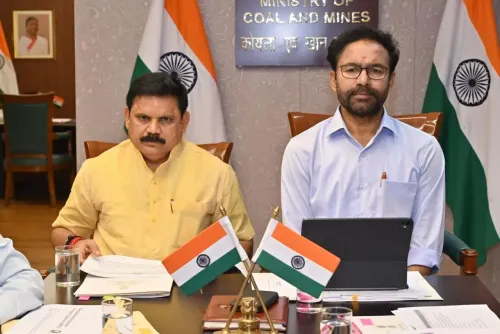
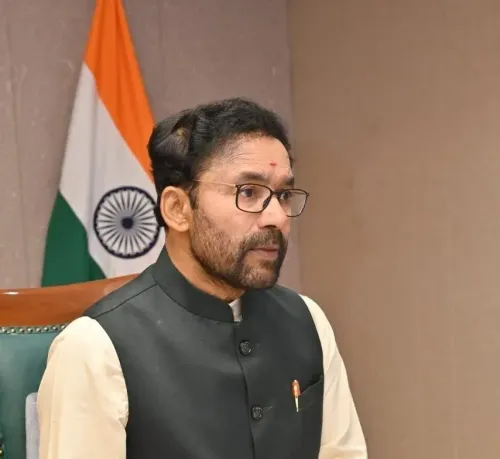
Union Coal and Mines Minister G.
Kishan Reddy welcomed the bill, citing gains in stability, transparency, and domestic mineral production.
The bill is linked to PM Narendra Modi 's Viksit Bharat vision, positioning mining reform as central to India's economic development blueprint.
The reform continues the post- 2015 trajectory of auction-based, transparent mineral allocation under the MMDR Act framework.
The bill must still pass the Rajya Sabha before becoming law; new rules and auction calendars will follow enactment.
State governments, mining lease holders, and private investors are the key stakeholders in the bill's implementation.
A landmark reform for India's mining sector cleared its first major legislative hurdle on Wednesday, August 12, 2026, as the Lok Sabha passed the Mines and Minerals (Development and Regulation) Amendment Bill, 2026 — and Union Coal and Mines Minister G. Kishan Reddy wasted no time welcoming it as a pillar of the country's push toward mineral self-reliance.
Posting on X, Reddy framed the bill's passage in sweeping terms: 'यह विधेयक खनन क्षेत्र में स्थिरता और पारदर्शिता बढ़ाएगा' — 'This bill will increase stability and transparency in the mining sector, encourage investment, promote domestic mineral production, and strengthen the country's mineral security.' The minister tied the legislation directly to Prime Minister Narendra Modi's Viksit Bharat (Developed India) vision, signalling that mining reform is now central to the government's long-term economic blueprint.
A Decade of Auction-Led Reform Reaches a New Chapter
The Mines and Minerals (Development and Regulation) Act has been the backbone of Indian mining law since 1957. The decisive turn came with the MMDR Amendment Act of 2015, which scrapped discretionary allocations and replaced them with competitive auctions — a structural shift designed to end the opacity that had plagued the sector for decades. Subsequent amendments extended lease periods and eased procedural bottlenecks to keep production moving.
The 2026 bill continues that trajectory. Successive governments have used MMDR amendments to tighten the regulatory framework while simultaneously injecting production incentives — and this iteration, according to Reddy, doubles down on both. The minister argued the reforms would unlock India's 'vast mineral potential' and deliver fresh momentum to infrastructure, manufacturing, and energy security.
Why Mineral Security Is Now a Strategic Priority
The timing is deliberate. Global supply chains for critical minerals — essential for electric vehicles, semiconductors, and clean energy infrastructure — have become a geopolitical flashpoint. India, sitting on significant deposits of coal, iron ore, bauxite, and a range of critical minerals, has faced persistent criticism for under-exploiting its own reserves while import dependence climbs.
Reddy's statement explicitly links the bill to energy security — a pointed signal that the government sees domestic mining reform as inseparable from its clean-energy and industrial ambitions. A stronger, more transparent auction regime could accelerate lease clearances and attract the private and foreign capital that state-run operations alone cannot mobilise.
The Rajya Sabha Test and What Follows
The bill's Lok Sabha passage is a significant milestone, but the legislation must still clear the Rajya Sabha before it becomes law. Once enacted, the real work shifts to framing new rules and auction calendars — the administrative machinery that determines whether legislative intent translates into actual production gains on the ground. State governments, which collect royalties and manage ground-level lease administration, will be key partners — and potential friction points — in that implementation phase.
India's mining sector reform is no longer a slow-moving bureaucratic exercise. With mineral security now woven into the national security conversation, the pressure to convert parliamentary momentum into mine-face output has never been higher.
Point of View
Rules-driven norms — a process that began in earnest with the 2015 overhaul. For the BJP government, passing this bill serves a dual purpose: it advances the Viksit Bharat economic narrative ahead of electoral cycles while addressing a genuine structural gap in India's critical-mineral supply chain. The Rajya Sabha vote will be the real test of political consensus, and the speed at which new auction rules are framed will determine whether this reform delivers on its industrial promise or stalls in administrative inertia. Kishan Reddy's prominent role in championing the bill also reinforces his standing as a key policy face for the BJP in Telangana, where mining interests carry significant economic weight.
NationPress
13 Aug 2026
Frequently Asked Questions
What is the MMDR Amendment Bill 2026?
The Mines and Minerals (Development and Regulation) Amendment Bill, 2026 is a central government legislation passed by the Lok Sabha on August 12, 2026, aimed at improving stability, transparency, and investment in India's mining sector and strengthening domestic mineral production.
What did Kishan Reddy say about the MMDR Amendment Bill 2026?
Union Coal and Mines Minister G. Kishan Reddy welcomed the Lok Sabha passage of the bill, stating it would boost mineral security, encourage investment, promote domestic output, and support infrastructure, manufacturing, and energy security under PM Modi's Viksit Bharat vision.
Has the MMDR Amendment Bill 2026 become law?
Not yet. The bill passed the Lok Sabha on August 12, 2026, but must still clear the Rajya Sabha before receiving Presidential assent and becoming law.
What is the history of MMDR Act reforms in India?
The Mines and Minerals (Development and Regulation) Act has governed Indian mining since 1957. A major 2015 amendment replaced discretionary lease allocations with competitive auctions to improve transparency. Subsequent amendments extended lease periods and eased procedural requirements, with the 2026 bill continuing this reform trajectory.
How does the MMDR Amendment Bill 2026 relate to Viksit Bharat?
Minister Kishan Reddy explicitly linked the bill to Prime Minister Narendra Modi's Viksit Bharat (Developed India) vision, arguing that a stronger and more transparent mining sector is essential to achieving India's broader infrastructure, manufacturing, and energy security goals.