Kishan Reddy Hails Modi's Push for EV Adoption, Green Infrastructure
Synopsis
Union Coal and Mines Minister G. Kishan Reddy praised PM Modi's push for electric mobility and green infrastructure on 22 June 2026, linking EV adoption to India's self-reliance goals and long-term environmental commitments.
Key Takeaways
Kishan Reddy , Union Minister of Coal and Mines, publicly endorsed PM Modi 's electric mobility and green infrastructure agenda on 22 June 2026 .
The statement frames EV adoption as central to India's Atmanirbhar Bharat (self-reliant India) vision, not just an environmental measure.
India's FAME India scheme , launched in 2015 , remains the primary policy vehicle for incentivising EV purchase and domestic manufacturing.
India pledged net-zero emissions by 2070 at the COP26 summit in Glasgow in 2021, anchoring the long-term policy direction.
The endorsement is notable given Kishan Reddy's coal portfolio, signalling a government-wide alignment on the green transition narrative.
Key policy milestones to watch include the next FAME guidelines phase and parliamentary discussions on green hydrogen and coal-transition funding.
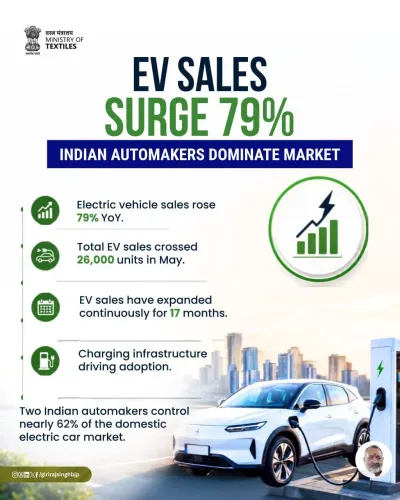
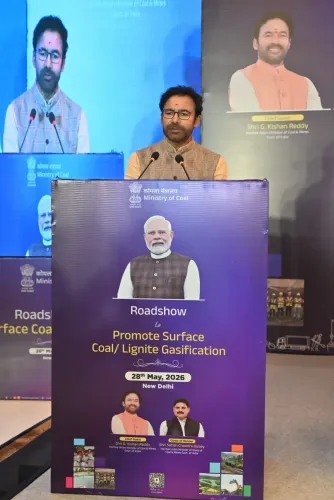
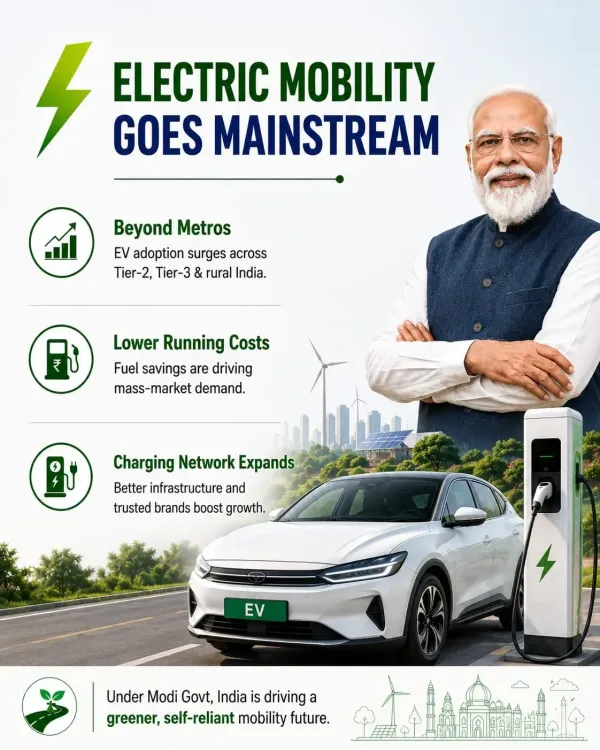
Union Coal and Mines Minister G. Kishan Reddy on Monday, 22 June 2026, credited Prime Minister Narendra Modi's administration with charting a 'bold course toward environmental stewardship and energy independence,' pointing to accelerated electric vehicle adoption and expanding green infrastructure as cornerstones of a self-reliant future.
Context
In his post, the Minister stated that India is 'establishing robust green infrastructure' and 'laying a strong foundation for a sustainable, self-reliant future' under PM Modi's leadership. The remarks align electric mobility directly with the broader Atmanirbhar Bharat framework, framing clean energy not merely as an environmental goal but as a pillar of national self-sufficiency.
The statement comes from a minister whose own portfolio — coal and mines — sits at the centre of India's ongoing energy transition, making the endorsement of green mobility notable in terms of the government's stated policy direction.
Policy Backdrop
India's push toward electric mobility has deep institutional roots. The National Electric Mobility Mission Plan, approved in 2013, laid the groundwork for hybrid and electric vehicle promotion. It was followed by the FAME India scheme (Faster Adoption and Manufacturing of Hybrid and Electric Vehicles), launched in 2015, which provided demand-side incentives for EV buyers and supported domestic manufacturing.
At the COP26 summit in Glasgow in 2021, India committed to reaching net-zero emissions by 2070, reinforcing a long-term policy trajectory that successive budgets have backed through allocations for charging infrastructure, battery production, and green hydrogen development. Domestic manufacturing mandates under the self-reliance framework have further tied EV promotion to industrial policy.
Stakeholders and Impact
EV manufacturers and component suppliers stand to benefit most directly from continued policy support, as sustained government signalling reduces investment uncertainty. Urban commuters in large cities are the primary end-users of expanding charging networks, with cleaner air quality and lower fuel costs as tangible benefits.
However, the transition also carries complex implications for coal mining regions — constituencies that fall squarely within Kishan Reddy's ministerial mandate. Workers and communities dependent on coal extraction face a longer-horizon adjustment as renewable capacity scales up, and the government has not yet detailed a comprehensive coal-transition fund or retraining programme in public discourse.
What's Next
Policy watchers will track the next phase of FAME guidelines, which will shape subsidy structures and eligibility criteria for the coming cycle of EV adoption. State-level EV policy updates — particularly from large states — will determine how uniformly the central push translates into on-ground infrastructure.
Parliamentary discussions around green hydrogen mission allocations and any dedicated coal-transition financing will serve as a key indicator of how the government intends to balance its twin commitments to fossil-fuel-dependent employment and its internationally stated climate targets. Kishan Reddy's public alignment with the green mobility agenda suggests the ruling dispensation is keen to project a unified front across even its most carbon-intensive ministries.
Point of View
Making self-reliance and climate goals mutually reinforcing rather than competing. However, the absence of specifics on coal-region transition support leaves a policy gap that opposition parties and labour groups are likely to probe. Kishan Reddy's post is best read as a political positioning exercise ahead of anticipated FAME and green hydrogen policy announcements.
NationPress
22 Jun 2026
Frequently Asked Questions
What did G. Kishan Reddy say about electric vehicles?
G. Kishan Reddy said that under PM Modi's leadership, India is accelerating EV adoption and building robust green infrastructure to create a sustainable, self-reliant future.
What is the FAME India scheme?
The FAME India scheme (Faster Adoption and Manufacturing of Hybrid and Electric Vehicles) was launched in 2015 to provide demand incentives for EV buyers and support domestic EV manufacturing.
What is India's net-zero emissions target?
India committed to achieving net-zero emissions by 2070, a pledge made at the COP26 climate summit held in Glasgow in 2021.
Why is a Coal Minister commenting on green energy significant?
G. Kishan Reddy's coal portfolio covers fossil fuel extraction, so his public endorsement of EV and green infrastructure goals signals a government-wide alignment on the clean energy transition narrative.
What should we watch next on India's EV policy?
Key developments to track include the next phase of FAME scheme guidelines, state-level EV policy updates, and parliamentary discussions on green hydrogen mission funding and coal-transition support.