Kishan Reddy hails Vikram-1 launch as milestone for India's space ambitions
Synopsis
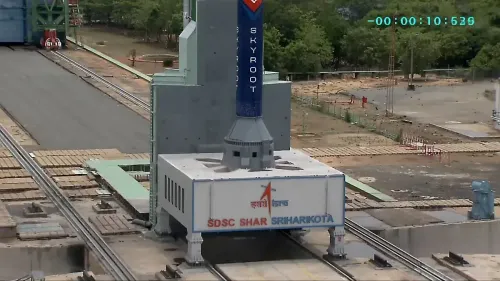
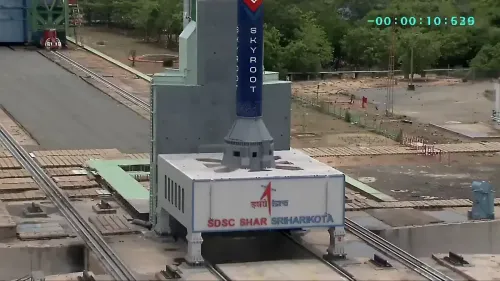
Union Minister G. Kishan Reddy joined PM Modi at the inauguration of Skyroot Aerospace's Infinity Campus in Hyderabad and celebrated the launch of Vikram-1, India's first privately developed orbital launch vehicle, calling it a milestone of India's space-sector reforms.
Key Takeaways
Kishan Reddy , Union Coal and Mines Minister, attended the inauguration of Skyroot Aerospace's Infinity Campus in Hyderabad on 18 July 2026 .
Prime Minister Narendra Modi presided over the campus inauguration.
Vikram-1 has been described as India's first privately developed orbital launch vehicle.
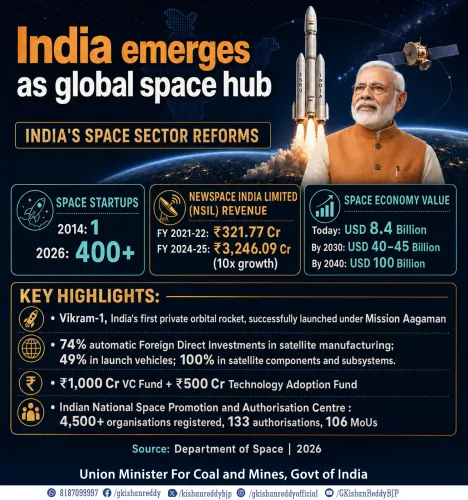
India's space-sector reforms, launched in 2020 , created IN-SPACe to enable private participation in launch and satellite activities.
The development is part of the Atmanirbhar Bharat push to grow India's share of the global space economy.
Hyderabad is emerging as a key hub for India's private aerospace and deep-technology industry.
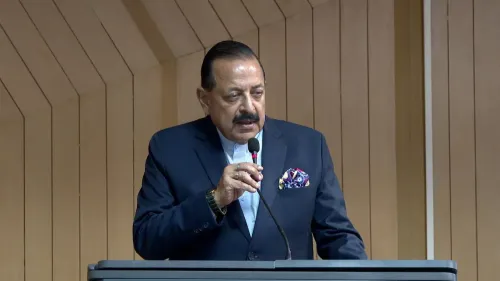
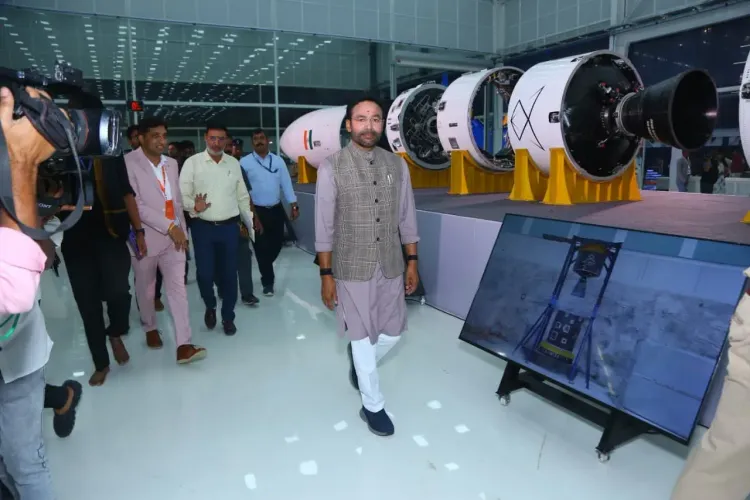
Union Coal and Mines Minister and BJP Telangana president G. Kishan Reddy on Saturday, 18 July 2026, hailed the inauguration of Skyroot Aerospace's Infinity Campus in Hyderabad and the successful launch of Vikram-1, describing the developments as a proud moment for Hyderabad, Telangana, and India. Reddy, who attended the campus inauguration presided over by Prime Minister Narendra Modi, said the milestone reflects the transformative impact of space-sector reforms under the Modi government.
Context
Posting on X, Reddy wrote that he 'had the privilege of visiting Skyroot Aerospace's Infinity Campus in Hyderabad during its inauguration by Hon'ble Prime Minister Shri Narendra Modi Ji.' He called it 'truly heartening to witness that vision translate into the successful launch of Vikram-1, India's first privately developed orbital launch vehicle.' The minister extended his wishes to Team Skyroot for 'many more milestones in the nation's inspiring space journey.'
Skyroot Aerospace, headquartered in Hyderabad, is among the pioneering private space startups that have emerged since India opened its space sector to private participation. The company's Vikram series of launch vehicles is named after Vikram Sarabhai, widely regarded as the father of India's space programme.
Policy Backdrop
In 2020, the Government of India announced landmark space-sector reforms that opened launch-vehicle development and satellite operations to private companies for the first time. The reforms established IN-SPACe (Indian National Space Promotion and Authorisation Centre) as the nodal regulatory agency to facilitate and authorise private participation.
The liberalisation is part of the broader Atmanirbhar Bharat initiative, which aims to reduce import dependence and raise India's share of the global space economy — estimated to be worth hundreds of billions of dollars over the coming decade. The policy shift mirrors earlier liberalisation steps in defence manufacturing and telecommunications, seeking to harness private capital and innovation alongside the established capacity of ISRO.
The Infinity Campus inauguration by Prime Minister Modi in Hyderabad signals continued high-level political commitment to the public-private partnership model in space, and reinforces the city's growing identity as a hub for aerospace and deep-technology industries.
Stakeholders and Impact
Hyderabad hosts a growing cluster of private aerospace firms, benefiting from proximity to ISRO's facilities, a skilled engineering workforce, and state-level support from the Telangana government. The successful orbital launch of Vikram-1 — described as India's first privately developed orbital launch vehicle — represents a significant commercial and technological proof-of-concept for the sector.
For private space startups and their investors, a completed orbital mission removes a critical risk from the commercialisation roadmap. It also strengthens India's positioning as a competitive destination for international satellite launch contracts, where cost and reliability are the primary decision factors.
What's Next
Attention will now turn to subsequent commercial flights by Skyroot Aerospace and other IN-SPACe-authorised firms, as well as any new funding windows or regulatory updates announced by the Department of Space. The government is expected to use the momentum from Vikram-1's success to attract further private investment into the domestic space supply chain.
As India seeks to capture a larger slice of the global launch market, the pace at which private operators can achieve reliable, repeatable missions will be a key indicator of how quickly the policy reforms translate into sustained commercial outcomes.
Point of View
Reinforcing the BJP's narrative of governance-driven innovation. Hyderabad's emergence as a private space hub also carries electoral significance for Reddy, who leads the BJP's Telangana unit in a state the party is keen to consolidate. The Vikram-1 milestone, if it marks a repeatable commercial capability, could validate India's 2020 space liberalisation as one of the more consequential structural reforms of the decade. The broader pattern — private capital entering sectors once reserved for state monopolies — will face its real test in the consistency of subsequent missions and the depth of the commercial order book that follows.
NationPress
17 Oct 2026
Frequently Asked Questions
What is Vikram-1 and who built it?
Vikram-1 is described as India's first privately developed orbital launch vehicle, built by Hyderabad-based startup Skyroot Aerospace.
Who inaugurated Skyroot Aerospace's Infinity Campus in Hyderabad?
Prime Minister Narendra Modi inaugurated Skyroot Aerospace's Infinity Campus in Hyderabad, with Union Minister G. Kishan Reddy among the attendees.
What are India's space sector reforms and when were they introduced?
In 2020, the Indian government opened space-sector activities — including launch vehicles and satellites — to private companies and established IN-SPACe as the nodal regulatory authority.
Why is Hyderabad significant for India's space industry?
Hyderabad hosts a growing cluster of private aerospace and deep-technology firms, supported by proximity to ISRO facilities, engineering talent, and state-level industrial backing from Telangana.
What is Atmanirbhar Bharat's role in India's space programme?
Atmanirbhar Bharat is the government's self-reliance initiative; in the space sector it aims to reduce import dependence, grow domestic manufacturing, and raise India's share of the global launch market.