Kishan Reddy Highlights Tribal Welfare Gains Under Modi Govt
Synopsis
Union Minister G. Kishan Reddy outlined central government tribal welfare measures on 19 July 2026, citing a 230% budget rise for the Ministry of Tribal Affairs, 11 freedom fighter museums, a ₹900 crore tribal university in Mulugu, 2.31 lakh Forest Rights titles in Telangana, and scholarships for over one crore ST students nationally.
Key Takeaways
The Ministry of Tribal Affairs annual budget has grown by more than 230% , from around ₹4,000 crore in 2013-14 to approximately ₹15,000 crore today.
11 Tribal Freedom Fighter Museums are being established nationwide, including the Ramji Gond Tribal Museum in Hyderabad , honouring leaders like Komaram Bheem.
The Sammakka Sarakka Central Tribal University in Mulugu, Telangana , has been built with an investment of around ₹900 crore .
More than 2.31 lakh Forest Rights Act titles have been distributed in Telangana, and 23 Eklavya schools there have received over ₹730 crore in the past five years.
Over one crore Scheduled Tribe students have received central scholarships in the past decade; more than 14 lakh in Telangana alone since 2014.
Friends of Tribal Society (FTS) runs 45,000 single-teacher schools across India, including 1,900 in Telangana .
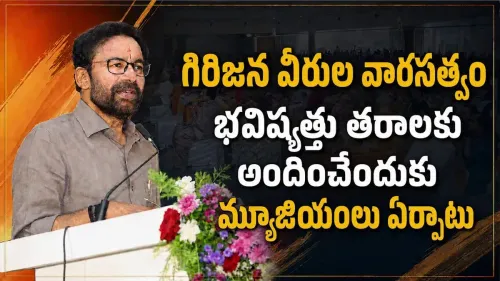
Union Coal and Mines Minister G. Kishan Reddy on Sunday, 19 July 2026, outlined a series of central government initiatives for tribal communities, citing budgetary growth, educational expansion, and the establishment of tribal heritage institutions across India, with particular reference to Telangana.
Context
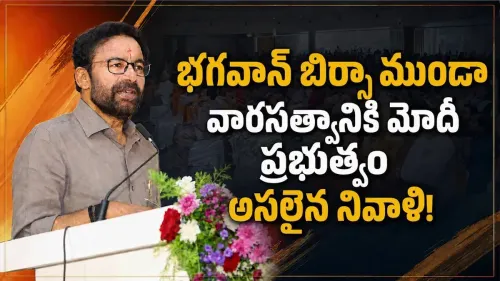
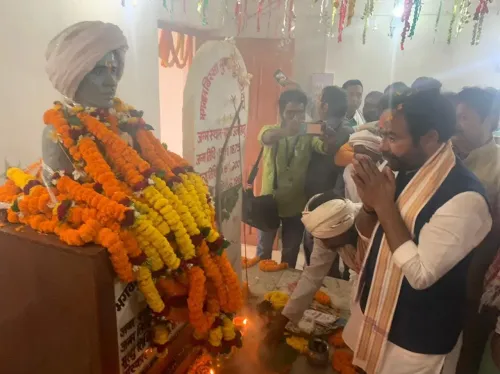
Reddy emphasised that tribal freedom fighters were denied adequate recognition for generations after Independence. He stated that this was corrected under Prime Minister Narendra Modi's leadership by declaring 15 November — the birth anniversary of Bhagwan Birsa Munda — as Janjatiya Gaurav Divas (Tribal Pride Day) in 2021. Birsa Munda, a 19th-century tribal leader from present-day Jharkhand, led the Ulgulan revolt against British colonial rule and remains a central symbol of tribal resistance.
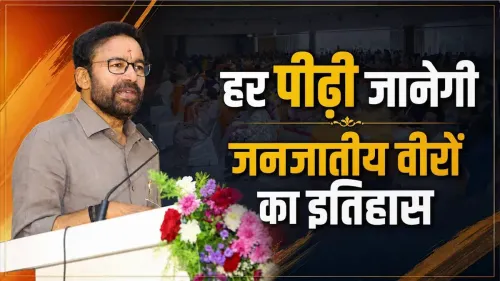
The minister noted that 11 Tribal Freedom Fighter Museums are being established nationwide, including the Ramji Gond Tribal Museum in Hyderabad, to honour figures such as Komaram Bheem and Ramji Gond, who resisted the Nizam's rule in Telangana under the rallying cry Jal, Jungle, Zameen (Water, Forest, Land).
Policy Backdrop
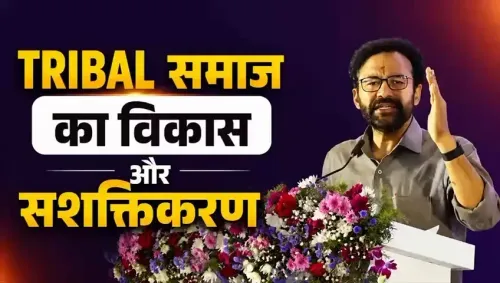
Reddy highlighted that the Ministry of Tribal Affairs' annual budget has grown by more than 230%, rising from approximately ₹4,000 crore in 2013-14 to around ₹15,000 crore at present. He also pointed to the Sammakka Sarakka Central Tribal University in Mulugu, Telangana, built with an investment of around ₹900 crore, as an institution honouring the legacy of the Medaram Sammakka-Saralamma Jatara, one of the largest tribal fairs in Asia.
He further noted that President Droupadi Murmu — India's first tribal head of state — continues to inspire tribal communities across the country. The Forest Rights Act, enacted by Parliament in 2006, formed the legal basis for land title distribution he cited in Telangana.
Stakeholders and Impact
In Telangana, Reddy stated that more than 2.31 lakh Forest Rights Act titles have been distributed and that 23 Eklavya Model Residential Schools (EMRS) have received support of more than ₹730 crore over the past five years. Nationally, he said 500 EMRS schools are now educating over 1.5 lakh tribal students. The Eklavya scheme, launched in 1997-98 and later brought under the Ministry of Tribal Affairs, provides residential schooling to Scheduled Tribe children.
Reddy also congratulated the Friends of Tribal Society (FTS) for operating 45,000 single-teacher schools across India, including 1,900 in Telangana. On scholarships, he said more than one crore Scheduled Tribe students have received central scholarships over the past decade, with more than 14 lakh students in Telangana benefiting since 2014.
What's Next
The operational rollout of the 11 Tribal Freedom Fighter Museums and the full functioning of the Sammakka Sarakka Central Tribal University in Mulugu will be key milestones to watch. Further rounds of Forest Rights Act title distribution and continued expansion of EMRS capacity in state budgets will determine how these commitments translate on the ground.
Reddy's remarks signal that tribal welfare, cultural recognition, and educational access will remain prominent planks of the BJP's outreach in Telangana ahead of future electoral cycles, with the party seeking to consolidate its standing among Scheduled Tribe communities in the state.
Point of View
A state where the party has historically struggled to build a strong base. By anchoring the narrative in cultural recognition — Janjatiya Gaurav Divas, the tribal museums, President Murmu's symbolic weight — alongside hard budget and scholarship numbers, the party is attempting to blend identity politics with welfare delivery. The 230% budget growth figure, if sustained, would represent a structural shift in tribal policy financing rather than incremental change. How much of this translates into ground-level outcomes, particularly the operational status of the museums and the Mulugu university, will shape whether these claims hold electoral resonance.
NationPress
20 Jul 2026
Frequently Asked Questions
What is Janjatiya Gaurav Divas and when was it declared?
Janjatiya Gaurav Divas is observed annually on 15 November , the birth anniversary of tribal leader Bhagwan Birsa Munda . The Government of India notified this observance in 2021 under Prime Minister Narendra Modi.
What is the Sammakka Sarakka Central Tribal University in Mulugu?
The Sammakka Sarakka Central Tribal University is a new central university in Mulugu district, Telangana , built with an investment of around ₹900 crore . It is named after the deities of the Medaram Sammakka-Saralamma Jatara, one of the largest tribal fairs in Asia.
How many Forest Rights Act titles have been distributed in Telangana?
According to Union Minister G. Kishan Reddy, more than 2.31 lakh Forest Rights Act titles have been distributed in Telangana under the central government.
What are Eklavya Model Residential Schools?
Eklavya Model Residential Schools (EMRS) are central government-funded residential schools for Scheduled Tribe children, launched in 1997-98 and administered by the Ministry of Tribal Affairs. More than 500 such schools have been sanctioned nationally, educating over 1.5 lakh tribal students .
How much has India's tribal affairs budget grown since 2014?
Minister Kishan Reddy stated that the Ministry of Tribal Affairs annual budget has grown by more than 230% , from approximately ₹4,000 crore in 2013-14 to around ₹15,000 crore at present.