Kishan Reddy hails Modi's 12 years of transparent governance
Synopsis
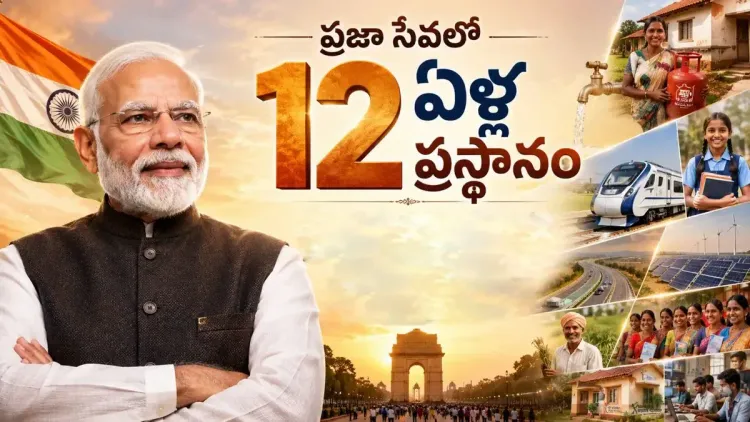
Union Minister and BJP Telangana chief G. Kishan Reddy on June 11, 2026 credited PM Narendra Modi with twelve years of corruption-free governance and claimed welfare schemes lifted nearly 25 crore people out of poverty, using the hashtag #LongestServingElectedPMModi.
Key Takeaways
Kishan Reddy , Union Coal and Mines Minister and BJP Telangana president, posted the tribute on June 11, 2026 .
The post credits PM Narendra Modi with twelve years of corruption-free, transparent governance since May 2014 .
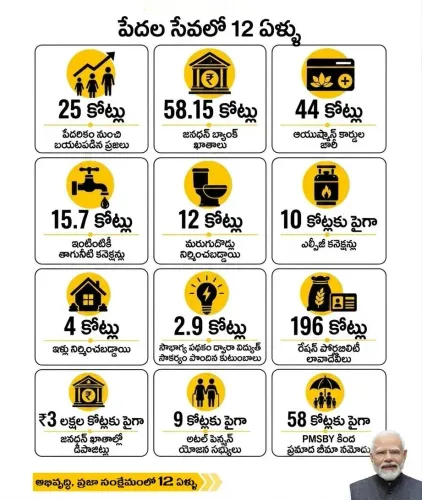
Reddy claims welfare schemes have lifted nearly 25 crore people out of poverty — a figure drawn from the BJP's official narrative, with independent verification ongoing.
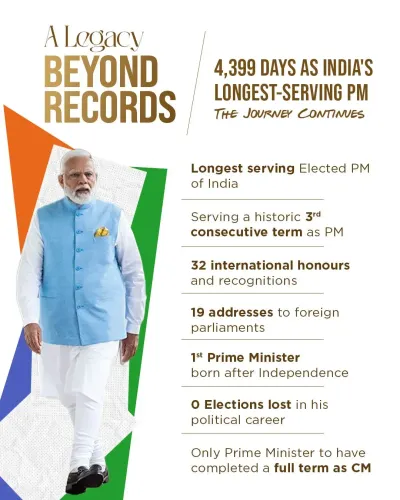
The hashtag #LongestServingElectedPMModi links the tribute to a wider BJP campaign marking a tenure milestone.
Key policy pillars cited include Direct Benefit Transfer , Swachh Bharat Mission , and PM Awas Yojana .
The NITI Aayog Multidimensional Poverty Index has been the government's primary data source for poverty-reduction claims since 2021.
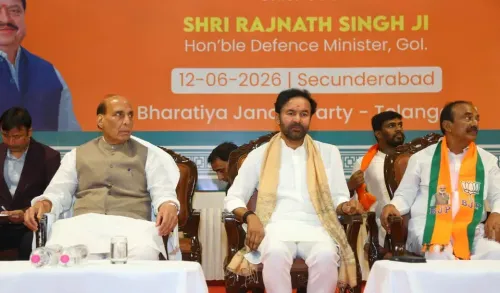
Union Coal and Mines Minister G. Kishan Reddy, who also serves as BJP Telangana state president, on Thursday, June 11, 2026, posted a tribute on X crediting Prime Minister Narendra Modi with twelve years of corruption-free, transparent governance and citing welfare schemes that the post claims lifted nearly 25 crore people out of poverty.
Context
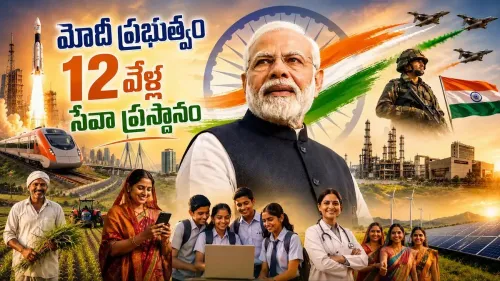
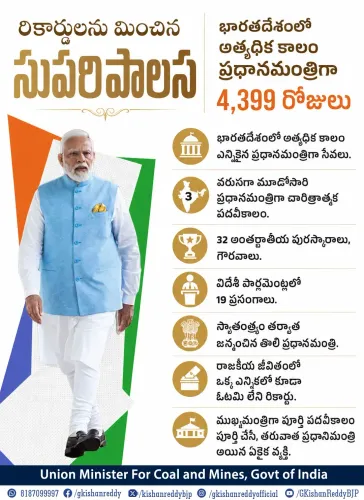
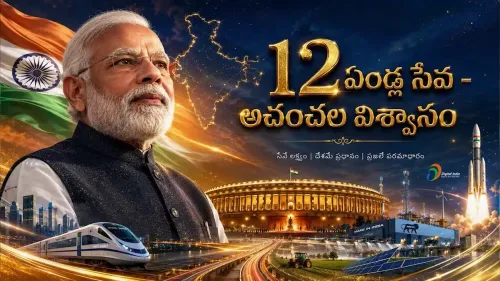
Reddy's post, written in Telugu, describes Modi as the 'kēropha aḍres' (care-of address) for honest and transparent administration over the past twelve years. Translated, the post states: 'Honourable Prime Minister Narendra Modi has stood as the defining address for corruption-free, transparent governance for the past 12 years.' The tribute was accompanied by the hashtag #LongestServingElectedPMModi, tying the message to a broader BJP campaign marking a milestone in Modi's tenure.
The post highlights two parallel achievements as framed by Reddy: an unprecedented scale of infrastructure creation and the near-elimination of poverty for a vast section of the population through 'various welfare schemes.' These claims reflect the BJP's core governance narrative that has been consistently deployed since 2014.
Policy Backdrop
Modi's government, which took office in May 2014, introduced Direct Benefit Transfer (DBT) and Aadhaar-linked delivery mechanisms to reduce leakages in welfare spending. Flagship programmes such as Swachh Bharat Mission (launched 2014) and PM Awas Yojana (expanded from 2015-16) became central to the administration's claim of delivering infrastructure and housing at scale to rural India.
Official poverty-reduction data has periodically been cited from NITI Aayog's Multidimensional Poverty Index (MPI) reports, released since 2021, which track deprivation across health, education, and living standards. The BJP has drawn on these reports to substantiate claims of large-scale poverty alleviation, though independent assessments of the precise numbers continue to be debated among economists and policy researchers.
Stakeholders and Impact
The primary beneficiaries cited in the BJP's welfare narrative are rural households, Below Poverty Line (BPL) families, and communities that gained access to housing, sanitation, and direct cash transfers under central schemes. For Telangana, where Reddy leads the state BJP unit, such messaging carries particular political weight as the party seeks to expand its footprint against the ruling BRS and the Congress.
Infrastructure stakeholders — including construction, logistics, and energy sectors — have also been positioned within the BJP's narrative as beneficiaries of record capital expenditure allocations in successive Union Budgets. Reddy's own ministry, Coal and Mines, has been central to the government's push to increase domestic energy production and reduce import dependence.
What's Next
The BJP's messaging around Modi's governance record is expected to intensify as the party approaches state and national electoral cycles. The next NITI Aayog MPI release and Union Budget allocations for infrastructure ministries will be closely watched to see whether updated outcome data reinforces or complicates the poverty-alleviation claims at the centre of this narrative. For Reddy specifically, sustaining this message in Telangana will be critical as the BJP attempts to consolidate its position in the state.
Point of View
Aimed at consolidating BJP support in a state where the party is still a challenger. The unverified '25 crore' poverty-reduction figure is a politically potent number, and its repetition by a senior minister suggests the party is doubling down on it ahead of electoral cycles. Whether updated NITI Aayog data or independent assessments corroborate the claim will determine how durable this messaging proves to be.
NationPress
26 Oct 2026
Frequently Asked Questions
What did G. Kishan Reddy say about PM Modi's governance?
Kishan Reddy credited PM Modi with twelve years of corruption-free, transparent governance and claimed that welfare schemes lifted nearly 25 crore people out of poverty in India.
What is the #LongestServingElectedPMModi hashtag about?
The hashtag is part of a BJP campaign marking a milestone in Narendra Modi's tenure as Prime Minister, positioning him as the longest-serving elected PM in India's history.
How many people does BJP claim were lifted out of poverty under Modi?
The BJP, including in Kishan Reddy's post, claims nearly 25 crore (250 million) people were lifted out of poverty through various central welfare schemes, citing figures linked to NITI Aayog's Multidimensional Poverty Index reports.
What welfare schemes is BJP referring to in its poverty-reduction claims?
The BJP's poverty-alleviation narrative centres on schemes such as PM Awas Yojana (rural housing), Swachh Bharat Mission (sanitation), and Direct Benefit Transfer programmes that use Aadhaar-linked delivery to reduce leakages.
Who is G. Kishan Reddy?
G. Kishan Reddy is the Union Minister of Coal and Mines in the Modi government and the president of the BJP's Telangana state unit.