Kishan Reddy Urges Citizens to Embrace Cycling on World Bicycle Day
Synopsis
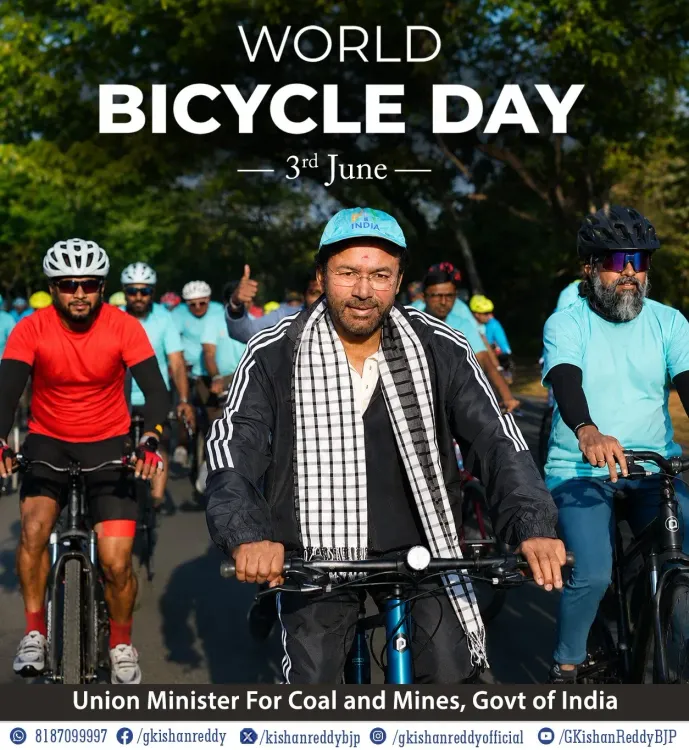
Union Coal and Mines Minister G. Kishan Reddy marked World Bicycle Day on 3 June 2026 with an appeal to citizens to embrace cycling for fitness and a cleaner environment, tying the message to the Fit India Movement and Prime Minister Narendra Modi's leadership on health and sustainability.
Key Takeaways
Kishan Reddy posted a World Bicycle Day message on 3 June 2026.
He urged citizens to embrace cycling for better health and a cleaner environment.
The appeal was tied to the Fit India Movement launched by PM Modi in August 2019.
World Bicycle Day was adopted by the UN General Assembly in 2018.
The message aligns with India's broader push on low-carbon urban mobility.
Reddy is also the BJP Telangana state president.
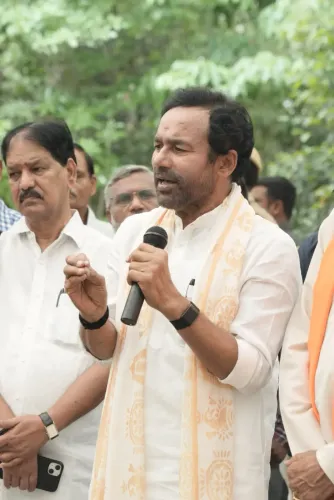
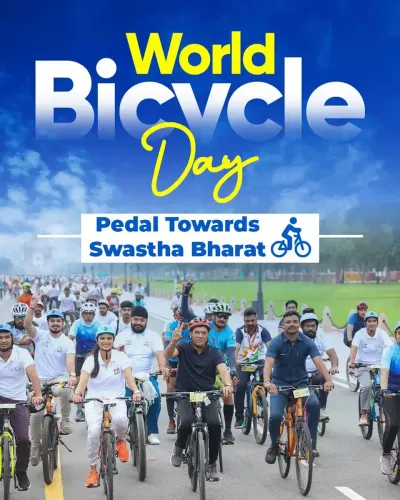
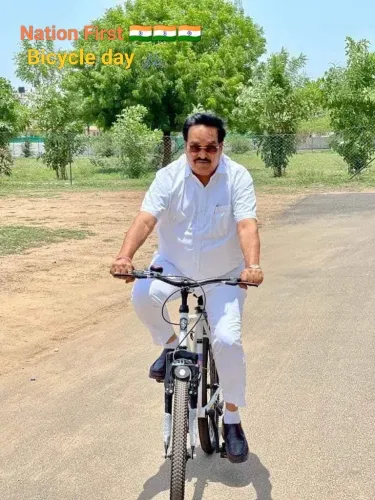
Union Coal and Mines Minister G. Kishan Reddy on Wednesday, 3 June 2026, marked World Bicycle Day with a call to citizens to 'rediscover the joy of cycling' and adopt it as a daily habit to improve public health and cut pollution. In a post on X, the senior Bharatiya Janata Party leader linked the appeal to the Fit India Movement and credited the leadership of Prime Minister Narendra Modi for shaping the wellness agenda.
Context
'For many of us, some of our fondest childhood memories began on a bicycle,' the minister wrote, framing the appeal in personal terms before pivoting to a policy message. 'Beyond nostalgia, cycling remains one of the simplest and most effective ways to enhance physical fitness, reduce pollution, and contribute to a greener environment.'
He signed off with the line 'Pedal today for a stronger tomorrow', echoing the slogan-led communication style that has become standard for senior BJP office-bearers on global observance days. Reddy is also the BJP Telangana state president, giving his message reach across both national policy circles and the southern political conversation.
Policy backdrop
World Bicycle Day, observed on 3 June, was adopted by the United Nations General Assembly in 2018 to recognise the bicycle as a simple, affordable and sustainable means of transport. Indian government messaging around the day routinely ties it to twin goals — non-communicable disease prevention and lower vehicular emissions.
The Fit India Movement, invoked in the post, was launched by Prime Minister Narendra Modi in August 2019 to encourage Indians to integrate physical activity into daily routines. The campaign has since spawned fitness challenges in schools, cycling drives in cities, and partnerships with sports federations.
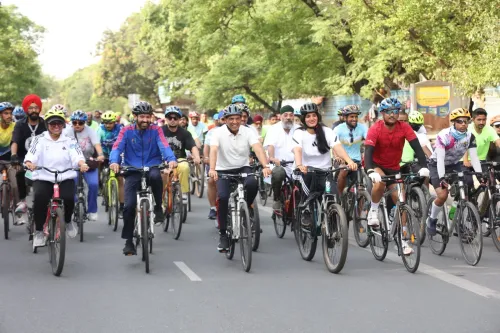
Cycling has also featured in India's urban mobility planning, with several smart-city projects investing in dedicated cycle tracks, public bicycle-sharing systems and last-mile connectivity to metro stations. The minister's appeal sits within that broader push to nudge commuters away from private motorised transport for short trips.
Stakeholders and impact
The most direct audience for the message is the urban commuter — office-goers, students and gig workers — for whom cycling could substitute short car or two-wheeler trips. Public-health advocates have long argued that even modest shifts to active transport can reduce cardiovascular risk and ease air-quality stress in Indian cities.
For the coal and mines portfolio that Reddy heads, the environmental framing also dovetails with the government's wider net-zero by 2070 commitment, where demand-side measures such as cleaner mobility complement supply-side energy transitions. Cycling infrastructure spending typically flows through urban affairs and state governments rather than the coal ministry, but cross-ministerial advocacy of low-carbon lifestyles is consistent with India's climate posture.
State governments, municipal bodies and resident welfare associations are the operational stakeholders who must translate such appeals into safer roads, protected lanes and parking for bicycles — the absence of which remains a persistent barrier to mass adoption.
What's next
Attention will turn to whether the symbolic appeal is followed by fresh announcements on city-level cycling infrastructure or participation drives under the Fit India Movement. Annual fitness challenges, school-level cyclothons and corporate wellness tie-ins typically follow such ministerial messaging.
For now, the post functions as a top-down nudge — a reminder from a senior Union minister that small everyday choices, framed as both nostalgia and policy, are being woven into the government's larger pitch on health and sustainability. The test, as with previous lifestyle campaigns, will be whether the appeal translates into measurable behaviour change on Indian streets.
Point of View
Stitching cycling to the Fit India Movement and, by extension, to Prime Minister Modi's personal brand of wellness politics. By layering nostalgia with sustainability, Reddy widens the appeal beyond fitness enthusiasts to climate-conscious urban voters. The framing also signals continuity in the government's lifestyle-as-policy messaging, which has steadily expanded from yoga to millets to active mobility. The real test, as always, lies not in the tweet but in whether municipal cycling infrastructure keeps pace with the rhetoric.
NationPress
20 Sept 2026
Frequently Asked Questions
When is World Bicycle Day observed?
World Bicycle Day is observed every year on 3 June. It was adopted by the United Nations General Assembly in 2018 to recognise the bicycle as a simple, affordable and sustainable means of transport.
What did G. Kishan Reddy say on World Bicycle Day 2026?
Union Coal and Mines Minister G. Kishan Reddy urged citizens to rediscover the joy of cycling and embrace it as a way of life for better health and a cleaner environment. He linked the appeal to the Fit India Movement and Prime Minister Narendra Modi's leadership.
What is the Fit India Movement?
The Fit India Movement is a nationwide initiative launched by Prime Minister Narendra Modi in August 2019 to encourage Indians to integrate physical activity and healthier lifestyles into daily routines. It runs school-level challenges, fitness drives and partnerships with sports bodies.
Who is G. Kishan Reddy?
G. Kishan Reddy is the Union Minister of Coal and Mines and the BJP state president in Telangana. He is a senior leader in the Bharatiya Janata Party and frequently communicates on national policy and party affairs.
How does cycling help the environment in India?
Cycling replaces short motorised trips, cutting tailpipe emissions and easing urban air pollution. It also reduces traffic congestion and supports India's broader climate commitments, including the net-zero by 2070 target, while improving public health.