Kishan Reddy: BRS, Congress Left Singareni in Crisis
Synopsis
Union Coal Minister G. Kishan Reddy has accused the BRS and Congress governments in Telangana of pushing Singareni Collieries into crisis by withholding dues worth nearly Rs 50,000 crore, while crediting the Modi government with reviving production through the Tadicherla-II and Naini coal block allocations.
Key Takeaways
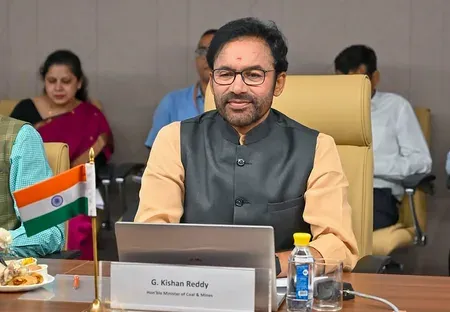
Union Coal and Mines Minister G.
Kishan Reddy accused both the previous BRS and current Congress Telangana governments of withholding dues owed to Singareni Collieries .
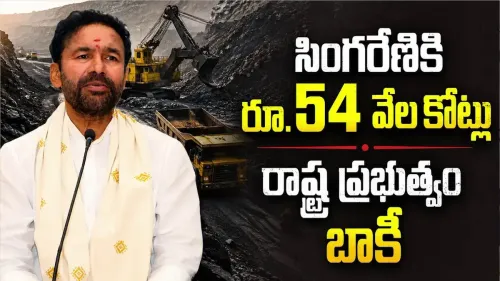
Reddy alleged that dues owed by state power utilities to SCCL have accumulated to nearly Rs 50,000 crore (figure unverified in public record).
The minister claimed Singareni's employee count fell from 70,000 to 40,000 under the previous BRS administration (figure unverified in public record).
The Modi government is credited with initiating coal production at Tadicherla-II in Telangana and Naini Coal Block in Odisha to support Singareni's revival.
Reddy called on Congress and BRS to acknowledge the central government's support and abandon what he called 'cheap politics' over the issue.
Singareni Collieries is a joint central-state PSU and a major employer in Telangana's coal belt, making its financial health a significant political and economic issue.
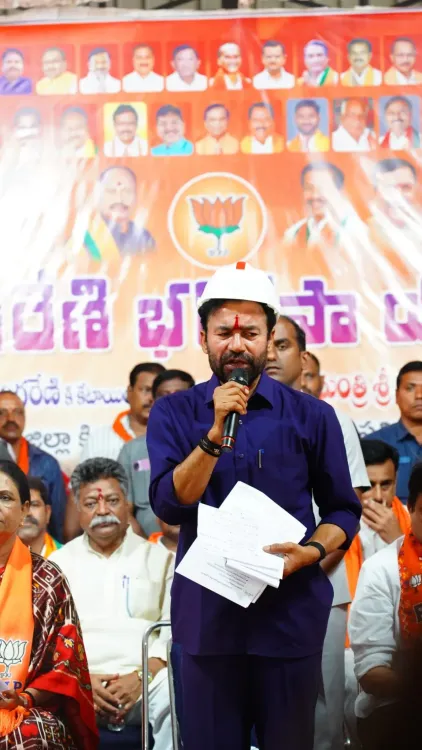
Union Coal and Mines Minister G. Kishan Reddy on Monday, July 13, 2026, accused the previous Bharat Rashtra Samithi (BRS) government and the current Congress administration in Telangana of pushing Singareni Collieries Company Limited (SCCL) into a financial crisis by withholding dues, while crediting the Modi government with reviving the state-run coal miner's fortunes through new block allocations in Telangana and Odisha.
Context
Replying to a post by Prime Minister Narendra Modi, Reddy wrote in Telugu that 'gata BRS prabhutvam nirlakshyam, tappudu vidhanala valle' (due to the neglect and wrong policies of the previous BRS government), Singareni's workforce had fallen and its revenues had deteriorated sharply. He stated that the company's employee count had dropped from 70,000 to 40,000 under the previous dispensation — a figure the research background flags as unverified in established public record. Reddy also alleged that both the BRS and Congress governments had used Singareni 'like an ATM', accumulating dues of nearly Rs 50,000 crore owed to the company by state power utilities — a figure similarly unverified in public record.
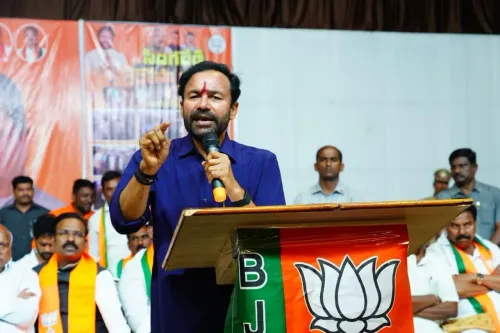
The minister is the BJP Telangana state president, and his remarks come in the context of ongoing political competition between the BJP, the Congress-led state government, and the BRS opposition in Telangana.
Policy Backdrop
Singareni Collieries is a joint-sector public undertaking co-owned by the Government of Telangana and the Government of India, and is one of the largest employers in the state's mining belt. The company supplies coal primarily to Telangana's state-run power generation utilities, making timely payment of dues by those utilities critical to SCCL's financial health.
Reddy highlighted that the Modi government had taken the initiative to commence coal production at 'Tadicherla-II', a block in Telangana, and at 'Naini Coal Block' in Odisha, which he said would secure the company's future and provide employment assurance to thousands of workers. The central government has, since 2015, pursued an auction-based coal block allocation regime aimed at expanding production and improving transparency following a 2014 Supreme Court order that cancelled earlier allocations.
Stakeholders and Impact
The most directly affected stakeholders are Singareni's workforce — estimated in the minister's post to have shrunk to around 40,000 employees — and the communities in Telangana's coal belt that depend on the company for livelihoods. The activation of Tadicherla-II and Naini Coal Block is presented by Reddy as a lifeline for these workers, potentially reversing the employment decline he attributes to state-level mismanagement.
Telangana's state power utilities are also central to this dispute: they are the primary buyers of Singareni coal, and Reddy's allegation is that successive state governments allowed dues to accumulate without settlement, starving the PSU of operating revenue. The Congress state government and BRS have not responded publicly to these specific allegations as of this report.
What's Next
Reddy called on the Congress and BRS parties to set aside what he termed 'cheap politics' and honestly acknowledge the 'historic support' extended by the Modi government to Singareni and its workers. The key variables to watch are the pace of production ramp-up at Tadicherla-II and Naini, and whether centre-state negotiations result in a concrete timeline for clearing the outstanding dues owed to SCCL by Telangana's power sector. A resolution of the dues question would be the most direct test of whether the political rhetoric translates into financial relief for the company.
Point of View
While positioning the BJP-led Centre as the company's saviour ahead of any future state election cycle. The invocation of specific, large numbers (Rs 50,000 crore in dues, a halving of the workforce) is designed to make the allegation concrete and memorable, even if those figures await independent verification. This fits a broader BJP pattern of using central coal policy announcements to draw a contrast with state-level governance in resource-rich states. The forward pressure on Congress and BRS to 'honestly acknowledge' central support signals that the BJP intends to sustain this narrative through the production milestones at Tadicherla-II and Naini.
NationPress
12 Oct 2026
Frequently Asked Questions
Why is Singareni Collieries in financial trouble?
Union Coal Minister G. Kishan Reddy has alleged that Telangana's state power utilities, under both the previous BRS and current Congress governments, failed to pay dues owed to Singareni Collieries for coal supplied, accumulating arrears he puts at nearly Rs 50,000 crore — a figure not yet independently verified.
What is the Tadicherla-II coal block?
Tadicherla-II is a coal block in Telangana whose production commencement has been linked to the central government's efforts to revive Singareni Collieries' output and employment, according to Minister G. Kishan Reddy's statement.
What is the Naini Coal Block in Odisha?
The Naini Coal Block is located in Odisha and has been cited by Kishan Reddy as another block where coal production has been initiated under the Modi government's push to support Singareni Collieries' operations.
How many employees does Singareni Collieries have?
Minister G. Kishan Reddy has stated that Singareni's workforce fell from 70,000 to around 40,000, attributing the decline to what he called the neglect and wrong policies of the previous BRS government; these figures have not been independently verified.
What is G. Kishan Reddy's role in Telangana politics?
G. Kishan Reddy is the Union Minister of Coal and Mines at the Centre and also serves as the BJP's Telangana state president, making him the party's primary political face in the state on both governance and electoral matters.