Kishan Reddy to Launch AAROH Mine Closure Report on July 22

Synopsis
The Ministry of Coal will release AAROH, India's first Annual Report on Mine Closure, on 22 July 2026 in New Delhi. The event marks the scientific closure of 42 coal mines since Independence and includes an India-Germany agreement, Coal NEER Plant inaugurations, and vocational training MoUs under the Revised Jharia Master Plan.
Key Takeaways
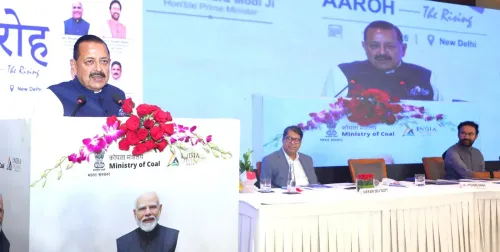
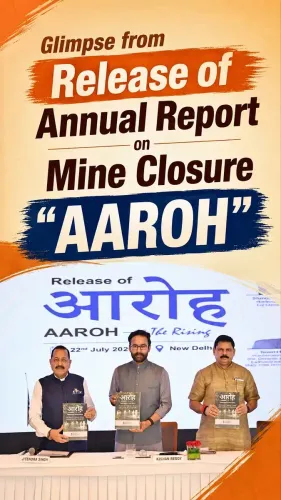
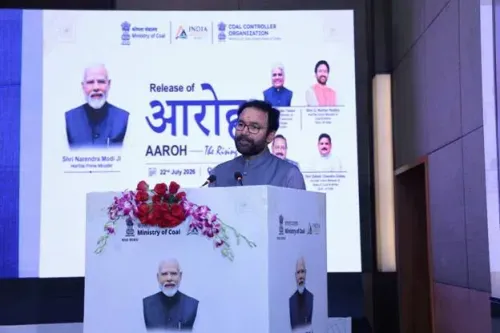
The Ministry of Coal will release AAROH – Annual Report on Mine Closure on 22 July 2026 in New Delhi .
India has scientifically closed 42 coal mines for the first time since Independence, per the ministry's announcement.
An India-Germany Implementation Agreement on scientific mine closure will be signed at the event, formalising bilateral technical cooperation.
Coal NEER Plants will be inaugurated to provide safe drinking water access in coal-bearing communities.
Tripartite MoUs will be signed to establish vocational training facilities under the Revised Jharia Master Plan in Jharkhand .
The AAROH report represents a shift in coal governance toward integrating ecological restoration and community development into mine closure policy.
Union Coal and Mines Minister G. Kishan Reddy announced on Tuesday, 22 July 2026, that the Ministry of Coal will release AAROH – Annual Report on Mine Closure in New Delhi, marking what the ministry describes as a landmark in sustainable and responsible mining governance.
Context
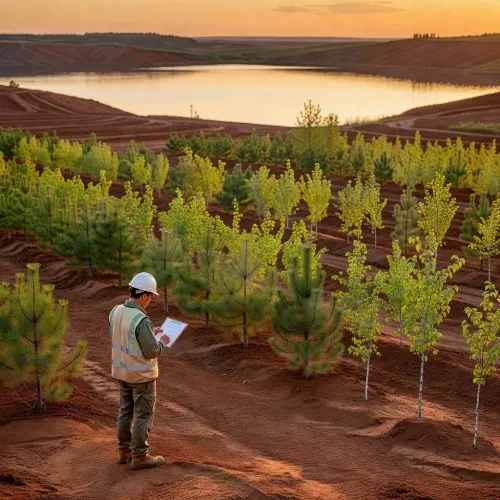
The AAROH report will document India's progress in scientifically closing 42 coal mines — a first since Independence, according to the minister's post. The event will highlight achievements in ecological restoration, sustainable land reclamation, and community-centric development across coal-bearing regions.
Mine closure in India has historically been an under-regulated end-of-life step, with thousands of abandoned workings leaving behind land subsidence, water contamination, and displaced communities. The release of a dedicated annual report signals an institutional effort to track and publicise closure outcomes systematically.
Policy Backdrop
The National Mineral Policy 2019 mandated scientific mine closure, ecological restoration, and post-closure land use planning across India, providing the regulatory foundation for the AAROH framework. India's cooperation with Germany on sustainable mining and just transition has been a recurring feature of bilateral engagements since the 2010s, with German technical agencies supplying expertise on closure standards and rehabilitation practices.
The 22 July event will also witness the signing of an India-Germany Implementation Agreement on scientific mine closure, formalising that technical partnership. Separately, tripartite Memoranda of Understanding (MoUs) will be signed to establish vocational training facilities under the Revised Jharia Master Plan, the updated framework for fire control, land reclamation, and community rehabilitation in Jharia, Jharkhand's historically fire-affected coalfields. The original Jharia Master Plan was Cabinet-approved in 2009.
Stakeholders and Impact
Communities in coal-bearing states — particularly in Jharkhand and Odisha — stand to be the primary beneficiaries of the initiatives announced. The Coal NEER Plants, to be inaugurated at the same event, are designed to strengthen access to safe drinking water in these regions, addressing a chronic public-health concern in areas where legacy mining has contaminated groundwater.
Subsidiaries of Coal India Limited, the state-owned mining conglomerate, are the principal implementing agencies for mine closure under the ministry's framework. Vocational training centres envisaged under the Revised Jharia Master Plan are intended to provide alternative livelihoods to workers and residents displaced by mine closures, embedding economic diversification into the closure process itself.
What's Next
The operationalisation of Coal NEER Plants and the progress of tripartite MoUs for vocational training centres will be closely watched as indicators of whether the AAROH framework translates into on-ground outcomes. Parliamentary committees and state governments in mineral-bearing states are likely to scrutinise the report's findings and the pace of implementation of the India-Germany Implementation Agreement.
If the AAROH report establishes a credible annual accountability mechanism, it could reshape how India's coal sector governance is evaluated — moving the policy conversation from production targets alone toward integrated metrics of environmental and social performance at mine sites.
Point of View
Reported, and celebrated. By anchoring the event around an India-Germany agreement and community welfare schemes like Coal NEER, the Ministry of Coal is constructing a narrative of responsible transition that serves both domestic political objectives and India's international sustainability commitments. The Revised Jharia Master Plan component is particularly significant: Jharia's underground fires and displacement crisis have been a long-standing governance failure, and embedding vocational training MoUs into the closure framework signals an attempt to address that legacy. Whether the AAROH mechanism produces durable accountability or remains a ceremonial annual exercise will depend on the rigour of its data and the independence of its verification.
NationPress
20 Oct 2026
Frequently Asked Questions
What is AAROH report released by Ministry of Coal?
AAROH stands for Annual Report on Mine Closure, a document released by the Ministry of Coal to track India's progress in scientifically closing coal mines, covering ecological restoration, land reclamation, and community development outcomes.
How many coal mines has India closed scientifically?
According to Union Minister G. Kishan Reddy's announcement, India has scientifically closed 42 coal mines for the first time since Independence, a milestone to be documented in the AAROH report.
What is the India-Germany mine closure agreement about?
The India-Germany Implementation Agreement on scientific mine closure is a bilateral accord formalising technical cooperation between the two countries on mine closure standards, ecological restoration methods, and rehabilitation practices.
What are Coal NEER Plants?
Coal NEER Plants are facilities being set up by the Ministry of Coal to provide safe drinking water access in coal-bearing regions, where legacy mining has often contaminated local water sources.
What is the Revised Jharia Master Plan?
The Revised Jharia Master Plan is an updated government framework for addressing underground mine fires, land subsidence, and community rehabilitation in the Jharia coalfields of Jharkhand , building on the original Cabinet-approved plan from 2009 .