Kishan Reddy Releases AAROH Mine Closure Report in New Delhi
Synopsis
Union Coal and Mines Minister G. Kishan Reddy released AAROH — the Annual Report on Mine Closure — in New Delhi on 22 July 2026, institutionalising public accountability for mine rehabilitation and environmental compliance across India's coal sector.
Key Takeaways
Kishan Reddy , Union Coal and Mines Minister, released AAROH — the Annual Report on Mine Closure on 22 July 2026 in New Delhi .
AAROH documents the status of mine rehabilitation, closure plans, and environmental compliance across India's coal mines.
India's mine closure framework is anchored in the Mine Closure Guidelines 2009 , National Mineral Policy 2019 , and the MMDR Amendment Act 2015 .
Key stakeholders include coal companies, local communities in mining states, environmental regulators, and mine workers.
Follow-up action on escrow fund norms and parliamentary scrutiny in the monsoon and winter sessions are expected next steps.
The annual report format is intended to create a periodic, public-facing audit trail of mine closure compliance across the sector.
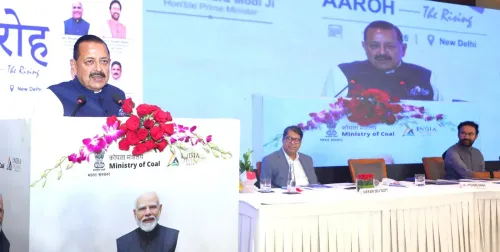
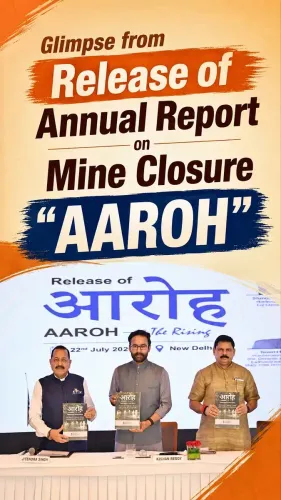
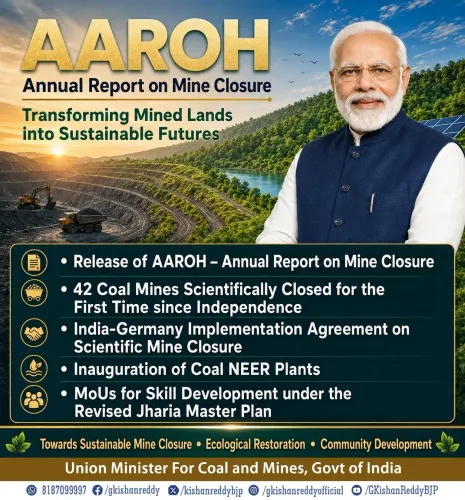
Union Coal and Mines Minister G. Kishan Reddy on Wednesday, 22 July 2026, presided over the live release of AAROH — the Annual Report on Mine Closure in New Delhi, marking the Ministry of Coal's latest step toward institutionalising transparency in mine rehabilitation and environmental compliance across India's coal sector.
Context
The release of AAROH signals a formal effort by the Ministry of Coal to document and publicly account for the status of mine closure plans, rehabilitation progress, and environmental compliance across operating and legacy coal mines. Mine closure — covering both progressive restoration during operations and final post-mining land use — has emerged as one of the most scrutinised aspects of India's coal governance in recent years. The annual report format is designed to bring greater accountability to a process that has historically lacked systematic public disclosure.
India's coal sector encompasses hundreds of opencast and underground mines managed by public sector undertakings and private operators, many of which have operated for decades, leaving behind significant land disturbance, water-table disruption, and community displacement. Addressing these legacy issues has become central to any credible just-transition conversation in the sector.
Policy Backdrop
The regulatory foundation for mine closure in India was laid by the Mine Closure Guidelines of 2009, which required all coal mines to submit progressive and final closure plans as a condition of operation. The National Mineral Policy 2019 subsequently elevated scientific mine closure, environmental restoration, and community consultation to core national principles, while the Mines and Minerals (Development and Regulation) Amendment Act of 2015 strengthened provisions for dedicated mine closure escrow funds and post-mining land-use planning.
Successive governments have tied closure compliance to lease renewals and the star-rating system for mines, creating financial and regulatory incentives for operators to maintain up-to-date closure plans. The introduction of a dedicated annual report — AAROH — builds on this framework by creating a periodic, public-facing audit trail of compliance status across the sector.
Stakeholders and Impact
Coal mining companies, including major public sector entities, face direct compliance obligations under mine closure norms and will be assessed through the data compiled in AAROH. Local communities living near mine sites — often among the most economically and environmentally vulnerable populations in states such as Jharkhand, Chhattisgarh, Odisha, and Telangana — stand to benefit most from rigorous closure and rehabilitation standards. Environmental regulators and state pollution control boards are key implementation partners whose coordination with the Ministry determines ground-level outcomes. Mine workers and their families also have a direct stake in post-closure land-use decisions, which shape livelihood alternatives after extraction ends.
Civil society organisations and parliamentary committees monitoring environmental and labour standards in the mining sector are expected to scrutinise the report's findings closely, particularly regarding the adequacy of escrow fund balances and the pace of afforestation and land reclamation at closed sites.
What's Next
The release of AAROH 2026 is expected to be followed by follow-up circulars from the Ministry on mine closure escrow fund norms and compliance timelines. Parliamentary questions on implementation status are anticipated in the upcoming monsoon and winter sessions of Parliament. How comprehensively the report documents shortfalls — and whether it triggers enforcement action against non-compliant operators — will determine whether the annual report becomes a genuine accountability instrument or a procedural exercise. The Ministry's willingness to act on the report's findings will be the clearest signal of the government's seriousness on the just-transition agenda in coal.
Point of View
Annual public report is a meaningful institutional step — it converts mine closure compliance from a bureaucratic obligation into a trackable, publicly visible metric, which raises the political cost of inaction. For Minister Kishan Reddy, who holds the dual role of Coal Minister and BJP Telangana state president, the event also carries regional resonance given Telangana's own legacy of coal and mineral extraction. The real test of the report's value will come from whether its data triggers enforcement — escrow fund adequacy, lease renewal linkages, and afforestation targets are the metrics to watch. Globally, India is under increasing pressure to demonstrate credible just-transition planning in coal, and a robust AAROH could serve as evidence of that commitment in multilateral forums.
NationPress
21 Oct 2026
Frequently Asked Questions
What is AAROH in the context of Indian coal mining?
AAROH stands for Annual Report on Mine Closure. It is a report released by India's Ministry of Coal documenting the status of mine rehabilitation, progressive and final closure plans, and environmental compliance across coal mines in the country.
What are India's mine closure rules for coal mines?
India's mine closure framework is governed by the Mine Closure Guidelines of 2009, which require all coal mines to submit progressive and final closure plans. The National Mineral Policy 2019 and the MMDR Amendment Act 2015 further mandate scientific closure, community consultation, and dedicated escrow funds for post-mining restoration.
Who released the AAROH mine closure report in 2026?
Union Coal and Mines Minister G. Kishan Reddy released the AAROH — Annual Report on Mine Closure — on 22 July 2026 at a live event in New Delhi organised by the Ministry of Coal.
Why is mine closure important for communities near coal mines in India?
Mine closure directly affects local communities through land reclamation, water-table restoration, and livelihood alternatives after extraction ends. Communities in states such as Jharkhand, Chhattisgarh, Odisha, and Telangana are among the most impacted by legacy environmental damage from coal operations.
What happens after the AAROH mine closure report is released?
After the report's release, the Ministry of Coal is expected to issue follow-up circulars on escrow fund norms and compliance timelines. Parliamentary committees are also likely to raise questions on implementation status during the monsoon and winter sessions of Parliament.