AAROH report launch, India-Germany GIZ pact set for Wednesday by Coal Ministry

Synopsis
India is releasing its first-ever annual report on mine closure — AAROH — while simultaneously signing a technical cooperation pact with Germany's GIZ. The backdrop: 42 coal mines have been scientifically closed for the first time since independence, a quiet but consequential shift in how the world's second-largest coal producer is managing its energy transition liabilities.
Key Takeaways
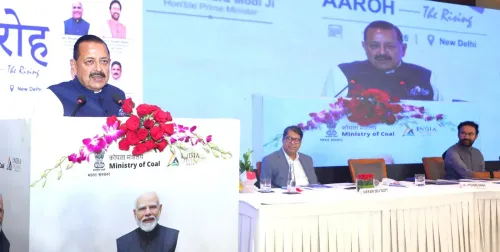
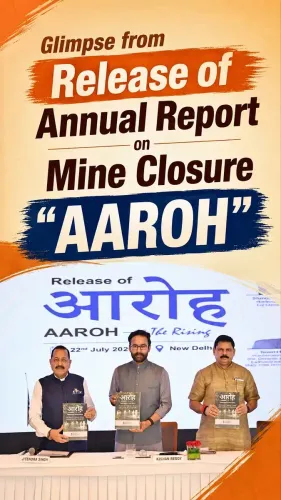
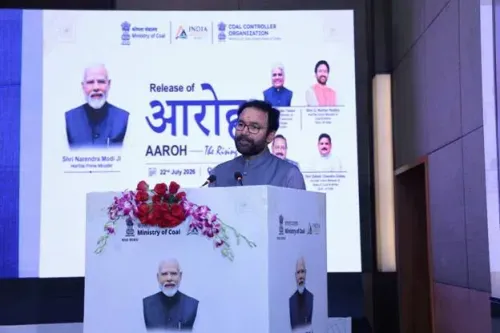
The Ministry of Coal will release AAROH – Annual Report on Mine Closure on Wednesday, 23 July 2025 in New Delhi .
For the first time since independence, 42 coal mines have been scientifically closed under approved mine closure plans.
An Implementation Agreement will be signed with Germany's GIZ for technical cooperation on to-be-closed coal mines.
Coal NEER Plants set up by Coal India Limited to provide safe drinking water in coal-bearing regions will be inaugurated at the event.
Kishan Reddy will be Chief Guest; Bhupender Yadav and Jitendra Singh will also attend.
Key frameworks guiding the process include RECLAIM , L.I.V.E.S. , and the decision support tool SUVIKALP .
The Ministry of Coal is set to release AAROH – Annual Report on Mine Closure on Wednesday, 23 July 2025 in New Delhi, marking a landmark moment in India's post-mining governance. The event will also see the signing of an Implementation Agreement with Germany's Deutsche Gesellschaft für Internationale Zusammenarbeit (GIZ) and the inauguration of Coal NEER Plants established by Coal India Limited (CIL) and its subsidiaries.
Historic First: 42 Coal Mines Scientifically Closed
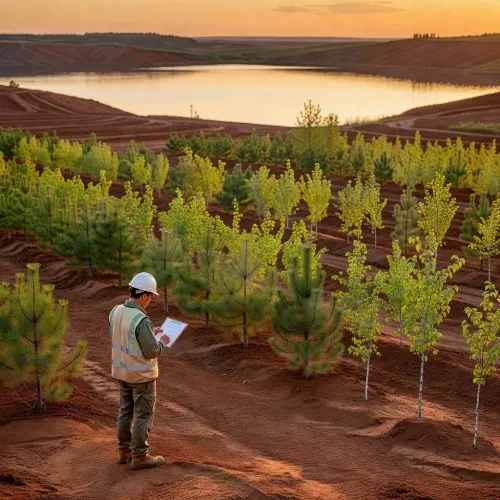
For the first time since independence, 42 coal mines have been scientifically closed in accordance with approved mine closure plans, according to a Coal Ministry statement issued on Tuesday, 22 July 2025. The AAROH report documents the transformative journey of these sites, detailing how scientific reclamation, ecological restoration, sustainable post-mining land utilisation, and community-centric interventions have enabled the productive reuse of former mining areas.
This milestone is significant in a country where coal mining has historically left behind degraded land and displaced communities. The report is intended to serve as a benchmark and reference document for future closure planning across India's coalfields.
India-Germany Technical Cooperation on Mine Closure
The Ministry of Coal will sign an Implementation Agreement with GIZ to advance technical cooperation specifically focused on 'to-be-closed coal mines.' The partnership aims to strengthen institutional capacity, facilitate knowledge exchange, and support the adoption of international best practices in scientific mine closure and post-mining land development.
This comes amid growing global pressure on coal-dependent economies to manage the social and environmental costs of energy transition. India, which operates one of the world's largest coal sectors, is increasingly seeking structured frameworks to handle the closure of ageing mines without disrupting local livelihoods.
Coal NEER Plants and Community Development
The inauguration of Coal NEER Plants — set up by Coal India Limited through its subsidiaries — will also take place at the event. These plants are designed to strengthen access to safe and sustainable drinking water in coal-bearing regions, reinforcing the government's stated commitment to community-focused development in mining areas.
An accompanying exhibition will showcase on-ground innovations in mine reclamation, ecological restoration, and community-oriented rehabilitation, with participation from Coal India Limited, NLC India Limited, Singareni Collieries Company Limited (SCCL), NTPC, and private mining organisations.
Key Frameworks Driving Scientific Closure
The Ministry has, over recent years, developed a series of frameworks to guide the process: the RECLAIM Framework for community engagement, the L.I.V.E.S. Framework for sustainable mine closure and repurposing, and SUVIKALP — an interactive decision support tool for assessing mine repurposing options. These tools are intended to standardise stakeholder participation and sustainable land-use planning across India's coalfields.
Senior Ministers to Attend
Union Minister of Coal and Mines G. Kishan Reddy will serve as Chief Guest at the event. Bhupender Yadav, Union Minister for Environment, Forest and Climate Change, and Jitendra Singh, Union Minister of State (Independent Charge) for Science and Technology, will also attend, signalling inter-ministerial alignment on the mine closure agenda.
The release of AAROH and the GIZ agreement together signal a policy shift — from treating mine closure as a liability to repositioning it as an opportunity for ecological and community renewal. How effectively these frameworks translate into measurable outcomes on the ground will be the defining test going forward.
Point of View
Contaminated water, and communities with no transition plan. The GIZ partnership and frameworks like SUVIKALP are promising signals, but frameworks without enforcement teeth rarely move outcomes. The real question is whether AAROH becomes an accountability document — one that tracks what actually happened to those 42 sites and the people around them — or just an annual showcase. India's energy transition will produce many more mine closures in the years ahead; how it handles the first 42 will set the template.
NationPress
20 Oct 2026
Frequently Asked Questions
What is the AAROH report released by the Ministry of Coal?
AAROH – Annual Report on Mine Closure is a report released by the Ministry of Coal documenting the scientific closure of 42 coal mines across India — the first such closures since independence. It covers ecological restoration, land reclamation, and community-focused reuse of former mining sites.
What is the India-Germany GIZ agreement on coal mine closure?
The Ministry of Coal will sign an Implementation Agreement with Germany's Deutsche Gesellschaft für Internationale Zusammenarbeit (GIZ) to advance technical cooperation on to-be-closed coal mines. The pact focuses on strengthening institutional capacity, knowledge sharing, and adoption of international best practices in scientific mine closure.
What are Coal NEER Plants and why are they significant?
Coal NEER Plants are drinking water facilities set up by Coal India Limited and its subsidiaries in coal-bearing regions. They are being inaugurated alongside the AAROH report launch as part of the government's community-focused development commitment in mining areas.
Which ministers will attend the AAROH report launch event?
Union Minister of Coal and Mines G. Kishan Reddy will be the Chief Guest. Union Minister for Environment, Forest and Climate Change Bhupender Yadav and Union Minister of State for Science and Technology Jitendra Singh will also attend the event.
What frameworks has India developed for scientific mine closure?
The Ministry of Coal has developed three key frameworks: the RECLAIM Framework for community engagement, the L.I.V.E.S. Framework for sustainable mine closure and repurposing, and SUVIKALP — an interactive decision support tool for evaluating mine repurposing options across India's coalfields.