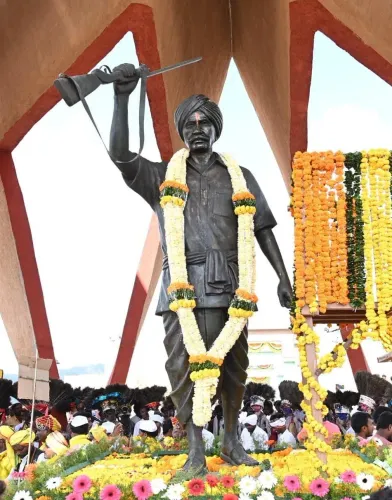
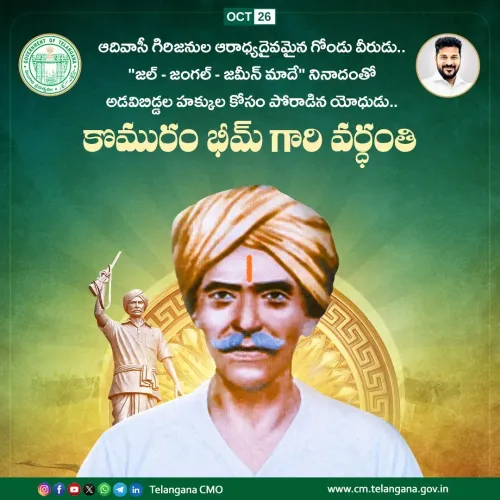
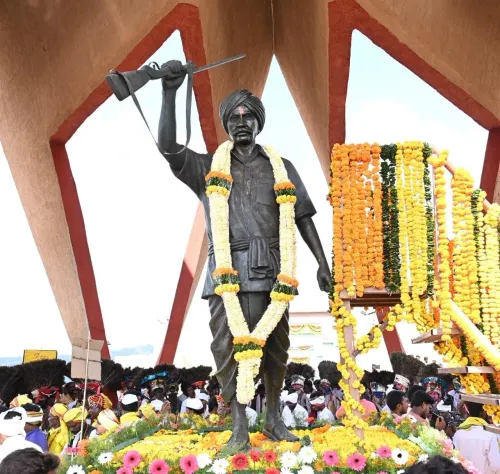
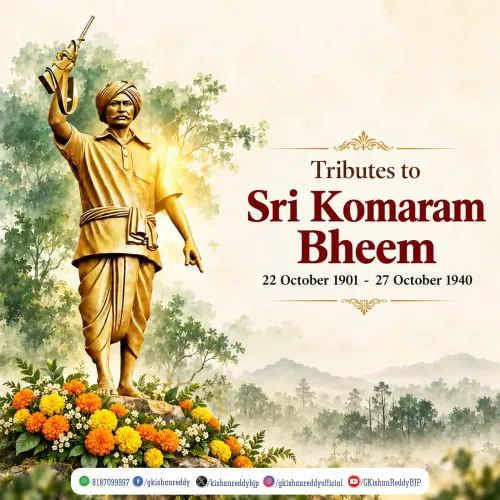
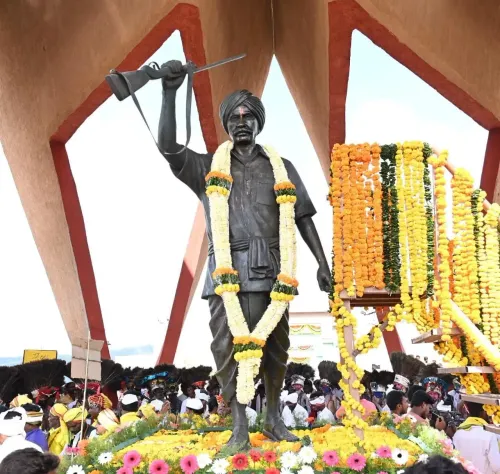
Kishan Reddy Pays Tribute to Komaram Bheem on Death Anniversary
Synopsis
Union Coal and Mines Minister G. Kishan Reddy honoured Gond tribal martyr Komaram Bheem on his death anniversary, paying homage to the leader who fought under the 'Jal, Jangal, Jameen' slogan against the Nizam of Hyderabad's rule for Adivasi rights.
Key Takeaways
Kishan Reddy posted a tribute in Telugu on 26 October 2026 to mark the death anniversary of Gond tribal martyr Komaram Bheem .
Komaram Bheem led an Adivasi resistance against the Nizam of Hyderabad's rule in the 1940s, fighting for tribal rights to water, forests, and land.
His rallying cry, 'Jal, Jangal, Jameen' ('water, forest, land'), remains one of the most enduring slogans in India's Adivasi rights history.
Kishan Reddy described Bheem as the 'Panther of the Gonds' and an immortal martyr whose spirit of struggle is eternally memorable.
The Forest Rights Act, 2006 , represents the most significant legislative effort to address the Adivasi land and forest rights that Bheem's movement championed.
Kishan Reddy holds the dual roles of Union Coal and Mines Minister and BJP Telangana state president , giving the tribute both national and state-level political resonance.
A slogan that echoed through the forests of Telangana nearly eight decades ago still resonates in Indian public life — and on Monday, 26 October 2026, Union Coal and Mines Minister G. Kishan Reddy invoked it to honour the memory of Komaram Bheem, the Gond tribal martyr who defied the Nizam of Hyderabad's autocratic rule in the name of Adivasi rights.
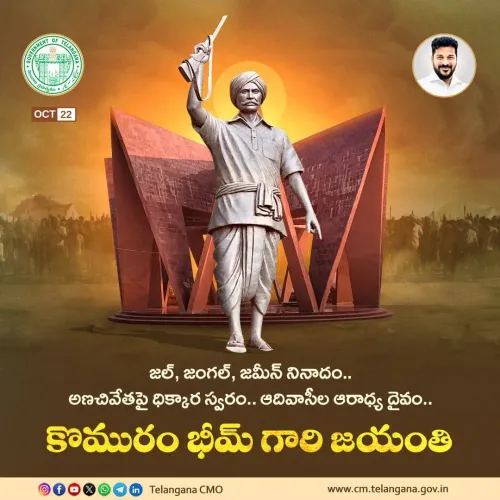
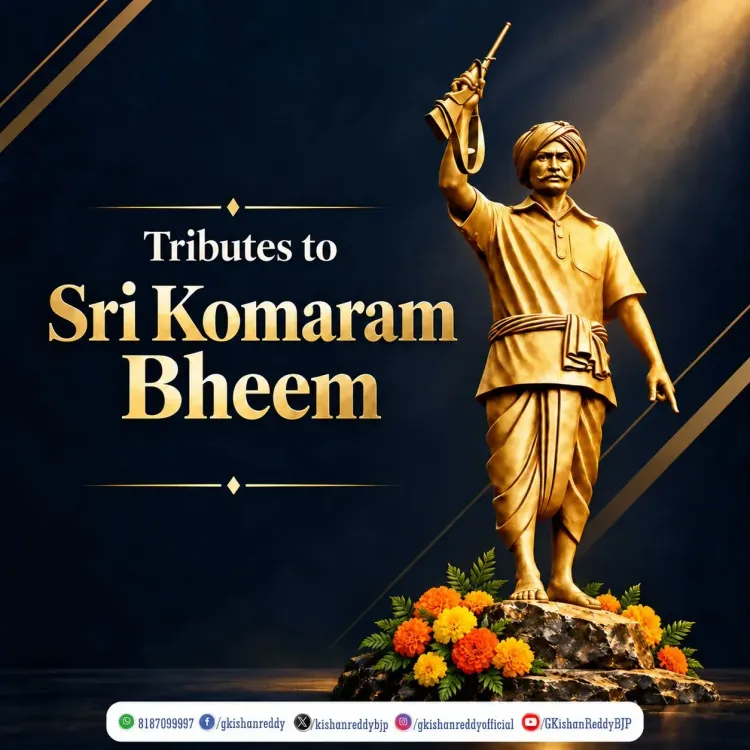
Posting in Telugu on the occasion of Komaram Bheem's death anniversary, Minister Kishan Reddy wrote: 'Jal, Jangal, Jameen' — 'water, forest, land' — was the rallying cry with which Bheem fought against the Nizam's oppressive regime and for the rights of Adivasi communities. He saluted Bheem as a 'Gondu Bebbuli' ('Panther of the Gonds') and an immortal martyr, adding that his spirit of struggle, as a symbol of the self-respect of the children of the forest, would remain eternally memorable.The Man Behind the Slogan: Who Was Komaram Bheem?
Komaram Bheem was a Gond tribal leader from the forested regions of what is today Telangana. In the 1940s, he mounted a determined resistance against the Nizam of Hyderabad's princely administration, which had long denied Adivasi communities their customary rights over water, forests, and land. His three-word demand — Jal, Jangal, Jameen — distilled the existential stakes for tribal populations into a phrase that endured long after his martyrdom. He was killed in the struggle, cementing his place as one of Telangana's most revered pre-independence icons.A Resistance Rooted in Forest Rights
The grievances Komaram Bheem articulated were not settled with his death. It took decades — and the independent Indian state — to begin addressing them legislatively. The Forest Rights Act, 2006, formally recognised individual and community rights of Scheduled Tribes over forest land and resources, a statutory acknowledgement of claims that movements like Bheem's had fought for at enormous personal cost. In Telangana's tribal districts, the Act's implementation remains an ongoing conversation, making the legacy of Bheem's slogan politically and practically alive today.Tributes Across Telangana's Political Landscape
References to Komaram Bheem occupy a distinctive space in Telangana's public memory. Leaders across the political spectrum regularly mark his death anniversary, reflecting the broad cultural resonance of the Jal, Jangal, Jameen movement within the state's identity. For Kishan Reddy, who serves simultaneously as a Union Minister and as BJP Telangana state president, the tribute carries both a personal and an organisational dimension — an assertion that the party stands within, rather than apart from, the state's own historical narrative of resistance to oppression.The forests that Komaram Bheem died defending still hold millions of Adivasi lives within them. His anniversary is a reminder that slogans born in struggle have a way of outlasting the regimes they challenged.
Point of View
Particularly its tribal heritage. The invocation of 'Jal, Jangal, Jameen' is politically significant: it connects a 1940s Adivasi uprising to contemporary debates over the Forest Rights Act and tribal land claims, issues that remain live in Telangana's forested districts. For a minister who oversees the coal sector — with its direct interface with tribal land and forest clearances — paying homage to Komaram Bheem also implicitly engages with the tension between resource extraction and Adivasi rights. How that tension is resolved in policy will ultimately matter more than the anniversary tribute.
NationPress
26 Oct 2026
Frequently Asked Questions
Who was Komaram Bheem?
Komaram Bheem was a Gond tribal leader from Telangana who in the 1940s led an armed resistance against the autocratic rule of the Nizam of Hyderabad, fighting for Adivasi rights to water, forests, and land under the slogan 'Jal, Jangal, Jameen'. He was martyred in the struggle and is revered as a symbol of tribal self-respect in Telangana.
What does 'Jal, Jangal, Jameen' mean?
'Jal, Jangal, Jameen' means 'water, forest, land' in Hindi. It was the rallying slogan of Komaram Bheem's movement, encapsulating the three fundamental natural resources over which Adivasi communities sought recognition of their traditional rights.
Why did G. Kishan Reddy pay tribute to Komaram Bheem?
Union Coal and Mines Minister G. Kishan Reddy posted a tribute to Komaram Bheem on the occasion of the martyr's death anniversary on 26 October 2026, honouring his resistance against the Nizam of Hyderabad and his legacy for Adivasi rights.
What is the Forest Rights Act and how does it relate to Komaram Bheem?
The Forest Rights Act, 2006, legally recognised the rights of Scheduled Tribes over forest land and resources in India. It is seen as a legislative response to the long-standing Adivasi grievances that movements like Komaram Bheem's 'Jal, Jangal, Jameen' campaign had highlighted decades earlier.
Who are the Gond Adivasis of Telangana?
The Gonds are one of the largest indigenous communities in central India, with a significant presence in Telangana. Their traditional livelihoods are deeply tied to forests and land, making resource rights a central issue in their history — one that Komaram Bheem gave his life to defend.