Kolkata AQI hits 437 on Kali Puja night as firecrackers choke city air
Synopsis
Kolkata's skies turned hazardous on Kali Puja night, with an average AQI of 437 and Salt Lake's EE Block spiking to 662 — all while firecrackers burned in defiance of government restrictions. The numbers reveal not just a festival-night spike, but a recurring seasonal failure of enforcement that experts say demands structural solutions, from banning old vehicles to deploying water cannons city-wide.
Key Takeaways
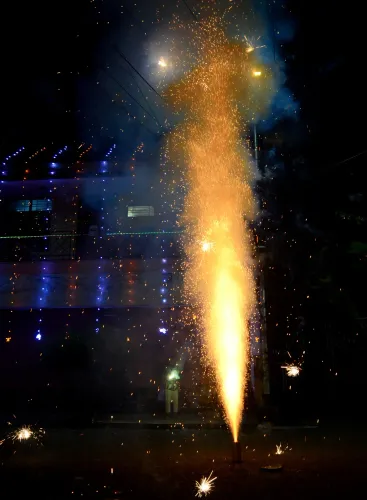
Kolkata's average AQI hit 437 ('Hazardous') by 2 am on 9 November 2026 after Kali Puja firecracker bursting.
PM2.5 levels reached 293 micrograms per cubic metre ; PM10 hit 354 micrograms per cubic metre .
EE Block, Salt Lake recorded the city's highest AQI at 662 ; Kankurgachi in north Kolkata peaked at 610 .
Firecrackers were burst in violation of West Bengal government restrictions.
Environmentalist Somendra Mohan Ghosh called for banning 15-year-old vehicles, eliminating coal chulas, and deploying 100 water cannons across the city.
Despite the hazardous reading, Kolkata did not feature among India's ten most polluted cities at the time.
Kolkata's air quality plunged to hazardous levels in the early hours of 9 November 2026, with the average Air Quality Index (AQI) recorded at 437 across the city by 2 am, following the widespread bursting of firecrackers during Kali Puja — in direct violation of government restrictions. The West Bengal Pollution Control Board classified the reading as 'Hazardous', even as Kolkata did not feature among the country's ten most polluted cities at the time.
Pollution Readings Across the City
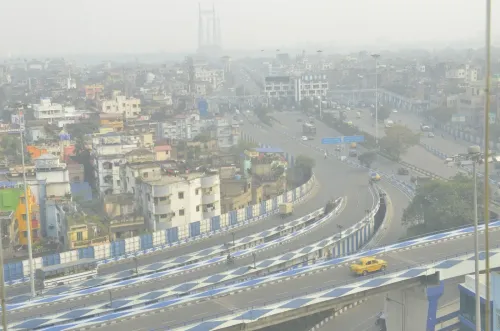
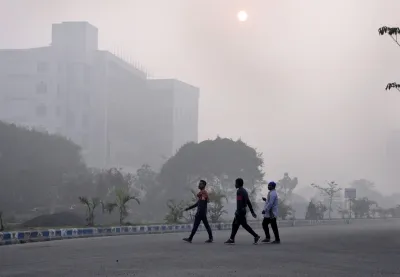
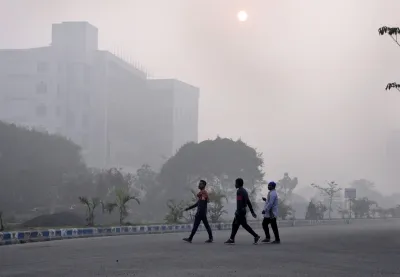
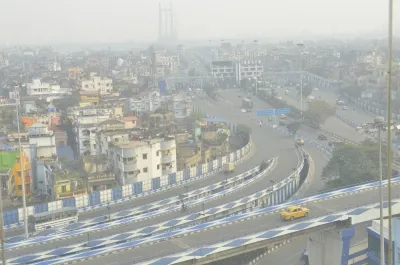
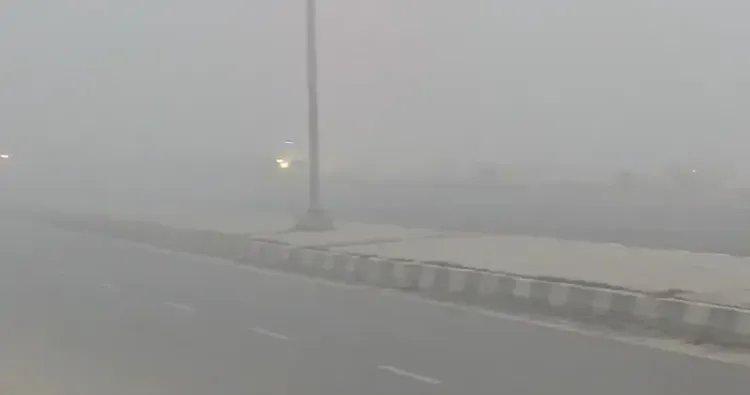
Concentration of PM2.5 — the most harmful fine particulate matter — reached 293 micrograms per cubic metre, while PM10 levels climbed to 354 micrograms per cubic metre. By midnight, a dense blanket of smog had settled over large parts of the city, with north Kolkata emerging as the worst-affected zone.
Kankurgachi recorded the highest AQI in the city at 610, followed by Maniktala at 538, Beniapukur at 528, Lebutala at 491, Cossipore at 490, and Taltala at 469. Several other neighbourhoods across the metropolitan area also reported dangerously elevated pollution levels.
Salt Lake and Central Kolkata Also Severely Hit
The situation in Bidhannagar (Salt Lake) deteriorated sharply as well. The EE Block of Salt Lake logged an AQI of 662, while the DJ Block recorded 557 and the Bidhannagar Municipal Corporation area stood at 490.
Central Kolkata fared no better. The Fort William complex registered an AQI of 484, while Elgin Road and Hastings each recorded 462, and the Maidan area came in at 461. South Kolkata mirrored this grim picture — Chakraberia at 478, Ballygunge at 474, Lake Terrace at 446, Bhawanipur at 432, Chetla at 425, Dhakuria at 397, and South City at 362.
Pollution spread beyond city limits as well. In Howrah district, Ghusuri recorded a maximum PM2.5 of 500 micrograms per cubic metre, and Belur stood at 453. In North 24 Parganas, the Rabindra Bharati University area recorded 474.
What Experts Are Saying
Prominent green technologist and environmentalist Somendra Mohan Ghosh called for immediate and long-term action to address the city's chronic air quality crisis. 'Ban 15-year-old vehicles. Old diesel and petrol vehicles are among the biggest contributors to PM2.5, PM10, and black carbon in our city. Stop roadside eateries using coal chulas. Hundreds of coal chulas burning all day on our footpaths and roadside stalls are choking our neighbourhoods. We need a shift to clean LPG/electric cooking, with support for small vendors to make the transition,' Ghosh said.
Ghosh further urged the administration to deploy 100 water cannons to wash down the city's streets. 'This will open up the dust cover on tree leaves, restoring leaf porosity for better oxygen generation, settle suspended dust instead of letting it hang in the air we breathe, and reduce the city's carbon footprint in a visible, immediate way. Water, enforcement, and clean fuel can reduce air pollution drastically,' he added.
Context and What Comes Next
This comes amid recurring concerns over Kolkata's air quality during the festival season, particularly around Diwali and Kali Puja, when firecracker use spikes despite court-ordered and government-mandated restrictions. The West Bengal administration had imposed curbs on firecracker use ahead of the festival, but enforcement appears to have been limited. Notably, the city's AQI during last year's Kali Puja also breached the 'Hazardous' threshold, pointing to a pattern of seasonal non-compliance.
Authorities and environmental groups are expected to revisit enforcement mechanisms and the adequacy of restrictions in the days ahead, as post-festival pollution typically takes several days to dissipate depending on wind patterns and temperature.
Point of View
But the real story is the annual cycle of restriction-and-impunity that plays out every Kali Puja in Kolkata. Government curbs on firecrackers exist on paper; enforcement on the ground is visibly inadequate, and an AQI of 662 in Salt Lake — a residential, relatively affluent zone — signals that the problem is structural, not fringe. What is missing from the official response is any credible deterrence mechanism: no fines publicised, no arrests reported, no accountability for the spike. Until enforcement has real teeth, the same headline will run again next November.
NationPress
9 Nov 2026
Frequently Asked Questions
What was Kolkata's AQI on Kali Puja night 2026?
The average AQI across Kolkata was 437 as recorded at 2 am on 9 November 2026, classified as 'Hazardous' by the West Bengal Pollution Control Board. Individual localities fared worse — EE Block in Salt Lake peaked at 662, and Kankurgachi in north Kolkata hit 610.
What caused Kolkata's air quality to turn hazardous on Kali Puja?
The sharp deterioration was caused by the widespread bursting of firecrackers during Kali Puja celebrations, which took place in defiance of government restrictions. The release of particulate matter from firecrackers drove PM2.5 to 293 micrograms per cubic metre and PM10 to 354 micrograms per cubic metre.
Which areas of Kolkata were worst affected by Kali Puja pollution?
North Kolkata was the worst-affected zone, with Kankurgachi recording an AQI of 610. In Bidhannagar (Salt Lake), EE Block peaked at 662 and DJ Block at 557. Central Kolkata's Fort William complex recorded 484, and Elgin Road and Hastings each logged 462.
What solutions have experts proposed for Kolkata's air pollution?
Environmentalist Somendra Mohan Ghosh recommended banning vehicles older than 15 years, eliminating coal chulas used by roadside eateries, shifting vendors to LPG or electric cooking, and deploying 100 water cannons across the city to settle suspended particulate matter and restore tree-leaf porosity.
Did Kolkata rank among India's most polluted cities on Kali Puja night?
Despite recording a hazardous average AQI of 437, Kolkata did not appear in the list of India's ten most polluted cities at the time of the 2 am reading on 9 November 2026, according to available data.