Shekhawat hails Diwali illumination at Srinagar's Lal Chowk
Synopsis
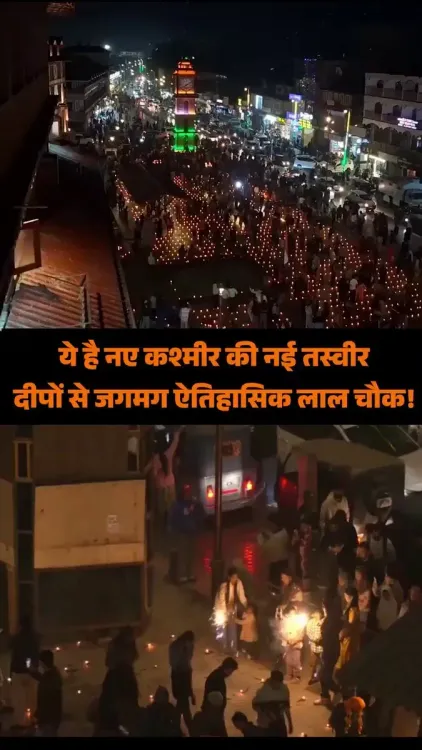
Union Culture and Tourism Minister Gajendra Singh Shekhawat shared a video of Srinagar's historic Lal Chowk glowing with thousands of Diwali lamps on 9 November 2026, calling it a symbol of a 'changed Kashmir' and invoking the power of the vote.
Key Takeaways
Gajendra Singh Shekhawat posted a video of Lal Chowk, Srinagar lit with thousands of diyas on Diwali, 9 November 2026 .
The minister contrasted the square's past association with protest slogans to its present festive illumination.
Lal Chowk is the historic central square of Srinagar, long a flashpoint during decades of political unrest in the Valley.
The post is part of a broader BJP messaging pattern since the 2019 abrogation of Article 370 , framing cultural events as evidence of restored normalcy.
Shekhawat explicitly linked the transformation to electoral power, writing 'see the power of your one vote.' As Union Minister of Culture and Tourism , Shekhawat's amplification carries institutional weight beyond a personal social-media comment.
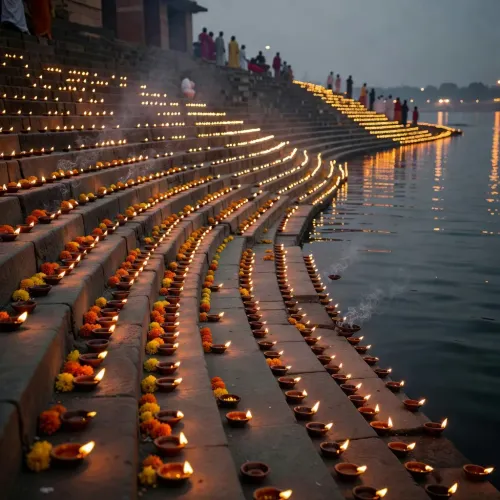
A square once synonymous with protest slogans lit up with thousands of lamps on Diwali — and Union Culture and Tourism Minister Gajendra Singh Shekhawat made sure the image reached every corner of the country. On Monday, 9 November 2026, Shekhawat posted a video of Lal Chowk in central Srinagar bathed in the warm glow of diyas and coloured lights, framing it as proof of a Kashmir transformed.
Posting in Hindi, Shekhawat wrote: 'Jo Lal Chowk kabhi virodh ke naaron se goonjta tha, aaj hazaaron deeyon ki roshni se jagmagaa raha hai...' — 'The Lal Chowk that once echoed with protest slogans is today glowing with the light of thousands of lamps... this is the new identity of a changing Kashmir!' He called the illumination 'a beautiful picture of changing Kashmir' and linked it directly to electoral choice: 'See the power of your one vote.'
Why Lal Chowk carries such symbolic weight
Lal Chowk is no ordinary traffic roundabout. The historic square in the heart of Srinagar has for decades been the stage for political rallies, shutdowns, and the most charged moments of the Valley's turbulent recent history. Its name alone once conjured images of unrest. The idea that Diwali diyas — a festival with no traditional mass presence in the Muslim-majority Valley — could illuminate it without incident is precisely the contrast Shekhawat is amplifying.
The political context stretches back to August 2019, when the central government abrogated Article 370, reorganising Jammu and Kashmir into two union territories and ushering in direct central administration. Since then, BJP leaders have consistently pointed to public festivals, tourist footfall records, and cultural events in the Valley as evidence that the reorganisation delivered peace and prosperity.
A recurring frame: festivals as proof of normalcy
Shekhawat's post is part of a well-established messaging pattern. Each Diwali, Eid, and New Year's celebration in Srinagar that proceeds without disruption becomes a data point in the government's 'changed Kashmir' narrative. Tourism numbers in Jammu and Kashmir have been repeatedly cited by central ministers as a metric of revival, with the Valley's hospitality sector — long battered by uncertainty — presented as a beneficiary of restored stability.
As Union Minister of Culture and Tourism, Shekhawat sits at the intersection of that story. Culture ministry initiatives aimed at integrating Kashmiri heritage into national tourism circuits, and the tourism ministry's push to develop winter-festival infrastructure in the Valley, give his amplification of the Lal Chowk visuals an institutional dimension beyond a single social-media post.
The image of a floodlit Lal Chowk on Diwali night is powerful precisely because it needs no caption — but Shekhawat gave it one anyway, and pointed straight at the ballot box. Whether voters in future elections read it as vindication or as political theatre, the picture itself will keep circulating.
Point of View
Every undisrupted festival in the Valley is a rebuttal to critics who called the Article 370 abrogation destabilising. The 'power of your one vote' line is a carefully aimed signal ahead of any future electoral cycle in the union territory. The post's durability lies not in its policy content but in its visual argument: a glowing square where slogans once rang out.
NationPress
9 Nov 2026
Frequently Asked Questions
Why is Lal Chowk in Srinagar historically significant?
Lal Chowk is the central public square of Srinagar and has historically been the site of major political rallies, shutdowns, and protests, making it a potent symbol of Kashmir's turbulent political history.
What did Gajendra Singh Shekhawat post about Kashmir on Diwali 2026?
Union Culture and Tourism Minister Gajendra Singh Shekhawat shared a video of Lal Chowk, Srinagar, illuminated with thousands of Diwali diyas and coloured lights, calling it the new identity of a changed Kashmir.
What is the BJP's 'changed Kashmir' narrative?
Since the abrogation of Article 370 in August 2019, BJP leaders have pointed to cultural events, tourism growth, and public festivals in the Valley as evidence of restored peace and economic revival in Jammu and Kashmir.
What is Gajendra Singh Shekhawat's role in the Indian government?
Gajendra Singh Shekhawat is the Union Minister of Culture and Tourism, a senior BJP leader, and the Lok Sabha MP from Jodhpur, Rajasthan.
What happened to Jammu and Kashmir's status in 2019?
In August 2019, the Indian government abrogated Article 370, stripping Jammu and Kashmir of its special status and reorganising it into two union territories — Jammu and Kashmir, and Ladakh.