KTR Hails Hyderabad Startup Founder Eyeing RBI Payments Licence
Synopsis
BRS working president K. T. Rama Rao has spotlighted Gaddam Shivaganesh, a Hyderabad-based fintech founder from Parsigutta, whose student-focused startup has secured a $100,000 Emergent Ventures grant, a Forbes 30 Under 30 Asia 2026 listing, and ₹10 crore to pursue an RBI payments bank licence.
Key Takeaways
Gaddam Shivaganesh , son of a former welder from Parsigutta, Hyderabad , is building a student-focused fintech startup incubated at T-Hub .
The startup has received a $100,000 grant from Emergent Ventures , a global programme supporting high-ambition technology and policy projects.
Shivaganesh has been named to the Forbes 30 Under 30 Asia 2026 list in the Finance and Venture Capital category.
The startup has raised ₹10 crore specifically to fund an application for an RBI payments bank licence .
Shivaganesh is developing a free animated film featuring a comic-character version of himself to promote financial literacy among students.
BRS working president K.
Rama Rao credited T-Hub with providing the platform that helped turn the founder's vision into a viable venture.
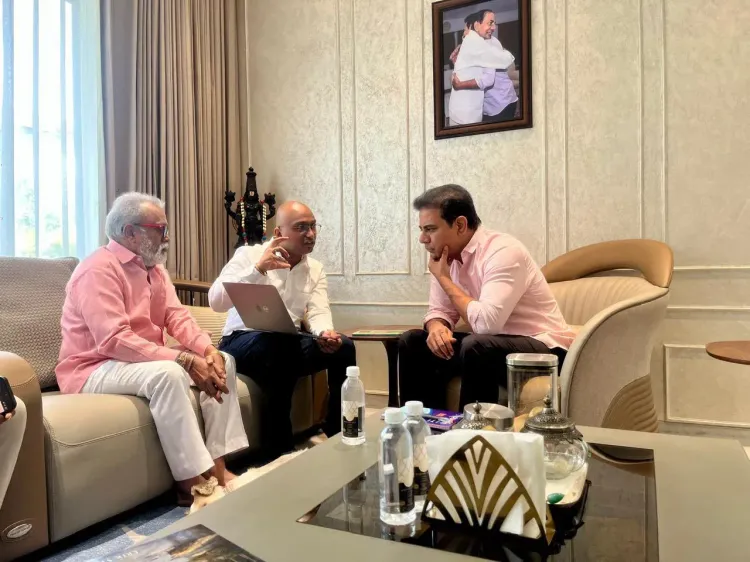
BRS working president K. T. Rama Rao on Monday, 15 June 2026 highlighted the journey of Gaddam Shivaganesh, a Hyderabad-based fintech founder from Parsigutta, whose student-focused startup has raised ₹10 crore and is now pursuing a payments bank licence from the Reserve Bank of India (RBI).
Context
Rama Rao took to X to share what he called 'an inspirational story,' spotlighting Shivaganesh as the son of a former welder who has built a startup aimed at becoming a 'one-stop financial solution for students and their parents.' The post drew attention to the founder's background in Parsigutta, a working-class locality in Hyderabad, underscoring a narrative of social mobility through entrepreneurship.
Shivaganesh's venture has earned a $100,000 grant from Emergent Ventures, a programme that backs high-ambition projects in technology, policy, and social innovation. He has also secured a place on the Forbes 30 Under 30 Asia 2026 list in the Finance and Venture Capital category, drawing international recognition to the Hyderabad startup ecosystem.
Policy Backdrop
T-Hub, the Telangana government's flagship startup incubator launched in 2015, has played a central role in supporting Shivaganesh's venture by providing a platform for innovation. Rama Rao, who oversaw T-Hub's growth during his tenure as Telangana's IT and Industries Minister, credited the institution with 'turning his vision into reality.'
The RBI introduced guidelines for payments bank licences in 2014 with the explicit goal of expanding digital financial services and deepening financial inclusion. Securing such a licence would allow Shivaganesh's startup to legally offer deposit, remittance, and payment services — a significant regulatory milestone for any fintech venture targeting student users.
Telangana's Startup Policy 2014 established a framework of incentives and incubation support that successive state administrations have built upon, positioning Hyderabad as a leading destination for early-stage technology companies, particularly in fintech and artificial intelligence.
Stakeholders and Impact
The startup's core proposition targets students and their families — a segment that remains underserved by traditional banking infrastructure. By raising ₹10 crore specifically to fund an RBI payments licence application, Shivaganesh is signalling intent to move from an innovation-stage venture to a regulated financial institution.
In a distinctive outreach move, Shivaganesh has transformed himself into a comic character and is developing a free animated film to make financial literacy 'simple and engaging for students.' This approach reflects a growing trend among fintech founders to pair product development with accessible financial education, particularly for younger audiences unfamiliar with formal banking.
T-Hub's involvement signals continued state-level commitment to converting locally incubated ideas into licensed entities, reinforcing Hyderabad's positioning in India's competitive startup landscape.
What's Next
The most consequential near-term development will be the outcome of the startup's RBI payments licence application. A successful licence would allow the platform to operationalise its student-banking vision and potentially pilot deposit and remittance products. Regulatory timelines for such approvals can extend over several months, subject to RBI scrutiny of the applicant's capital adequacy, governance, and technology infrastructure.
Rama Rao's public endorsement also places the startup on the radar of institutional investors and policy observers watching Telangana's fintech pipeline. The broader question is whether state-backed incubation models like T-Hub can consistently produce ventures capable of graduating from grant-stage to regulated financial institutions — a benchmark that would strengthen the case for deepening public investment in startup infrastructure.
Point of View
He reinforces the BRS-era narrative that Telangana's startup infrastructure, built during his own ministerial tenure, continues to generate tangible outcomes even under a rival state government. The Shivaganesh story fits a well-worn template: a founder from a modest background, international validation, and a regulated financial ambition that tests the limits of incubation support. The ₹10 crore RBI licence bid is the real policy test: if approved, it would be one of the few instances of a state-incubated student fintech graduating to a regulated payments institution. Rama Rao's endorsement, coming from the opposition benches, also signals that startup diplomacy in Telangana transcends party lines — at least rhetorically.
NationPress
15 Sept 2026
Frequently Asked Questions
Who is Gaddam Shivaganesh and what is his startup about?
Gaddam Shivaganesh is a Hyderabad-based fintech founder from Parsigutta whose startup aims to build a student-focused bank offering one-stop financial solutions for students and their parents. He has been incubated at T-Hub and has received international recognition for the venture.
What is the Emergent Ventures grant that Shivaganesh received?
Emergent Ventures is a grant programme that backs high-ambition projects in technology, policy, and social innovation. Shivaganesh's startup received a $100,000 grant from the programme, providing early-stage capital and credibility for his fintech vision.
What is an RBI payments bank licence and why does Shivaganesh need one?
An RBI payments bank licence, introduced under guidelines issued in 2014, allows an entity to legally offer deposit, remittance, and digital payment services. Shivaganesh's startup has raised ₹10 crore to apply for this licence, which would enable it to function as a regulated financial institution for students.
What is T-Hub and what role has it played in this startup?
T-Hub is the Telangana government's flagship startup incubator, launched in 2015 to support early-stage ventures in fintech, AI, and other sectors. It provided Shivaganesh's startup with a platform for innovation and institutional support to develop the business.
Why did KTR post about Gaddam Shivaganesh?
BRS working president K. T. Rama Rao shared Shivaganesh's story as an inspirational example of entrepreneurship emerging from a working-class background in Hyderabad. Rama Rao also highlighted T-Hub's role, an institution built during his tenure as Telangana's IT Minister, in supporting the founder's journey.