KTR Claims Credit as Telangana Defence MSME Base Grows Fivefold
Synopsis
BRS working president K. T. Rama Rao has claimed credit for Telangana's defence and aerospace MSME base growing fivefold, citing the sector's push toward export expansion as a product of industrial policies he championed as the state's Industries Minister.
Key Takeaways
BRS working president K.
Rama Rao posted on 3 August 2026 claiming credit for Telangana's defence and aerospace MSME sector growth.
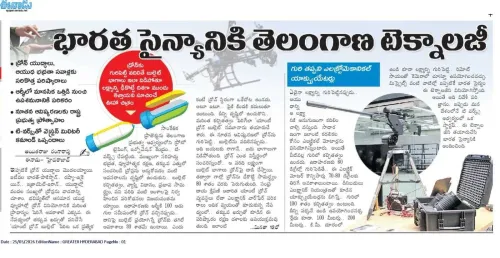
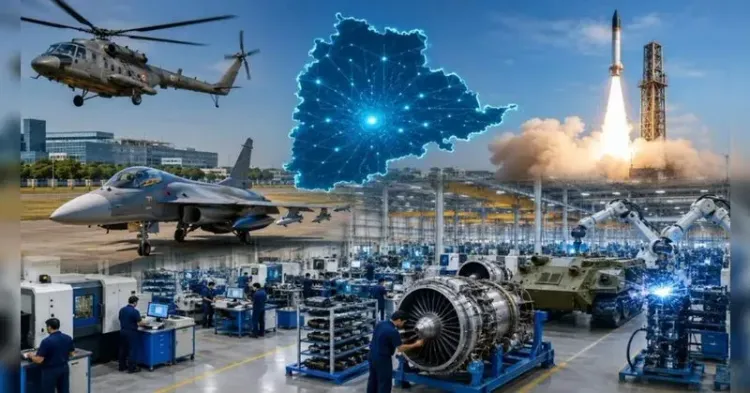
A report cited in his post states the state's defence and aerospace MSME base has grown fivefold , with export expansion now in focus.
Telangana began targeting defence and aerospace investment after state formation in 2014 , with KTR holding the Industries portfolio.
The cluster is centred on Hyderabad , leveraging its engineering talent and proximity to defence research institutions.
The post comes after BRS lost power in the December 2023 assembly elections, making the credit-claim politically significant.
The growth aligns with India's national push to expand domestic defence manufacturing and exports.
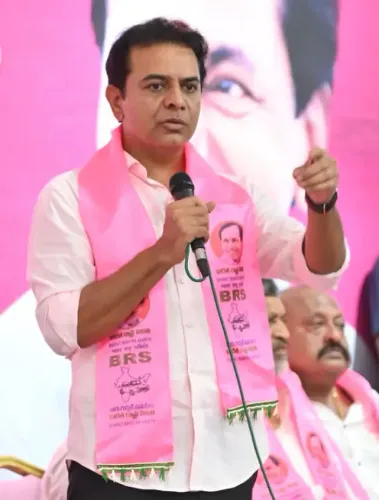
A fivefold expansion in Telangana's defence and aerospace MSME base — and BRS working president K. T. Rama Rao is making sure the record shows who helped build it. On Monday, 3 August 2026, the former Telangana Industries and IT Minister posted on X, pointing to a report on the state's surging defence manufacturing cluster and noting simply: 'Proud to have contributed to the growth.'
From a blank slate to a fivefold MSME base
When Telangana was carved out as a separate state in 2014, its industrial identity was almost entirely anchored to information technology. The new government, with K. T. Rama Rao holding the Industries portfolio, set out to change that — targeting defence and aerospace as a second pillar around Hyderabad. Dedicated policies were rolled out to attract investment into the sector, leveraging the city's existing engineering talent pool and proximity to defence research institutions.
The reported fivefold growth in the state's defence and aerospace MSME count is the visible result of that decade-long push. The cluster now has its sights set on export expansion, positioning Telangana as a supplier not just to domestic defence programmes but to global aerospace supply chains.
KTR's industrial legacy under political scrutiny
Rama Rao's post lands at a pointed moment. The BRS lost power in Telangana in the December 2023 assembly elections, and the party has since been in opposition. By publicly claiming a stake in the sector's growth, Rama Rao is doing two things at once: burnishing his own policy record and implicitly contesting any narrative that attributes the industrial gains solely to the current administration.
It is a familiar move in Indian state politics — outgoing ministers staking ownership of long-gestation projects that bear fruit after their tenure ends. The defence MSME story, years in the making, is exactly that kind of slow-burn success.
Telangana's bet on India's defence export push
The state's ambitions align with a broader national shift. India has made expanding domestic defence manufacturing and exports a strategic priority, with targets set for the sector to become a significant global supplier. State-level clusters like Hyderabad's aerospace belt are central to that plan — they supply components and sub-systems to larger prime contractors and, increasingly, to foreign buyers.
The next test for Telangana's defence ecosystem is whether the MSME base can convert scale into sustained export revenue — and whether the current government and the opposition can agree on who deserves credit for laying the foundation.
Point of View
He forces the political conversation to acknowledge BRS-era policy continuity even under a rival government. The fivefold MSME growth, if sustained, validates the state's post-bifurcation bet on defence diversification — a strategy that required years of patient ecosystem-building before producing headline numbers. For Indian state politics more broadly, it underscores how long-gestation industrial projects create contested ownership, with both ruling and opposition parties claiming authorship of outcomes that span multiple administrations. The real question is whether Telangana's MSME base can now convert scale into durable export contracts — and that answer will define whose legacy ultimately sticks.
NationPress
3 Aug 2026
Frequently Asked Questions
What is KTR claiming credit for in his August 2026 post?
BRS working president K. T. Rama Rao is claiming credit for Telangana's defence and aerospace MSME base growing fivefold, citing industrial policies he championed as the state's Industries and IT Minister after Telangana's formation in 2014.
How much has Telangana's defence MSME sector grown?
According to a report referenced in KTR's post, Telangana's defence and aerospace MSME base has grown fivefold, with the sector now aiming for export expansion.
What policies helped build Telangana's defence and aerospace cluster?
After Telangana's formation in 2014, the state government launched targeted investment policies to attract defence and aerospace companies to Hyderabad, leveraging the city's engineering talent and proximity to defence research institutions.
Why is KTR posting about Telangana's industrial growth now?
BRS lost the Telangana assembly elections in December 2023 and is now in opposition. KTR's post appears aimed at establishing his party's policy legacy and contesting any narrative that credits the current government alone for the sector's growth.
How does Telangana's defence MSME growth fit into India's broader strategy?
India has set national targets for expanding domestic defence manufacturing and exports. State-level clusters like Hyderabad's aerospace belt supply components to prime contractors and foreign buyers, making Telangana's growth a key piece of that national push.