Rajasthan CM Bhajan Lal Pushes Grid Sub-Station Expansion
Synopsis
The Chief Minister's Office of Rajasthan announced on 3 August 2026 that new Grid Sub-Stations of varying capacities are being established across the state. The move, flagged under CM Bhajan Lal Sharma's 'Aapno Aagrani Rajasthan' campaign, aims to bolster the transmission backbone supporting rising power demand and renewable energy integration.
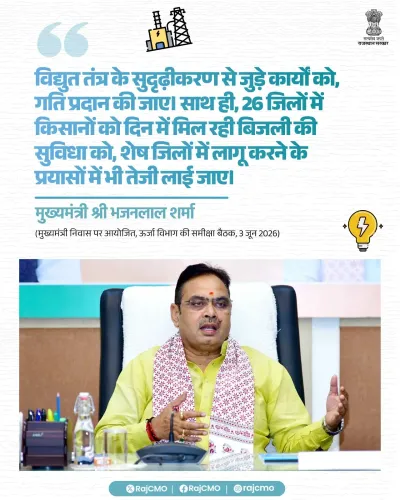
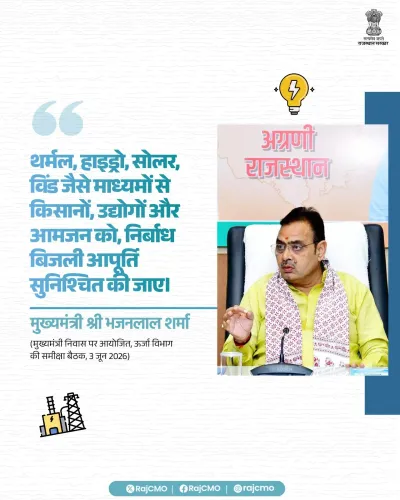
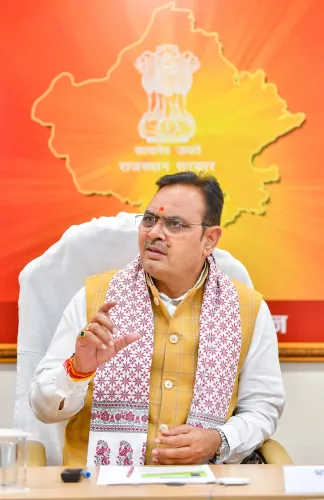
Rajasthan's power infrastructure is getting a structural upgrade. The Chief Minister's Office of Rajasthan announced on Monday, 3 August 2026 that new Grid Sub-Stations (GSS) of varying capacities are being established across the state, signalling a push to strengthen the electricity transmission backbone under Chief Minister Bhajan Lal Sharma.
The post, tagged with the campaign hashtag #आपणो_अग्रणी_राजस्थान ('Our Leading Rajasthan'), frames the GSS expansion as part of a broader state-development agenda. RVPN — Rajasthan Rajya Vidyut Prasaran Nigam Ltd — the state's transmission utility, is the nodal agency responsible for building and operating such sub-stations across the state's vast geography.
Why new GSS capacity matters for Rajasthan
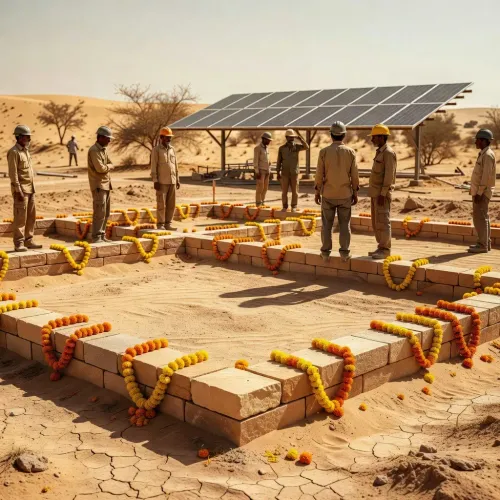
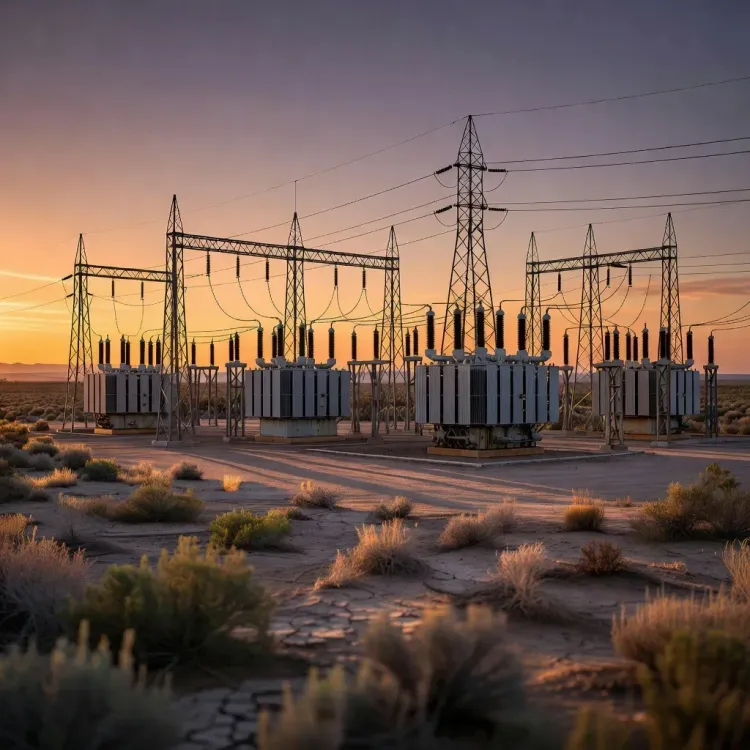
Rajasthan carries one of India's largest renewable energy portfolios — solar parks in Jaisalmer, Barmer, and Jodhpur districts alone account for thousands of megawatts of installed capacity. That generation is only as useful as the transmission infrastructure that carries it to consumers. Grid sub-stations step down high-voltage power for distribution and act as the critical link between generation assets and end users — industries, farms, and homes alike.
Without adequate GSS capacity, new renewable generation sits stranded, and industrial consumers face voltage instability. The Sharma government's emphasis on 'varying capacities' suggests a mix of high-voltage and distribution-level sub-stations, targeting both bulk transmission and last-mile reliability.
BJP's 'Aapno Aagrani Rajasthan' infrastructure push
Bhajan Lal Sharma, who took charge as Chief Minister in December 2023, has anchored his administration's identity around the #आपणो_अग्रणी_राजस्थान ('Our Leading Rajasthan') brand — a campaign phrase that has appeared consistently across infrastructure, investment, and welfare announcements. GSS expansion is not new to Rajasthan; successive governments have added sub-station capacity as demand has grown. What distinguishes the current cycle is the scale of renewable integration pressure: every new solar or wind project commissioned requires matching transmission infrastructure or risks grid congestion.
Electricity consumers and industries stand to benefit most directly — reliable, stable supply is a prerequisite for both household quality of life and industrial competitiveness in a state actively courting investment.
The grid gets built one sub-station at a time — and in Rajasthan, the count is going up.
Point of View
Transmission capacity is a genuine bottleneck — the state's renewable energy ambitions outpace its grid infrastructure, making sub-station additions a policy necessity, not just optics. The 'varying capacities' framing suggests a deliberate mix of bulk and distribution-level investment, which would address both industrial reliability and household supply. Whether the pace of commissioning matches the scale of the announcement will be the real measure of delivery.
NationPress
17 Sept 2026
Frequently Asked Questions
What is a GSS in Rajasthan's power sector?
GSS stands for Grid Sub-Station — a facility that steps down high-voltage electricity from transmission lines to levels suitable for distribution to homes, farms, and industries. In Rajasthan, they are built and operated by RVPN, the state transmission utility.
Why is Rajasthan expanding its grid sub-stations?
Rajasthan has rapidly expanded its renewable energy capacity, particularly solar power, which requires matching transmission infrastructure. New GSS installations help evacuate this power and deliver stable supply to consumers and industries.
Who is responsible for building GSS in Rajasthan?
Rajasthan Rajya Vidyut Prasaran Nigam Ltd (RVPN) is the state transmission utility responsible for constructing and operating grid sub-stations across Rajasthan.
What is the 'Aapno Aagrani Rajasthan' campaign?
'Aapno Aagrani Rajasthan' — meaning 'Our Leading Rajasthan' — is a branding campaign used by the Bhajan Lal Sharma-led BJP government to highlight state development and infrastructure initiatives since December 2023.
How does the GSS expansion benefit ordinary Rajasthan residents?
New sub-stations improve voltage stability and reduce outages for households and small businesses. They also support industrial growth by ensuring reliable power supply, which can attract investment and create employment in the state.