KTR: Telangana gram panchayats slipped into deficit
Synopsis
BRS working president K. T. Rama Rao accused the Congress government of driving Telangana gram panchayats from surplus into deficit, citing a sharp drop in average village spending and a breakdown in basic rural services.
Key Takeaways
BRS working president K.
Rama Rao on 26 November 2026 accused Congress of pushing Telangana gram panchayats from surplus into deficit.
He claimed average panchayat spending fell from Rs 16.59 lakh in 2022-23 to Rs 6.24 lakh by 2024-25 ; those figures are his claim.
He said sanitation, drinking-water supply and street-light maintenance were no longer being done properly, and that new village works had stalled.
The previous BRS government had launched Palle Pragathi in 2019 to fund gram panchayats; Congress took office in December 2023 .
Rama Rao contrasted KCR-era gram swaraj with what he called Revanth Reddy's corrupt and chaotic rule, using the line CongressFailedTelangana.
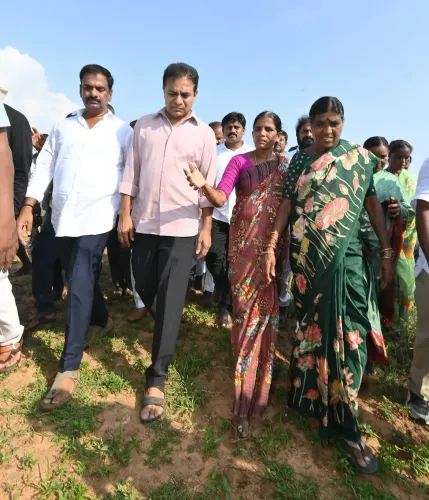
Village India is meant to be the first mile of the Indian state. On Thursday, 26 November 2026, BRS working president K. T. Rama Rao said that mile is breaking in Telangana, accusing the Congress government of pushing gram panchayats from surplus into deficit. He claimed average village-body spending had crashed, leaving sanitation, drinking water and street lights without proper upkeep.
In a Telugu post on X, Rama Rao wrote that villages which had thrived under K. Chandrashekar Rao were now withering. He used the contrast కళకళలాడిన గ్రామాలు (villages that once bustled) versus వెలవెలబోతున్నాయి (they are fading) to frame a rural decline he pinned on Congress.
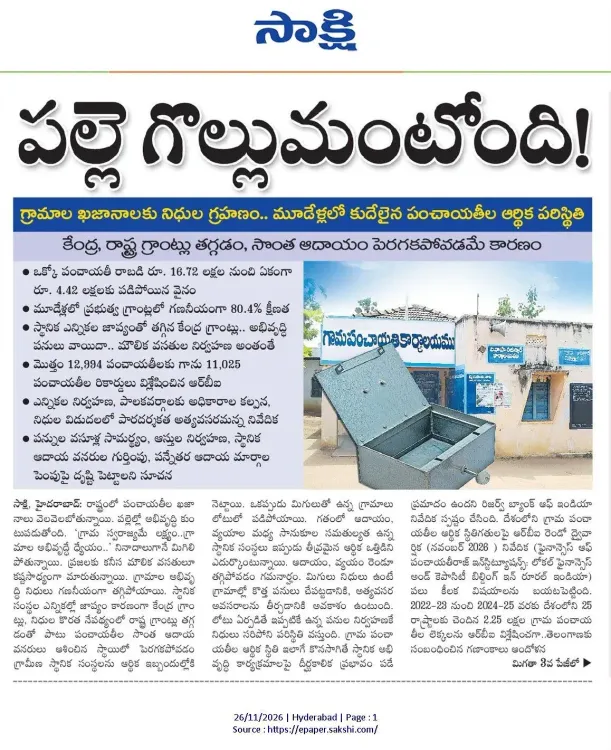
He said Telangana panchayats that ran surplus budgets in the BRS years had slipped into financial deficit by 2024-25. The working president put two figures at the centre of the charge: average gram panchayat expenditure of Rs 16.59 lakh in 2022-23, falling to Rs 6.24 lakh by 2024-25.
Those numbers are his claim. He argued the drop meant no new development works in villages, and that even basic sanitation, drinking-water supply and street-light maintenance were not being done properly.
The panchayat spending crash KTR put on record
The attack is fiscal as much as political. Rama Rao presented the surplus-to-deficit turn as proof that local bodies have been starved since the change of government. A panchayat that cannot keep street lights on, he suggested, cannot deliver village self-rule either.
He closed by saying that while KCR had worked for గ్రామ స్వరాజ్యం (gram swaraj, or village self-rule), Telangana's villages were now crying out under what he called Revanth Reddy's అవినీతి, అరాచక పాలన (corrupt and chaotic rule), tagging the line CongressFailedTelangana.
From Palle Pragathi to a rural money fight
The charge lands on a known Telangana fault line. The BRS government, which ruled from 2014 to 2023, had launched the Palle Pragathi programme in 2019 to strengthen gram panchayats with extra funding and infrastructure works. That scheme is now the opposition's measuring stick.
Congress assumed office in December 2023 after winning the assembly elections, with Revanth Reddy as chief minister. Since that transition, BRS has repeatedly accused the successor government of squeezing panchayat funds and neglecting village maintenance, a pattern Indian state politics knows well when one regime's claimed surplus becomes the next regime's alleged deficit.
Gram panchayats and rural residents sit in the middle. They run sanitation, water supply and local upkeep. When the money thins, the first failures are visible: dark streets, dry taps, uncollected waste.
Revanth Reddy and the village-services charge
Rama Rao named the chief minister directly. The contrast he drew was personal as well as programmatic: KCR's rural push versus a Congress administration he accused of letting panchayats slide from surplus into the red.
The papers that would settle the argument sit in government files: the Telangana state budget for 2025-26, fund-release records of the Panchayat Raj department, and any Comptroller and Auditor General findings on local-body finances. Until those numbers are public in full, the fight remains a political one, with villages as the stage.
If the first mile of the state is the village, the next set of official panchayat accounts will show whether Telangana's local bodies are solvent, or stranded.
Point of View
Rural local-body finances become a political weapon. BRS is running that playbook in Telangana, tying the Congress government of Revanth Reddy to a claimed collapse in gram panchayat spending after the Palle Pragathi years. The surplus-to-deficit story is meant to turn street lights and drinking water into a statewide indictment. Whether the charge sticks will turn on official panchayat accounts and the 2025-26 budget, not on a single post.
NationPress
26 Nov 2026
Frequently Asked Questions
What did KTR say about Telangana gram panchayats?
BRS working president K. T. Rama Rao said Telangana gram panchayats that had surplus budgets under BRS had slipped into financial deficit by 2024-25 under Congress. He argued that village development had stalled and that sanitation, drinking water and street lights were not being maintained properly.
What spending figures did KTR cite for Telangana panchayats?
KTR cited average gram panchayat expenditure of Rs 16.59 lakh in 2022-23, falling to Rs 6.24 lakh by 2024-25. Those figures are his claim from the post and would need official budget or audit papers to confirm.
What is Palle Pragathi in Telangana?
Palle Pragathi is a BRS-era rural programme launched in 2019 to strengthen gram panchayats with extra funding and infrastructure works. KTR's attack treats that period as the benchmark against which he measures Congress handling of village finances.
When did Congress form the government in Telangana?
Congress formed the government in Telangana in December 2023 after winning the assembly elections, with Revanth Reddy as chief minister. BRS, which had governed from 2014 to 2023 under K. Chandrashekar Rao, has since repeatedly criticised panchayat funding and village maintenance.
Who is K. T. Rama Rao?
K. T. Rama Rao is working president of the Bharat Rashtra Samithi and a former Telangana minister for IT, industries and municipal administration. He is a principal opposition voice against the Revanth Reddy government on rural and urban governance.