KTR Shares Jindal Global Lecture on Telangana's Startup Story
Synopsis
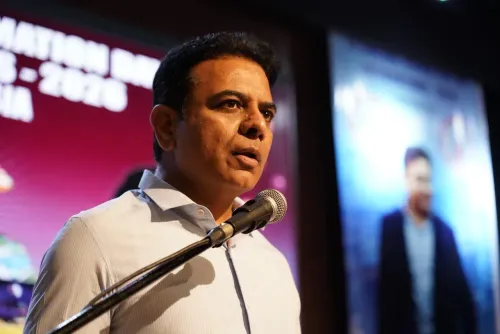
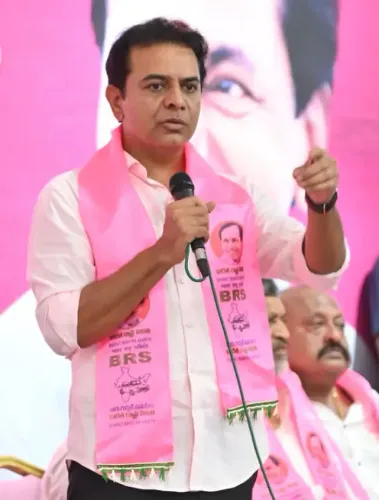
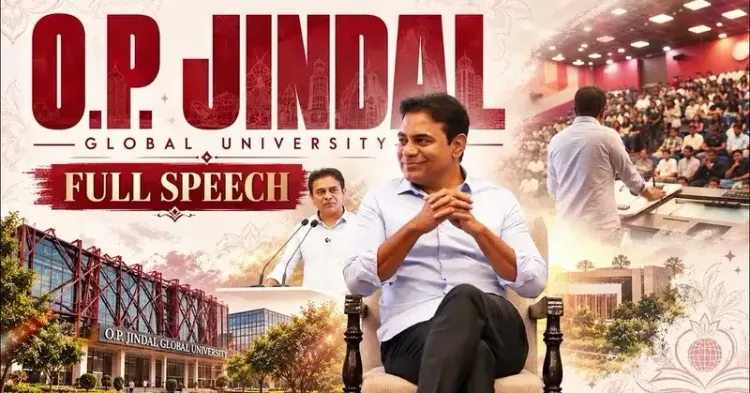
BRS working president K. T. Rama Rao shared the full video of his Distinguished Public Lecture at O. P. Jindal Global University in Haryana, titled 'Innovation in Governance: The Story of a Startup State,' highlighting Telangana's post-2014 development model built on T-Hub and TS-iPASS.
Key Takeaways
Rama Rao delivered a Distinguished Public Lecture at O.
Jindal Global University, Sonipat, Haryana titled 'Innovation in Governance: The Story of a Startup State.' He shared the full lecture video on X on 26 September 2026 , reaffirming his commitment to highlighting the BRS government's achievements.
The 'startup state' narrative draws on flagship policies including the T-Hub startup incubator (launched 2015 ) and the TS-iPASS industrial clearance system.
BRS lost the Telangana assembly election to Congress in December 2023 , making academic platforms a key channel for keeping its governance record in national discourse.
The lecture's Haryana venue signals BRS's effort to position Telangana's governance model as a national blueprint, not merely a regional achievement.
Three years after leading Telangana's transformation into one of India's most talked-about governance experiments, BRS working president K. T. Rama Rao stepped back onto an academic stage — this time at O. P. Jindal Global University, Sonipat, Haryana — to deliver a Distinguished Public Lecture titled 'Innovation in Governance: The Story of a Startup State.' On Saturday, 26 September 2026, he shared the full video of the address on X, calling it 'always rewarding to interact with students and young people, exchange ideas, and share Telangana's remarkable journey of innovation and transformation.'
A 'Startup State' Pitch Built Over a Decade
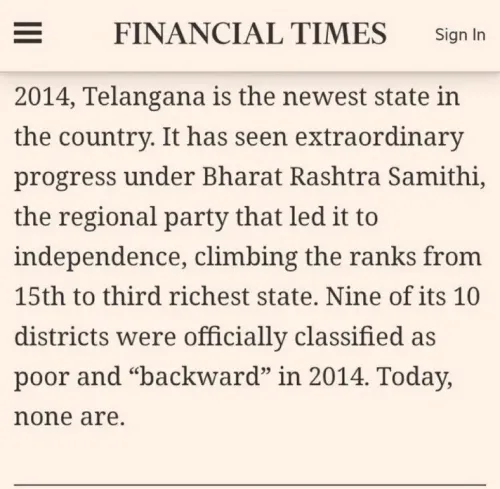
The 'startup state' framing is not rhetorical decoration — it has roots in concrete policy. When Telangana was carved out of Andhra Pradesh in 2014, the then-TRS government set about building a distinct development identity. The launch of T-Hub in 2015 gave the state India's first and, for a time, largest startup incubator, while the TS-iPASS single-window industrial clearance system was positioned as proof that bureaucratic friction could be engineered away. These two pillars — entrepreneurship infrastructure and investor-friendly regulation — became the backbone of the 'startup state' narrative that KTR, as IT and Industries Minister, championed for nearly a decade.
Delivering that record as a lecture at a nationally prominent private university like Jindal Global — known for hosting high-profile policy and governance dialogues — amplifies it beyond Telangana's borders. The audience of students and young professionals is exactly the constituency BRS has historically courted: aspirational, digitally fluent, and attentive to governance quality.
Opposition Platform, Academic Megaphone
Context matters here. BRS lost power in Telangana to the Indian National Congress in December 2023, ending a near-decade of uninterrupted rule. Since then, KTR and the party have leaned heavily on academic and public platforms to keep the development story alive in national discourse — a calculated move to prevent electoral defeat from becoming a narrative defeat. Lectures like this one serve a dual purpose: they document the BRS governance record for posterity and position KTR as a statesman-level thinker on innovation policy, not merely a regional politician.
KTR noted he is 'always passionate about sharing Telangana's growth story' and pledged to 'continue to take every opportunity to highlight the achievements of the BRS government.' That phrasing is deliberate. With the current Telangana Congress government setting its own policy direction, BRS faces the challenge of keeping its decade of work relevant — and academic platforms, with their credibility and reach among educated youth, are a key part of that strategy.
Why the 'Startup State' Story Still Travels
India's startup ecosystem debate is far from settled. Questions about which state offers the best environment for new ventures — in terms of infrastructure, talent, regulatory ease and funding access — remain live and contested. Telangana's post-2014 model, whatever its electoral fortunes, contributed a replicable template: concentrated IT investment in a single hub city (Hyderabad), aggressive branding, and ministerial-level personal commitment. KTR's willingness to carry that story to university audiences in Haryana — far from home — signals that the BRS brand of governance entrepreneurialism is being positioned as a national idea, not a regional one.
Whether the current Congress-led government in Hyderabad builds on, modifies or replaces that model is the next chapter — and one that lectures like this one implicitly invite the audience to watch closely.
Point of View
It fights to retain the narrative. By taking the 'startup state' story to a prestigious national university, BRS is essentially arguing that its governance model deserves recognition independent of its electoral fate. The timing is significant — with the Congress government in Hyderabad now setting its own policy direction, BRS must act before the institutional memory of T-Hub and TS-iPASS gets reattributed or overshadowed. For KTR personally, these engagements build a policy-intellectual identity that could prove valuable in future electoral cycles, positioning him as a thinker on innovation governance rather than simply a regional party functionary.
NationPress
26 Sept 2026
Frequently Asked Questions
What did KTR speak about at Jindal Global University?
KTR delivered a Distinguished Public Lecture titled 'Innovation in Governance: The Story of a Startup State,' covering Telangana's post-2014 development model, including initiatives like T-Hub and TS-iPASS.
Where is O. P. Jindal Global University?
O. P. Jindal Global University is located in Sonipat, Haryana. It regularly hosts distinguished lectures on policy, governance and international affairs.
What is Telangana's 'startup state' model?
The 'startup state' concept refers to Telangana's post-2014 governance approach under the TRS/BRS government, centred on T-Hub (India's first major startup incubator, launched 2015) and TS-iPASS, a single-window industrial clearance system designed to attract investment.
Is BRS still in power in Telangana?
No. BRS lost the Telangana state assembly election to the Indian National Congress in December 2023, ending nearly a decade in power. KTR now serves as BRS working president in opposition.
Why is KTR doing lectures at universities?
Since losing power in 2023, BRS leaders have used academic and public platforms to preserve and project the party's governance record nationally, keeping the Telangana development story in public discourse while in opposition.