Kulgam hit-and-run cracked in 2 hours using CCTV, technical evidence
Synopsis
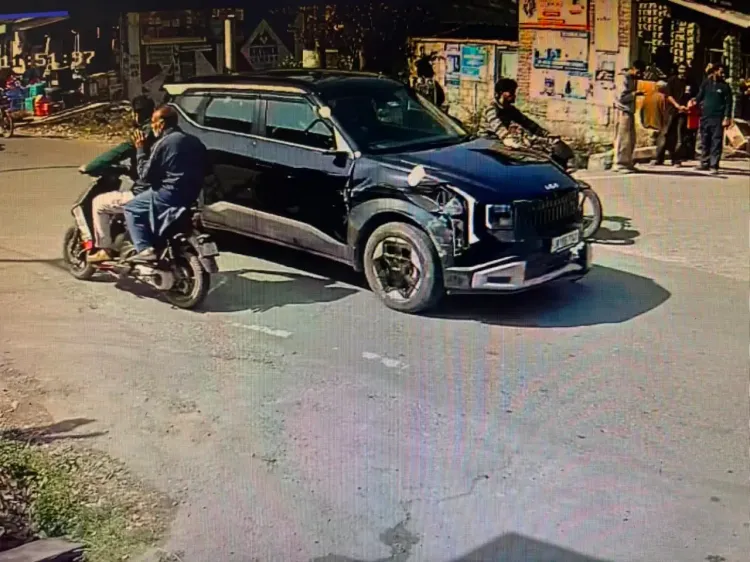
Kulgam Police cracked a hit-and-run case in just two hours on 26 October, using CCTV footage and technical surveillance to identify and arrest the accused driver from Chimmer, DH Pora. It is a concrete demonstration of J&K Police's push toward technology-led, evidence-based criminal investigation.
Key Takeaways
Kulgam Police solved a hit-and-run case within two hours of occurrence on 26 October 2026 .
An unknown vehicle struck a load carrier at high speed; injured occupants were referred to GMC Anantnag due to critical injuries.
203/2026 was registered under Sections 281 and 125(a) of the Bharatiya Nyaya Sanhita (BNS) at Police Station Kulgam .
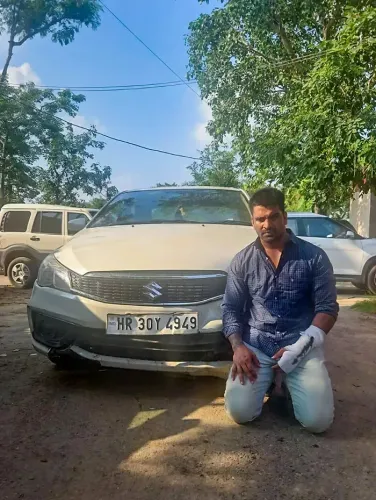
Accused Mohammad Asif Lone of Chimmer, DH Pora was arrested using CCTV footage and technical evidence.
Further investigation is underway to complete all legal formalities in the case.
Kulgam Police in Jammu & Kashmir solved a hit-and-run case within two hours of its occurrence on 26 October 2026, arresting the accused driver after a swift investigation driven by CCTV footage and technical evidence. The rapid resolution highlights the force's growing reliance on surveillance technology for time-sensitive criminal investigations.
How the Incident Unfolded
An unidentified vehicle travelling at high speed struck a load carrier in the Kulgam district, causing serious injuries to the vehicle's occupants. The injured were immediately shifted to a nearby hospital and subsequently referred to Government Medical College (GMC) Anantnag due to the critical nature of their condition.
Following the incident, FIR No. 203/2026 was registered at Police Station Kulgam under Sections 281 and 125(a) of the Bharatiya Nyaya Sanhita (BNS), and an investigation was launched without delay.
How Police Cracked the Case
A dedicated team from Police Station Kulgam moved swiftly to trace the offending vehicle. Investigators thoroughly analysed available CCTV footage and cross-referenced technical intelligence, which helped establish vital leads within a short window. Through prompt and coordinated field operations, the accused was located in the Chimmer area of DH Pora.
The arrested individual was identified as Mohammad Asif Lone, son of Abdul Rehman Lone, a resident of Chimmer, DH Pora. He was apprehended within two hours of the hit-and-run, according to the official police statement. Further investigation is underway to establish all relevant facts and complete the necessary legal formalities.
J&K Police's Technology-Driven Approach
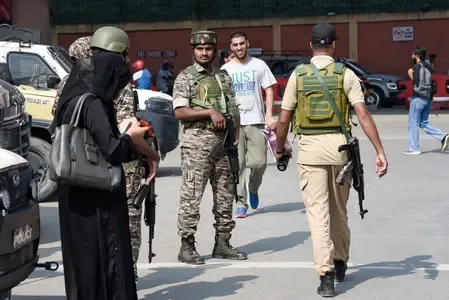
According to police, J&K Police have been deploying hi-tech gadgets and advanced surveillance equipment to carry out crime investigations in a prompt, scientific, and efficient manner. This modern approach encompasses tools such as CCTV networks, Automated Fingerprint Identification Systems (AFIS), facial recognition software, GPS tracking, and automated licence plate readers (ALPRs).
Notably, the integration of Geographic Information Systems (GIS) and digital data platforms has allowed the force to map crime hotspots and trace suspect movements with greater accuracy. Officials say this shift to evidence-based, technology-led policing is already yielding results — the Kulgam case being one of the more visible recent examples.
What Happens Next
The case remains under active investigation, with police working to complete all legal formalities surrounding the arrest of Mohammad Asif Lone. The condition of the injured occupants of the load carrier, who were referred to GMC Anantnag, has not been officially updated. As J&K Police continue to scale up their surveillance infrastructure, faster case resolution times are expected to become a benchmark for the force across the region.
Point of View
But the story that deserves scrutiny is the condition of the critically injured — referred to GMC Anantnag with no follow-up update from authorities. J&K Police are rightly showcasing their surveillance capabilities, and the rapid arrest is a genuine positive, but accountability in hit-and-run cases must extend beyond the arrest to medical outcomes and eventual conviction rates. Technology solves the 'who' faster; the justice system still needs to answer 'what next' for victims.
NationPress
26 Oct 2026
Frequently Asked Questions
How did Kulgam Police solve the hit-and-run case so quickly?
Kulgam Police used CCTV footage and technical evidence to establish vital leads within hours of the incident on 26 October 2026. The coordinated field effort led to the arrest of the accused, Mohammad Asif Lone, from the Chimmer area of DH Pora within two hours of the hit-and-run.
Who was arrested in the Kulgam hit-and-run case?
The accused identified and arrested is Mohammad Asif Lone, son of Abdul Rehman Lone, a resident of Chimmer, DH Pora. He was apprehended from the Chimmer area by a team from Police Station Kulgam.
What charges have been filed in the Kulgam hit-and-run case?
FIR No. 203/2026 has been registered at Police Station Kulgam under Sections 281 and 125(a) of the Bharatiya Nyaya Sanhita (BNS). Further investigation is underway to establish all relevant facts and complete necessary legal formalities.
What happened to the injured in the Kulgam hit-and-run?
The injured occupants of the load carrier were first shifted to a nearby hospital and subsequently referred to Government Medical College (GMC) Anantnag owing to the critical nature of their injuries. No further official update on their condition has been issued as of the latest police statement.
How is J&K Police using technology to solve crimes faster?
J&K Police have been deploying surveillance tools including CCTV networks, AFIS, facial recognition software, GPS tracking, and automated licence plate readers to investigate crimes in a scientific manner. The Kulgam hit-and-run case is cited as a recent example of this technology-driven approach delivering fast results.