CM Yogi Pitches UP GCC Policy 2024 as India's Most Competitive

Synopsis
Uttar Pradesh's GCC Policy 2024 offers land, payroll and SGST incentives to attract multinationals, targeting 500 new Global Capability Centres and 4 crore sq ft of Grade A office space by 2030-31, CM Yogi Adityanath announced.
Key Takeaways
The UP GCC Policy 2024 has been described by CM Yogi Adityanath as one of India's most competitive state-level policies for attracting Global Capability Centres.
The policy offers four key incentives: Land Incentive, OpEx support, Payroll Incentive, and SGST Reimbursement .
UP has set a target of establishing 500 new GCCs by the financial year 2030-31 .
The state also aims to develop 4 crore square feet of world-class Grade A office space by the same deadline.
The policy builds on UP's Global Investors Summit 2023 and reflects a national trend of states competing to attract GCC investment beyond saturated metros.
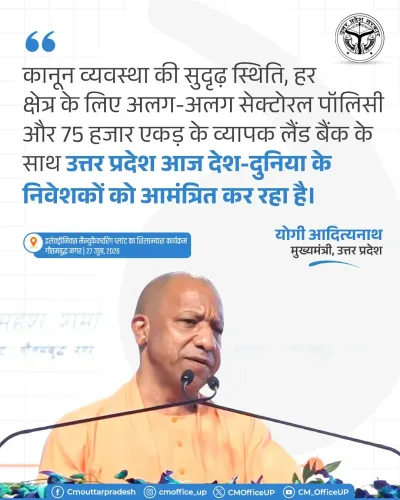
Uttar Pradesh is putting its chips on the global corporate map. The Chief Minister's Office of Uttar Pradesh on Monday, 26 October 2026, quoted Chief Minister Yogi Adityanath directly, calling the UP GCC Policy 2024 one of the most competitive state-level frameworks in the country — and laying out hard targets to back that claim.
The policy's pitch rests on a four-pronged incentive stack: Land Incentive, OpEx (Operational Expenditure) support, Payroll Incentive, and SGST Reimbursement. Together, these instruments are designed to chip away at the cost calculus that has historically steered multinational firms toward Bengaluru, Hyderabad, and Pune rather than UP.
The 2030-31 Targets: 500 Centres, 4 Crore Square Feet
The numbers CM Yogi put on the table are ambitious. By 2030-31, the state aims to develop 4 crore square feet of world-class Grade A office space and establish 500 new Global Capability Centres. These are the twin pillars of what the government is calling a 'sashakt GCC ecosystem' — sashakt meaning empowered or robust.
Global Capability Centres — offshore delivery and innovation hubs run by multinationals — have become one of the most fiercely contested economic trophies among Indian states. India already hosts more than 1,700 such centres nationally, contributing significantly to high-skilled employment in IT, R&D, and business services. Every major state wants a larger slice of that pie.
How UP Stacks Up Against Competing States
The broader pattern is unmistakable. States across India have rolled out dedicated GCC policies in recent years, recognising that the traditional tech hubs are saturated and that land, talent, and operating costs remain lower in tier-2 ecosystems. UP's approach — pairing fiscal incentives with an explicit infrastructure target — mirrors that playbook, but the scale of the Grade A office space commitment signals an intent to compete on quality, not just cost.
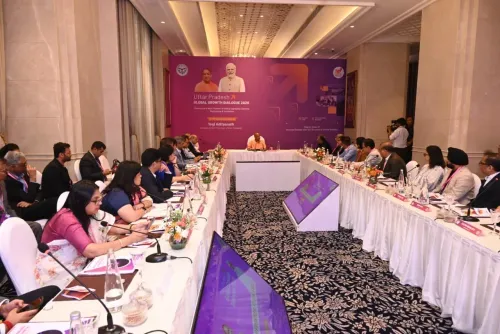
The groundwork dates at least to the Global Investors Summit of 2023, which UP hosted to attract investment proposals across technology and services. The GCC policy formalises and deepens that momentum. Lucknow, Noida, and Greater Noida are the most likely focal points for Grade A development, given existing connectivity and talent pipelines.
What MNCs — and Job Seekers — Will Be Watching
For multinational investors, the acid test will be the actual rollout of incentives and the speed of MoU conversions into operational centres. Announcing a policy and achieving the targets are two different innings. Payroll incentives and SGST reimbursements are particularly attractive levers — they directly reduce the recurring cost burden on a GCC's P&L, not just the one-time setup cost.
For UP's workforce — the state's single largest economic asset given its population — the promise is of high-quality, services-sector employment at scale. If the 500-centre target is met, the downstream employment and skilling demand could reshape the state's economic profile well beyond agriculture and traditional manufacturing.
India's most populous state is making its clearest bid yet for the global services economy. The targets are set, the incentives are on paper — now comes the part where execution writes the headline.
Point of View
Making them more persuasive to CFOs than one-time land grants. The 500-centre target by 2030-31 is bold; with India's existing GCC base hovering around 1,700 nationally, UP is effectively bidding to capture nearly a third of the next wave of growth. The real metric to watch is MoU-to-operational-centre conversion rates in the next 18 to 24 months — that number will tell whether this policy is transformative or aspirational.
NationPress
26 Oct 2026
Frequently Asked Questions
What is the UP GCC Policy 2024?
The UP GCC Policy 2024 is a state-level framework introduced by the Uttar Pradesh government to attract Global Capability Centres of multinational companies. It offers incentives including land support, operational expenditure assistance, payroll incentives, and SGST reimbursement to companies that set up GCCs in the state.
What are the targets under UP's GCC Policy by 2030-31?
Uttar Pradesh aims to establish 500 new Global Capability Centres and develop 4 crore square feet of world-class Grade A office space by the financial year 2030-31 under the GCC Policy 2024.
What is a Global Capability Centre (GCC)?
A Global Capability Centre is an offshore hub set up by a multinational company to handle technology, R&D, analytics, or business processes. India is one of the world's leading destinations for GCCs due to its large skilled workforce and competitive costs.
How does UP's GCC Policy compare with other Indian states?
Several Indian states have introduced dedicated GCC policies to attract multinationals as traditional hubs like Bengaluru and Hyderabad become saturated. UP's policy mirrors this trend but distinguishes itself with an explicit large-scale Grade A office space target and a broad incentive package including payroll and SGST benefits.
Which cities in UP are likely to benefit from the GCC Policy?
Noida, Greater Noida, and Lucknow are the most likely focal points for GCC development under the policy, given their existing infrastructure, connectivity, and talent availability.