Audi to Build First U.S. Plant With $4 Billion Investment
Synopsis
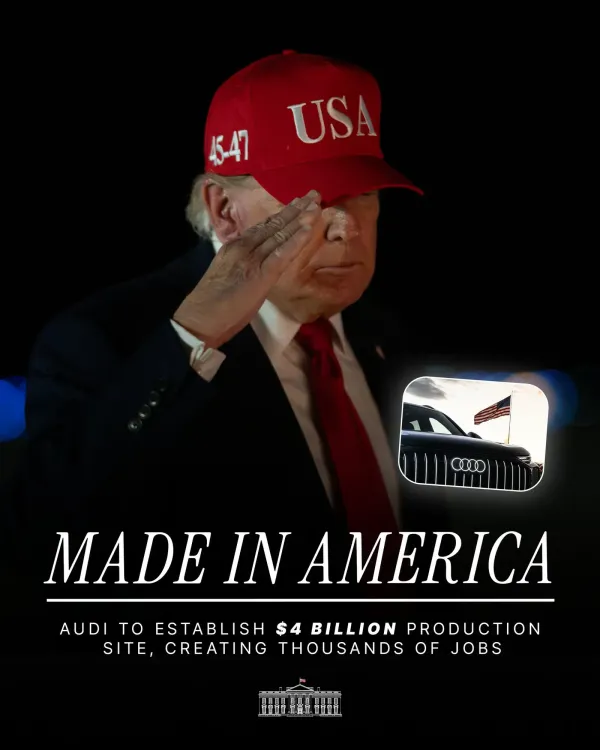
The White House announced that Audi will invest a historic $4 billion to establish its first-ever production facility in the United States, directly crediting President Trump's tariff regime and pro-growth manufacturing policies for driving the German luxury automaker's landmark decision.
Key Takeaways
Audi is investing $4 billion to build its first-ever U.S. production facility , a historic first for the German luxury brand.
The White House credited President Trump 's tariffs and pro-growth manufacturing policies as the direct catalyst for the investment.
Audi, a Volkswagen Group subsidiary, has historically served the U.S. market from production bases in Europe and Mexico .
Trump's first term established Section 232 tariffs on imported autos and parts; the current term is extending that framework.
Site selection, construction timelines, and employment figures have not yet been publicly confirmed.
Potential EU and German government responses to the tariff-linked investment shift remain a key development to watch.
A German luxury automaker is making a move that would have seemed unthinkable a decade ago: Audi has announced a $4 billion investment to build its first-ever production facility on American soil, a landmark shift that the White House is squarely attributing to President Donald Trump's tariff strategy and pro-domestic-manufacturing agenda.
A German Giant Picks Up and Moves West
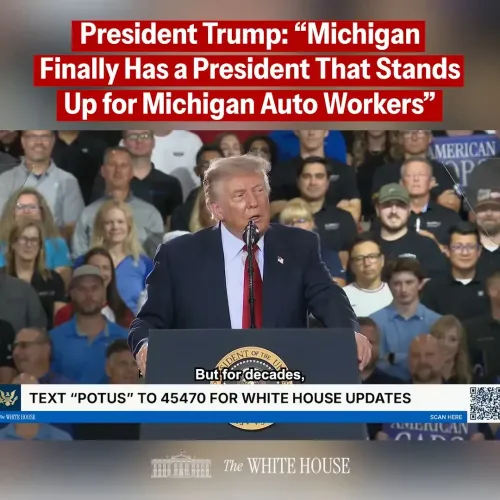
Audi, a subsidiary of Volkswagen Group, has for decades served the U.S. market through production lines in Europe and Mexico. The announcement of a dedicated American plant marks a fundamental break from that model. The White House framed the move directly: 'President Trump is bringing auto manufacturing back to American soil through tariffs and pro-growth production policies. And the results are showing.'
The investment, described by the administration as 'historic,' would give Audi its first footprint in U.S. domestic production — a gap that distinguished it from American-brand competitors who have long operated sprawling assembly operations across states like Michigan, Ohio, and Tennessee.
The Tariff Lever — How Washington Moved the Math
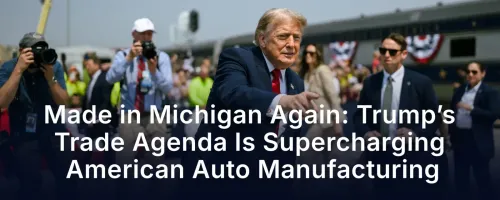
The policy architecture behind this kind of announcement has been building for years. During Trump's first term, the administration deployed Section 232 tariffs on imported automobiles and auto parts, explicitly designed to make foreign-produced vehicles more expensive in the U.S. market and to shift the production calculus for overseas manufacturers.
That playbook is now being re-run in his second term with evident force. For a company like Audi, absorbing tariff costs on every vehicle shipped from Germany or Mexico into the world's largest luxury car market becomes an unsustainable competitive handicap. Building locally converts a tariff liability into a structural advantage — and a $4 billion plant is the clearest possible signal that the arithmetic has tipped.
What Comes Next: Sites, Timelines, and Geopolitical Echoes
Key details — including the precise site selection, construction timeline, and expected employment numbers — have not yet been confirmed publicly. Watching whether Germany or the European Union formally responds to what Brussels is likely to view as tariff-coerced reshoring will be a significant subplot. Berlin has historically pushed back on the use of trade measures to redirect investment flows away from German industrial champions.
For U.S. autoworkers and the communities competing to host a facility of this scale, the announcement signals a new chapter in the decades-long contest to anchor foreign auto investment on American ground.
If the plant breaks ground on schedule, Trump will have a flagship example to point to — a European prestige brand, planting its flag in the heartland of American manufacturing, with a tariff policy as the forcing function.
Point of View
Sustained long enough, compels foreign manufacturers to substitute domestic assembly for cross-border exports. Whether this represents genuine industrial policy success or a one-time headline driven by unique company circumstances will depend on how many more such announcements follow. For the EU, each reshoring story of this magnitude deepens the political pressure to either negotiate or retaliate. The broader arc — from Section 232 in 2018 to a flagship German luxury brand breaking ground in the American midwest — gives the White House a durable campaign-trail and governing narrative heading into the next policy cycle.
NationPress
26 Oct 2026
Frequently Asked Questions
Is Audi building a factory in the United States?
The White House announced on October 26, 2026 that Audi is investing $4 billion to build its first-ever production facility in the United States, though the specific location and timeline have not yet been confirmed.
Why is Audi building a plant in the US?
The White House attributed the decision to President Trump's tariffs on imported automobiles and pro-growth manufacturing policies, which make producing vehicles in the U.S. more economically attractive than importing them from Europe or Mexico.
Where will Audi's new US plant be located?
The specific site for Audi's first U.S. factory has not been publicly confirmed as of the White House's announcement. Site selection and construction timelines are still awaited.
What are Trump's auto tariffs and how do they work?
Section 232 tariffs , first imposed during Trump's first term in 2018 , levy duties on imported automobiles and auto parts to make foreign-produced vehicles more expensive in the U.S. market and incentivise domestic production.
Does Audi currently make cars in the United States?
No — as of this announcement, Audi had no U.S. production facility, serving the American market through plants in Europe and Mexico . The proposed $4 billion investment would be the brand's first-ever American manufacturing plant.