CM Yogi: UP producing 2 lakh STEM graduates yearly
Synopsis
Chief Minister Yogi Adityanath says Uttar Pradesh is producing 2 lakh STEM graduates every year and connecting them with skill, innovation, and technology to build an industry-ready and future-technology-ready workforce — a declaration anchored in the state's post-2017 higher education expansion.
Key Takeaways
Uttar Pradesh claims to produce 2 lakh STEM graduates per year under the current administration.
CM Yogi Adityanath frames the goal as building graduates who are both 'Industry-Ready' and 'Future-Technology-Ready.' The state's skilling drive aligns with the national Skill India Mission (launched 2015 ) and the National Education Policy 2020 .
Uttar Pradesh has expanded higher education and industry-academia linkages since 2017 to attract investment in IT, electronics, and emerging tech.
Future budget allocations and new industry-academia MoUs will be key indicators of whether the pipeline delivers on scale and quality.
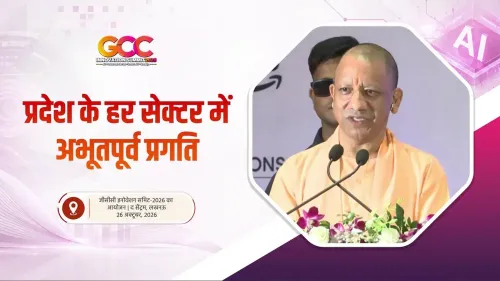
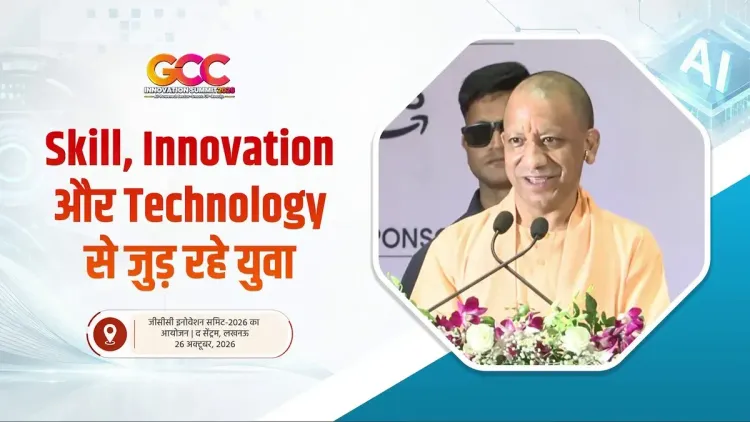
Every year, Uttar Pradesh is sending 2 lakh STEM graduates into the workforce — and the state is not stopping at degrees. Chief Minister Yogi Adityanath's office declared on Monday, 26 October 2026 that the state is actively building these graduates into an industry-ready and future-technology-ready workforce by connecting them with skill, innovation, and technology.
The post, quoting Chief Minister Yogi Adityanath directly, stated: 'हम प्रतिवर्ष 2 लाख STEM Graduates तैयार कर रहे हैं' — 'We are preparing 2 lakh STEM graduates every year' — and emphasised that the focus extends beyond classroom output to forging an 'Industry-Ready and Future-Technology-Ready Workforce.'
A workforce bet on scale and depth
The ambition behind the number is telling. Uttar Pradesh, India's most populous state, has spent the years since 2017 systematically expanding higher education capacity and stitching together tighter links between academia and industry. The dual mandate — producing graduates at volume and making them immediately deployable — reflects a pressure point every large economy feels: a credential gap that widens when classrooms outpace employers.
That gap is precisely what the state's skill-development push is designed to close. The national Skill India Mission, launched in 2015, provided the federal scaffolding; Uttar Pradesh has built its own programmes on top, with an eye on incoming investment in IT, electronics, and emerging technologies. Industry-academia tie-ups and dedicated skilling corridors have become a recurring theme in the state's economic pitch to investors.
NEP 2020 and the broader policy frame
The state's approach sits squarely inside the National Education Policy 2020, which pushed multidisciplinary STEM learning and employability as twin pillars of educational reform. For Uttar Pradesh, aligning with NEP 2020 is also a signal to national and global industry: the talent pipeline here is being built to spec.
The word 'Future-Technology-Ready' carries its own weight. At a moment when artificial intelligence, semiconductor manufacturing, and green-energy technology are reshaping hiring globally, a state-level commitment to forward-skilling — rather than just filling seats — marks a shift in how India's largest state thinks about human capital.
The graduates who walk out of Uttar Pradesh's STEM institutions this year will be among the first full cohorts shaped by that philosophy. Whether the pipeline holds — in placement rates, in innovation output, in industry satisfaction — is the question that next year's budget season will have to answer.
Point of View
Suggesting the state is reading global labour trends and framing policy around them. How well the quality of this pipeline matches its scale will determine whether UP's workforce pitch converts into actual industrial anchoring.
NationPress
26 Oct 2026
Frequently Asked Questions
How many STEM graduates does Uttar Pradesh produce each year?
Chief Minister Yogi Adityanath stated that Uttar Pradesh produces 2 lakh STEM graduates annually, connecting them with skill, innovation, and technology to build an industry-ready workforce.
What is CM Yogi's plan for STEM graduates in UP?
The plan is to develop STEM graduates into both 'Industry-Ready' and 'Future-Technology-Ready' professionals by integrating skill development, innovation exposure, and technology training alongside their core degrees.
How does UP's STEM push connect to the Skill India Mission?
The Skill India Mission , launched nationally in 2015 , provides the federal framework for vocational and technical training; Uttar Pradesh has built state-level programmes on top of it as part of its post-2017 higher education expansion.
What role does National Education Policy 2020 play in UP's STEM strategy?
NEP 2020 emphasises multidisciplinary STEM learning and employability; Uttar Pradesh's workforce skilling agenda aligns with these pillars, signalling to industry that the state's graduates are trained to national-policy standards.
Which sectors is UP targeting with its industry-ready STEM workforce?
Uttar Pradesh is focused on attracting investment and employment in IT, electronics, and emerging technologies , with industry-academia linkages and skill corridors forming the backbone of this sectoral strategy.