Kumaraswamy backs EV two-wheeler push, pledges policy support for global competitiveness
Synopsis
India's top electric two-wheeler startups — Ather Energy, Matter, River, Euler Motors, and Raptee.HV — took their case directly to the Centre on 4 July, pushing for an extension of the PM E-DRIVE Scheme and a revised PLI Auto policy. Minister Kumaraswamy's assurance of 'all possible support' signals the government is listening, but the real test is whether concrete policy action follows before current scheme timelines expire.
Key Takeaways
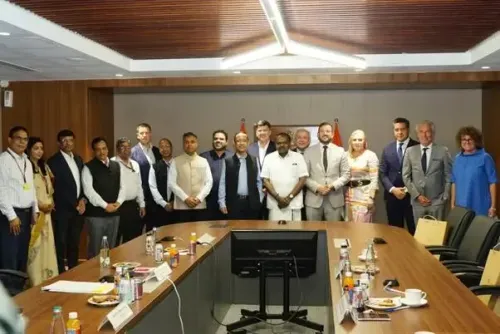
Kumaraswamy chaired a meeting with leading electric two-wheeler manufacturers in Bengaluru on 4 July .
Industry sought extension of the PM E-DRIVE Scheme and revision of the PLI Auto Scheme to align with current sector needs.
Manufacturers presented plans to position India as a global manufacturing hub for electric two-wheelers, including export market ambitions.
Kumaraswamy pledged full support from the Ministry of Heavy Industries for indigenous manufacturing, innovation, and exports.
The minister linked EV growth to PM Modi's Net Zero by 2070 target and the Viksit Bharat 2047 vision.
Delegation included CEOs of Ather Energy , Matter , River , Euler Motors , and Raptee.HV .
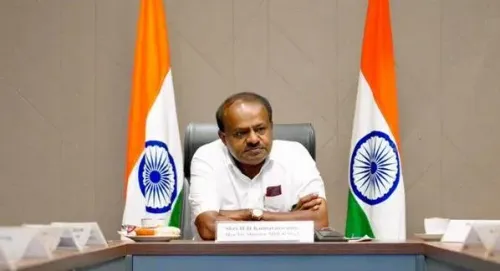
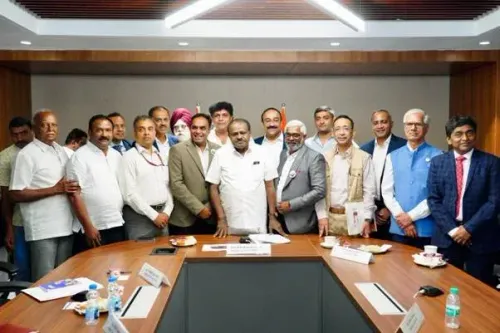
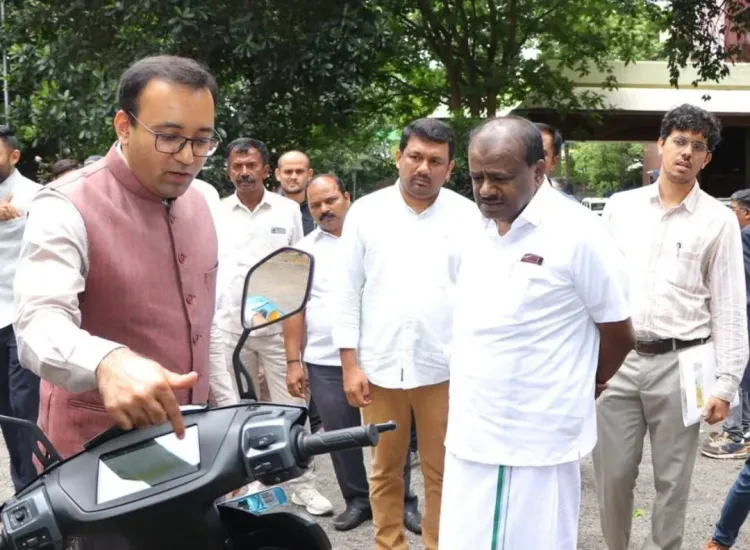
Union Minister for Heavy Industries and Steel H.D. Kumaraswamy on Saturday, 4 July chaired a high-level meeting in Bengaluru with leading electric two-wheeler manufacturers, pledging full ministerial support to build a robust, innovation-driven and globally competitive electric mobility ecosystem in India. The discussions centred on deepening indigenous manufacturing, unlocking export potential, and securing continued policy backing for the sector.
Key Developments from the Meeting
Electric two-wheeler makers briefed the minister on their progress in developing homegrown platforms and technologies, highlighting advances in indigenous engineering, product development, and domestic manufacturing capacity. The delegation articulated a shared vision of positioning India as a major global manufacturing hub for electric two-wheelers.
A central ask from the industry was the extension of the PM E-DRIVE Scheme, which currently includes support for the electric two-wheeler segment as part of the Centre's broader clean mobility push. Manufacturers also called for a revision of the PLI Auto Scheme to better align with the sector's evolving requirements — including incentives to scale production and strengthen presence in both domestic and export markets.
What the Government Said
Responding to the industry delegation, Kumaraswamy assured that the Ministry of Heavy Industries would extend all possible support to strengthen India's electric two-wheeler ecosystem and encourage domestic manufacturing, innovation, and exports. He reaffirmed the Central government's commitment to creating an environment where Indian manufacturers can innovate, scale, and compete globally.
The minister also linked the sector's growth to Prime Minister Narendra Modi's national goal of achieving Net Zero by 2070, stating that the transition to clean mobility and the expansion of indigenous EV manufacturing would be critical to realising that vision. He further underlined that building globally competitive domestic enterprises is central to the country's trajectory toward Viksit Bharat 2047 and the broader Aatmanirbhar Bharat agenda.
Who Was in the Room
The industry delegation comprised some of India's most prominent electric two-wheeler entrepreneurs: Tarun Mehta, Co-Founder and CEO of Ather Energy; Mohal Lalbhai, Founder and CEO of Matter; Aravind Mani, Co-Founder and CEO of River; Saurav Kumar, Founder and CEO of Euler Motors; and Dinesh Arjun, Co-Founder and CEO of Raptee.HV. The presence of multiple startup founders alongside established players signals the breadth of the sector's ambitions.
Why This Matters for India's EV Ambitions
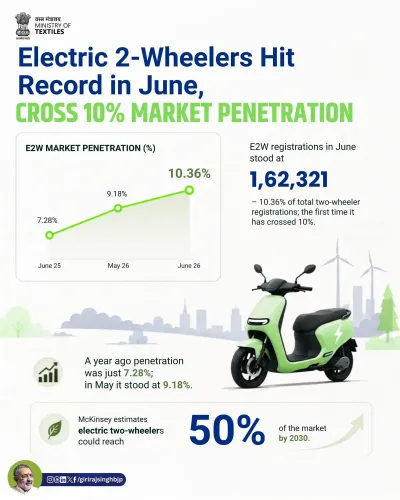
India's electric two-wheeler segment has emerged as one of the fastest-growing verticals in the country's broader EV transition, with domestic manufacturers increasingly challenging global incumbents on technology and price. This comes amid intensifying global competition from Chinese EV manufacturers, making indigenous capability-building not just an industrial priority but a strategic one.
Notably, the push to extend the PM E-DRIVE Scheme and revise the PLI Auto Scheme reflects industry concern that current policy timelines may not be sufficient to sustain the investment momentum needed for global scale. With the government's Net Zero and Viksit Bharat commitments on the line, the outcome of these policy deliberations could shape the sector's trajectory for the next decade.
Point of View
But it remains acutely policy-dependent at a stage when Chinese competitors are scaling with state-backed aggression. The presence of five startup CEOs in one room with a Cabinet minister is unusual and signals real urgency from the industry. What is missing from the public record is any timeline or quantum for the policy changes sought — without those specifics, 'all possible support' risks being a holding statement rather than a commitment.
NationPress
3 Oct 2026
Frequently Asked Questions
What was discussed at H.D. Kumaraswamy's meeting with EV manufacturers in Bengaluru?
Union Minister H.D. Kumaraswamy met leading electric two-wheeler manufacturers on 4 July in Bengaluru to discuss strengthening indigenous manufacturing, deepening domestic value addition, and expanding India's EV export potential. The meeting also covered the need to extend the PM E-DRIVE Scheme and revise the PLI Auto Scheme.
What is the PM E-DRIVE Scheme and why are manufacturers seeking its extension?
The PM E-DRIVE Scheme is a Central government initiative that provides support for electric two-wheelers as part of India's clean mobility push. Manufacturers are seeking its extension because current timelines may be insufficient to sustain the investment momentum needed to scale production and compete globally.
Which companies were represented at the Bengaluru EV meeting?
The delegation included Tarun Mehta of Ather Energy, Mohal Lalbhai of Matter, Aravind Mani of River, Saurav Kumar of Euler Motors, and Dinesh Arjun of Raptee.HV — representing a cross-section of India's homegrown electric two-wheeler industry.
How does the government's EV push connect to India's Net Zero and Viksit Bharat goals?
Minister Kumaraswamy explicitly linked the growth of indigenous EV manufacturing to Prime Minister Modi's Net Zero by 2070 target and the Viksit Bharat 2047 vision. He stated that clean mobility and globally competitive domestic enterprises are central to achieving both national goals.
What policy changes did the EV industry ask for at the meeting?
The industry sought an extension of the PM E-DRIVE Scheme and a revision of the PLI Auto Scheme to better reflect the evolving needs of electric two-wheeler manufacturers, including stronger incentives to scale production and grow in both domestic and export markets.