Kashmiri Pandits must reclaim J&K homeland, says L-G Sinha at 2026 conclave
Synopsis
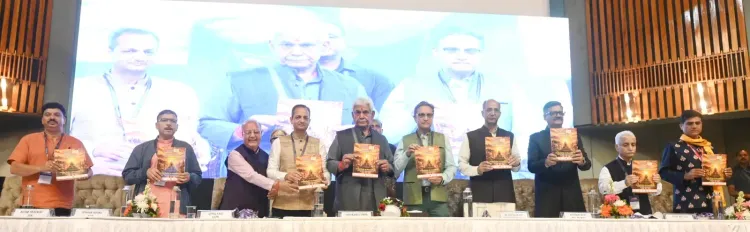
For the first time in decades, a Global Kashmiri Pandit Conclave convened in Srinagar — and J&K L-G Manoj Sinha used the platform to issue a direct call to action: return, rebuild, and reclaim. The gathering, themed 'From Exile to Excellence', marks a symbolic and potentially policy-significant moment in the long, unresolved story of one of India's most documented displacement crises.
Key Takeaways
J&K L-G Manoj Sinha addressed the Global Kashmiri Pandit Conclave 2026 in Srinagar on 13 June 2026 .
The conclave was themed 'From Exile to Excellence' , bringing together Kashmiri Pandits from across India and the world.
Sinha called on the community to reclaim its place in Jammu and Kashmir and build institutions in the Union Territory.
He referenced the 1989–90 mass exodus , when Kashmiri Pandits were displaced overnight amid armed militancy and targeted violence.
The J&K Migrant Immovable Property Act, 1997 was enacted to protect community properties lost during the displacement.
Sinha framed the conclave as a roadmap for economic empowerment, social rejuvenation and cultural revival — not merely a symbolic event.
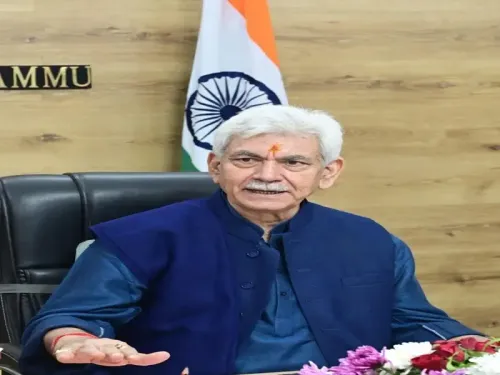
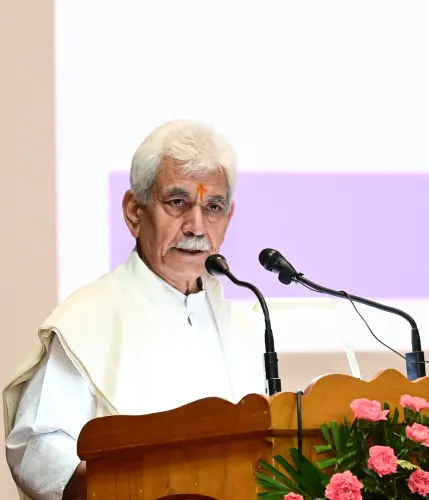
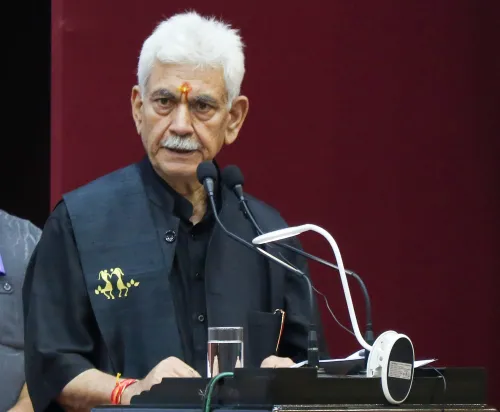
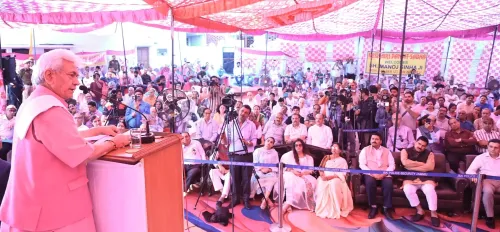
Jammu and Kashmir Lieutenant Governor Manoj Sinha on Saturday, 13 June 2026, called on the Kashmiri Pandit community to reclaim its rightful place in the Union Territory, declaring that the time for reconnection and rebuilding had arrived. Addressing the Global Kashmiri Pandit Conclave 2026 — themed 'From Exile to Excellence' — in Srinagar, Sinha described the community's decades-long journey as a testament to courage, resilience, and an unbroken bond with the homeland.
L-G Sinha's Address: Key Remarks
'I see before me the sons and daughters of this soil. We are witnessing a historic moment in Srinagar. Kashmir has witnessed the pain of the community's displacement and is now witnessing its resurgence and renewed confidence,' Sinha said at the gathering.
He acknowledged the trauma of the 1990s mass exodus, when Kashmiri Pandits were uprooted overnight amid a surge of terrorist violence, selective killings, and large-scale intimidation. 'Families were displaced overnight, but despite the pain and uncertainty, they chose not to surrender to despair,' he said.
The L-G framed the community's post-displacement choices in stark terms: 'The easier path was despair, but you chose reconstruction, hard work and service. You transformed your struggle into strength and your pain into purpose.'
From Displacement to Global Achievement
Sinha highlighted that Kashmiri Pandits had risen to distinction across education, administration, arts, literature, science, and public service — without seeking sympathy. 'Even in adversity, you enriched the nation through your contributions,' he said, adding that the community had produced 'thinkers, scholars and visionaries who shaped national discourse.'
He expressed particular satisfaction that members of the community were 'achieving excellence across the country and globally while preserving their heritage and identity' — a dual accomplishment he described as the community's 'real victory.'
A Roadmap, Not Just Symbolism
L-G Sinha was emphatic that the conclave was more than a ceremonial gathering. 'The deliberations here are not just discussions; they provide a framework for economic empowerment, social rejuvenation and the restoration of a vibrant community life,' he said.
He urged Kashmiri Pandits to actively build institutions in Jammu and Kashmir and contribute to the Union Territory's development. 'Your experience and knowledge are invaluable for the future of this land,' he added.
Notably, the conclave's very convening in Srinagar was cited by Sinha as evidence of a transformed security environment — one where those 'rendered shelterless and displaced are today returning with confidence.'
Historical Context: The 1989–90 Exodus
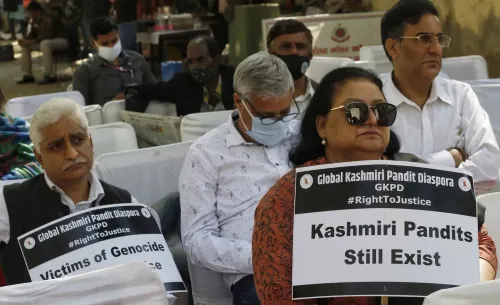
The mass displacement of Kashmiri Pandits began with the outbreak of armed militancy in 1989, when targeted killings, threats, and large processions demanding the Islamisation of the Valley triggered one of independent India's largest internal displacement crises. The community left behind homes, land, and livelihoods almost overnight.
In the years that followed, many properties were encroached upon or acquired through what authorities described as distress sales. The Jammu and Kashmir Migrant Immovable Property (Preservation, Protection and Restraint on Distress Sales) Act, 1997 was subsequently enacted to protect community assets.
What Comes Next
L-G Sinha's call for institutional participation and economic engagement signals a policy push to translate the conclave's aspirations into ground-level action. Whether that momentum translates into concrete return and resettlement programmes will be closely watched by the community and by observers tracking J&K's post-Article 370 transformation.
'A new Jammu and Kashmir has emerged. Its strength, aspirations and future are closely linked with your participation and contribution,' Sinha said, framing the community's return not merely as personal homecoming but as a shared national commitment.
Point of View
Funded resettlement framework with security guarantees, property restitution mechanisms, and livelihood anchors. The conclave's 'roadmap' framing is a step forward, but without binding policy commitments, it risks becoming another eloquent chapter in a story that has been told without a resolution for over three decades. The real test is whether Srinagar as a venue for this conclave signals a durable shift in ground conditions — or remains, for now, a powerful symbol without a policy spine.
NationPress
19 Sept 2026
Frequently Asked Questions
What is the Global Kashmiri Pandit Conclave 2026?
The Global Kashmiri Pandit Conclave 2026, themed 'From Exile to Excellence', is a gathering of Kashmiri Pandits from across India and the world, held in Srinagar on 13 June 2026. It brought together community members to discuss economic empowerment, cultural revival, and the prospect of reconnecting with their homeland in Jammu and Kashmir.
What did L-G Manoj Sinha say at the conclave?
L-G Sinha called on Kashmiri Pandits to reclaim their place in Jammu and Kashmir, build institutions, and actively contribute to the Union Territory's development. He acknowledged the trauma of the 1990s displacement and described the community's global achievements as a triumph of resilience over adversity.
Why were Kashmiri Pandits displaced in the first place?
The mass exodus of Kashmiri Pandits began in 1989–90, triggered by the outbreak of armed militancy in the Kashmir Valley, which brought targeted killings, threats, and large processions demanding the Islamisation of the region. The community was forced to flee almost overnight, leaving behind homes and properties.
What legal protection exists for Kashmiri Pandit properties?
The Jammu and Kashmir Migrant Immovable Property (Preservation, Protection and Restraint on Distress Sales) Act, 1997 was enacted to protect properties belonging to displaced Kashmiri Pandits, many of which had been encroached upon or acquired through distress sales in the years following the exodus.
What is the significance of holding the conclave in Srinagar?
Holding the conclave in Srinagar itself is seen as a marker of the changed security environment in Jammu and Kashmir. L-G Sinha cited it as evidence that displaced community members were 'returning with confidence' — a signal, at minimum, of improved conditions, even as questions about formal resettlement policy remain open.