Kashmiri Pandits plan June 2025 heritage tour, 36 years after exodus
Synopsis
Nearly four decades after the 1989-90 exodus, dozens of Kashmiri Pandit families from the US are returning to the Valley in June 2025 — not as tourists, but as a community asserting cultural survival. For the second generation, raised on inherited grief and fading photographs, this heritage tour is their first encounter with a homeland they have only ever known through stories.
Key Takeaways
Dozens of Kashmiri Pandit families from across the United States will visit Kashmir from 6 to 14 June 2025 in a heritage tour and international conclave.
The conclave is themed 'From Exile to Excellence: The Kashmiri Pandit Journey of Resilience, Renaissance and Return.' Organisers say nearly 90 per cent of the community has not returned to Kashmir since the 1989-90 militancy-driven exodus.
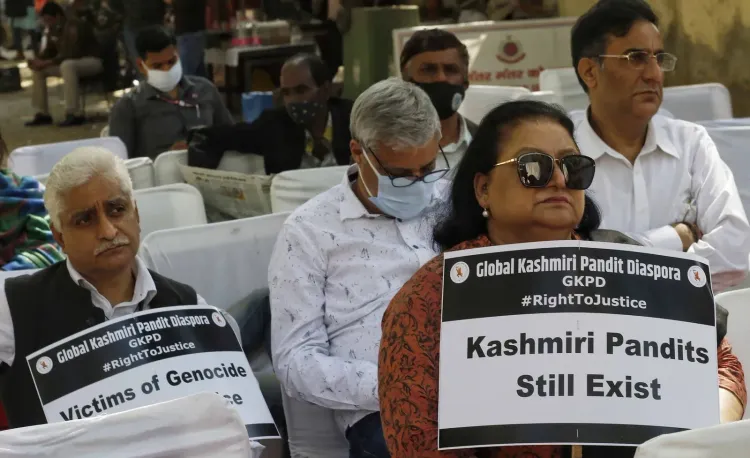
Global Kashmiri Pandit Diaspora (GKPD) , co-founded by Dr.
Surinder Kaul of Houston, is among the lead organisers.
Second-generation participants like Sheerin Raina , 21, are visiting the Valley for the first time, seeking to reconnect with ancestral temples and heritage sites.
Community leaders describe the effort as urgent cultural preservation against what they call the threat of 'looming extinction' of roots and identity.
Dozens of Kashmiri Pandit families from across the United States are preparing to travel to the Kashmir Valley in June 2025 — for many, the first return in 36 years — in what organisers describe as both a heritage pilgrimage and an act of cultural survival. For second-generation youth like Sheerin Raina, 21, of New Jersey, the Valley has existed only in inherited fragments: dinner-table stories, fading photographs, and temple names spoken with reverence by parents who fled in the middle of the night.
The Heritage Tour and Conclave
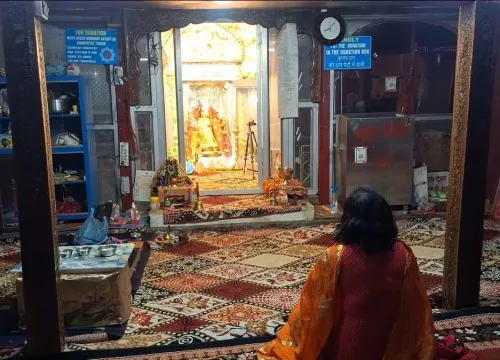
The tour, scheduled from 6 to 14 June 2025, will include visits to temples, heritage sites, and ancestral locations across Kashmir. It will culminate in an international conclave themed 'From Exile to Excellence: The Kashmiri Pandit Journey of Resilience, Renaissance and Return.' Organisers say the initiative has drawn participants from multiple countries, bringing together survivors of the 1989-90 exodus, their children, and community leaders.
Rakesh Kaul, an author and community leader based in New Jersey, framed the return in stark historical terms. 'This is our seventh exodus from Kashmir,' he said. 'But in this most recent genocide and ethnic cleansing, this is the first time that we are formally going back in as large a number.' He described the journey as an inheritance being passed to a younger generation raised far from the Valley. 'The Kashmir that you have heard of from your grandparents, stories of pain... that Kashmir also has something very profound that is your living inheritance,' he said.
The Diaspora Behind the Drive
Dr. Surinder Kaul, a Houston-based physician and co-founder of the Global Kashmiri Pandit Diaspora (GKPD), called the effort both emotional and urgent. 'The biggest threat of our community is looming extinction,' he said, adding that nearly 90 per cent of the community had not been able to return to Kashmir since the militancy-driven displacement of 1989-90. 'We are not going there as victims. We are going there as a resilient community,' he said.
Nirja Kaul Sadhu, the New Jersey-based international coordinator of GKPD, has been coordinating the effort across countries, working to bring families, youth, and exodus survivors into a shared initiative centred on cultural continuity. Mohan Wanchoo, an entrepreneur and GKPD US coordinator based in New York, said the initiative was also about rebuilding bonds within a dispersed community that had spent decades reconstructing lives across continents while retaining links to Kashmir's cultural and spiritual traditions.
The Second Generation Speaks
For many younger participants, the journey is less about politics and more about identity. Amit Raina, an IT professional from Houston who left Kashmir as a child, said: 'My connection to Kashmir now is mostly in my childhood memories — memories of my home, memories of our temples, memories that are slowly fading away.' He added that the community could not remain paralysed by fear. 'We wanna go back to our homeland not as tourists, not as strangers, but as rightful sons and daughters of the soil.'
Vinod Raina, a New Jersey-based IT professional associated with the Kashmiri Overseas Association, said he wanted younger generations to see ancestral temples and heritage sites firsthand. Uphaar Kotru, President of the Kashmiri Overseas Association in California, said: 'Our children deserve to know where their roots are. Kashmir is not just a story that I have been telling my kids. It is a place that they know.'
Sunita Ticku Bhan, a Houston-based coordinator with GKPD US, described the emotional register of the return in deeply personal terms. 'It is going back to see your mom,' she said. 'You are away from your mother, and you are going to hug her and kiss her and tell her that you missed her for so many years.'
The Weight of 1989 and What Comes Next
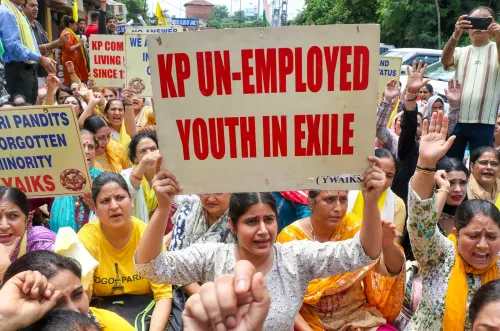
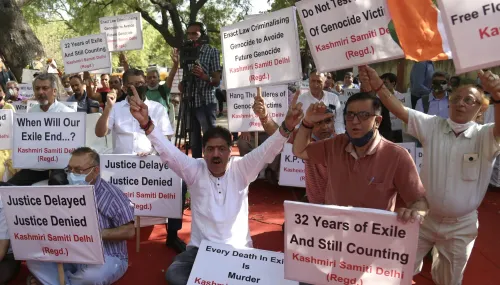
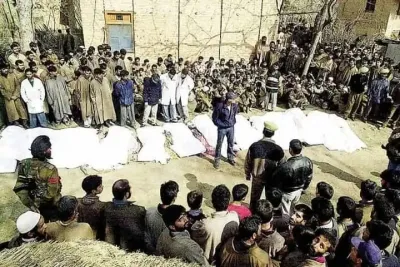
The exodus of Kashmiri Pandits from the Valley in 1989 and 1990 remains one of the most painful and politically contested chapters in modern Indian history. Tens of thousands of Kashmiri Hindus fled their homes amid rising militancy, killings, and threats, eventually dispersing across India and the world. In recent years, renewed public discussion — amplified by activism, documentaries, and films such as The Kashmir Files — has brought greater visibility to the community's experiences.
For Sheerin Raina, who has been asking her father since seventh grade when they could return, the Valley is simultaneously paradise and wound. 'It is known as paradise on Earth,' she said. 'But there is also a lot of darkness within there as well.' Yet she is clear about the community's agency going forward: 'Only we can control our story from here on out. No one else will do it for us.' Whether return is truly possible — and what 'home' means after nearly four decades — remains, for many displaced families, an open and deeply personal question.
Point of View
But it also risks softening the unresolved political question of why return remains a tour and not a resettlement. Thirty-six years on, the Valley has changed, the diaspora has changed, and what going back actually means remains unanswered by any government policy.
NationPress
5 Oct 2026
Frequently Asked Questions
What is the Kashmiri Pandit heritage tour planned for June 2025?
It is a group visit by dozens of Kashmiri Pandit families, primarily from the United States, scheduled from 6 to 14 June 2025. The tour includes visits to ancestral temples and heritage sites across Kashmir, followed by an international conclave themed 'From Exile to Excellence: The Kashmiri Pandit Journey of Resilience, Renaissance and Return.'
Who is organising the Kashmiri Pandit return visit to Kashmir?
The Global Kashmiri Pandit Diaspora (GKPD), co-founded by Houston-based physician Dr. Surinder Kaul, is among the lead organisers. Community leaders including Rakesh Kaul of New Jersey, Nirja Kaul Sadhu as GKPD international coordinator, and Mohan Wanchoo of New York are also driving the initiative.
Why did Kashmiri Pandits leave Kashmir in 1989-90?
Tens of thousands of Kashmiri Hindus fled the Valley in 1989 and 1990 amid rising militancy, killings, and threats, in what remains one of the most politically contested episodes in modern Indian history. The displacement scattered the community across India and the world, with organisers estimating that nearly 90 per cent have not been able to return since.
Why does the June 2025 tour matter to the second generation?
For young Kashmiri Pandits raised in the diaspora — like 21-year-old Sheerin Raina of New Jersey — the Valley exists only through inherited stories, photographs, and temple names passed down by parents. The June visit is, for many, their first time physically experiencing a homeland they have only known through family memory.
What is the Global Kashmiri Pandit Diaspora (GKPD)?
GKPD is a diaspora organisation co-founded by Dr. Surinder Kaul, a Houston-based physician, aimed at preserving Kashmiri Pandit cultural identity and connecting community members globally. It has coordinated the June 2025 heritage tour across multiple countries, bringing together families, youth, and survivors of the 1989-90 exodus.