Will Kashmiri Pandits Ever Return Permanently to the Valley?

Synopsis
Farooq Abdullah, former Chief Minister of Jammu and Kashmir, raises concerns over the permanent return of Kashmiri Pandits to the Valley, citing their established lives elsewhere. His remarks coincide with the observance of 'Holocaust Day' by the displaced community, emphasizing the ongoing debate about their future.
Key Takeaways
Kashmiri Pandits face challenges in returning to the Valley.
Many have established lives in other parts of India.
The mass exodus began in 1990 due to terrorism.
Some families still live in the Valley.
The concept of Kashmiriyat is central to the region's cultural identity.
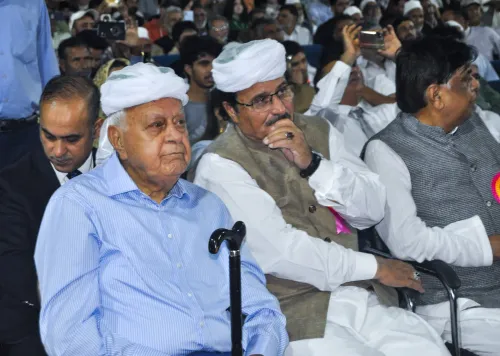
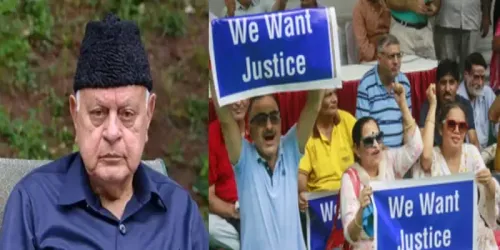
Jammu, Jan 19 (NationPress) Farooq Abdullah, the former Chief Minister of Jammu and Kashmir and President of the National Conference (NC), expressed on Monday that he doubts the permanent return of Kashmiri Pandits to the Valley.
"They might visit, but I am skeptical that Kashmiri Pandits will ever truly settle back in the Valley," Abdullah stated to reporters.
He emphasized that the displaced Kashmiri Pandits are always invited to come back to their homeland.
Highlighting that the Valley is the rightful home for Kashmiri Pandits, he expressed doubt regarding their willingness to return, given that they have established new lives in other regions of India, where their children are now working and studying.
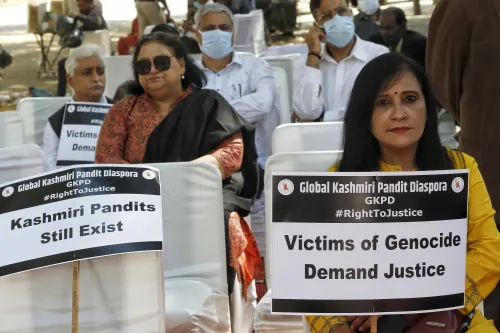
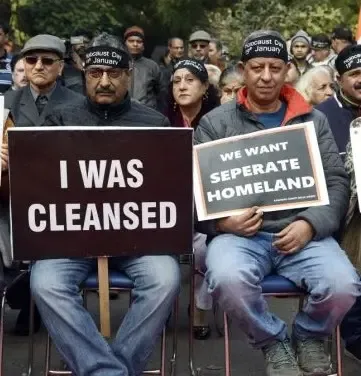
This statement coincided with the observation of 'Holocaust Day' by the migrant Kashmiri Pandits, commemorating their forced displacement from their ancestral lands.
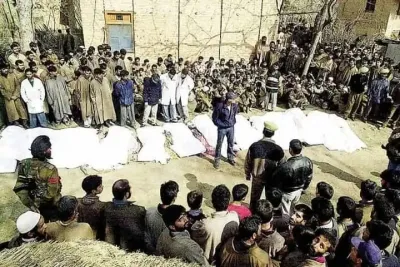
The mass exodus began in 1990 when threats from terrorists forced them to flee or face violence.
Farooq Abdullah noted that several families of Kashmiri Pandits have remained in the Valley and continue to live peacefully in their original villages.
"When are they going to return to Kashmir? Who is preventing them? No one is stopping them. They should come back since it is their home," he remarked.
In response to protests by Kashmiri Pandits advocating for their return and rehabilitation, Abdullah pointed out that many still reside in the Valley and have not left their communities.
On Monday evening, a group of Kashmiri Pandits under the banner of 'Youth 4 Panun Kashmir' protested by blocking the Jammu-Srinagar national highway near the Jagti migrant camp, demanding a separate homeland in the Valley and urging Parliament to acknowledge their genocide.
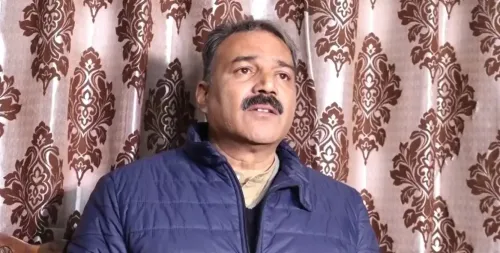
When questioned about the demands of the displaced community, Abdullah assured them that the government would construct homes and provide necessary assistance.
He mentioned that after the fall of his government, it was up to the Central government to act on the proposal.
He pointed out that the Kashmiri Pandit community needs to evaluate the situation, as many have settled in various parts of India.
"They have aged, many require medical care, and their children are engaged in educational institutions," he stated.
"They might visit, but I don't believe they will return to live there permanently," he concluded.
While around 3,000 Kashmiri Pandits still inhabit various locations in the Valley, the majority fled in 1990 and became refugees in their own nation.
Despite the enduring pain of migration faced by this educated and cultured community, their elders still hold a strong desire to return permanently to their ancestral lands.
However, the younger generation, particularly those born around or after 1990, holds a different perspective.
The cultural and religious unity known as Kashmiriyat was deeply rooted in the mutual respect between Hindus and Muslims in the Valley.
Although discussions about Kashmiriyat continue and its strong message resonates, the reality remains that terrorism sponsored by Pakistan has severely disrupted the tolerant culture of Kashmir.
Point of View
It is crucial to understand the emotional and historical context surrounding the return of Kashmiri Pandits. Their plight is a significant part of India's complex narrative, and while many wish to return, the realities of integration and adaptation in a changed socio-political landscape must be acknowledged. The voices of both the displaced community and those who never left deserve to be heard in this ongoing dialogue.
NationPress
22 Oct 2026
Frequently Asked Questions
Why did Kashmiri Pandits leave the Valley?
Kashmiri Pandits were forced to leave the Valley due to threats from terrorists in 1990, leading to a mass exodus.
Are there still Kashmiri Pandits living in the Valley?
Yes, some Kashmiri Pandits continue to live peacefully in various villages across the Valley.
What is 'Kashmiriyat'?
'Kashmiriyat' refers to the cultural and religious unity between Hindus and Muslims in Kashmir, characterized by mutual respect.
What are the demands of Kashmiri Pandits today?
Kashmiri Pandits are demanding a separate homeland in the Valley and recognition of their genocide.
What is being done for the displaced Kashmiri Pandits?
Abdullah has assured that the government will provide housing and support for the displaced community.